Regular lunch planners
People preparing work, school or at-home lunches who want cans that are straightforward to portion and nutrition labels they can compare for protein, fat and salt.


Choose a spring-water multipack if you want a plain tuna base for repeat lunches; choose brine or oil if its flavour and texture suit the meals you plan to make. Compare the nutrition labels and drained quantities of the exact products, rather than assuming the packing liquid or number of cans tells you which pack fits your household.
People preparing work, school or at-home lunches who want cans that are straightforward to portion and nutrition labels they can compare for protein, fat and salt.
Households planning several lunches from one purchase, for whom can size and drained quantity matter more than the number of tins alone.
People who want to check fishing-method, traceability or certification information for the tuna they are considering, alongside its suitability for lunch.
Start with the packing liquid that suits your recipes, then compare the exact labels and the amount of tuna your household will use.
Consider it when: You want a plain tuna base for sandwiches, salads or jacket potatoes.
Keep in mind: Spring water does not establish the salt content; check the particular tin.
Consider it when: You prefer its flavour in the lunch you are making.
Keep in mind: Salt varies between products, so compare the label rather than treating all brine packs alike.
Consider it when: You want an oil-packed version for a recipe that suits its taste and texture.
Keep in mind: Check the listed energy, fat and saturates for the exact product; the packing liquid alone does not give its nutrition values.
| Concern | What to check | Who this matters to |
|---|---|---|
| Nutrition for lunch | Compare energy, fat, saturates, protein and salt on the same per-100g basis; check whether figures refer to drained tuna. | If I am choosing tuna for regular lunches, I want to see how the exact recipe fits the rest of each meal. About 30% of consumers put nutrition first. |
| Pack size and usable quantity | Check can size, drained weight and how many lunches the pack will cover. | A pack needs to last through the lunches my household actually makes, without leaving more opened tuna than we can use. Pack fit comes first for about 30% of consumers. |
| Sourcing and traceability | Look for claims or certification that apply to the exact product, not just the retailer or brand. | Before choosing a familiar name, I want to know what its fishing or traceability statement covers. Roughly 20% of consumers make sourcing their primary concern. |
| Lunch preparation | Choose a can size and tuna format that suit the meals; read the label for instructions after opening. | When lunches have to be assembled quickly, portion size and handling leftovers can decide which pack works. Convenience comes first for around 20% of consumers. |
A pack with more cans does not necessarily contain more usable tuna: can sizes and drained weights can differ.
Check the drained quantity and work out whether the separately opened cans suit the number of lunches you plan to make.
Products packed in the same liquid can have different nutrition values. Princes lists 0.85g salt per 100g drained for its cited spring-water chunks, while John West lists 0.9g per 100g for its cited brine four-pack; those figures describe those products, not every tin in either category.
Compare the current labels on a like-for-like per-100g basis, including fat, saturates and salt.
The NHS says fresh and canned tuna do not count as oily fish, even when the tuna is packed in oil.
If you are planning meals around the NHS oily-fish guidance, count that portion separately from tuna lunches.
The NHS advises pregnant people and those trying for a baby to have no more than four cans of tuna or two tuna steaks a week because of mercury concerns. A multipack can make it easy to overlook how many cans are used across several meals.
Check how the planned lunches fit that NHS guidance where it applies.
John West lists a tuna-chunks-in-brine four-pack for family meals.
Princes lists spring-water tuna chunks in several sizes, including 4 × 145g, 6 × 145g and 8 × 145g multipacks.
Tesco has listed own-brand spring-water tuna in 4 × 145g and 400g formats.
Asda provides retailer-level information about its seafood sourcing.
M&S has listed spring-water tuna chunks in 160g and 640g formats.
These spring-water and brine chunks multipacks are options for households planning several tuna lunches. Use the exact pack labels to compare drained quantity and nutrition before choosing.
 Image unavailable
Consider this four-can spring-water pack when you want to open cans separately for lunches during the week.
The stated format is 4 × 125g. Check the drained quantity and current nutrition label for the comparison that matters to you.
 Image unavailable
Consider this spring-water option if six separately opened cans fit your household’s lunch routine.
The product name specifies a 145g can size and six-pack. Confirm the pack contents and drained quantity on the label.
 Image unavailable
Consider this brine pack when that packing liquid suits the lunches your household makes.
The stated format is four 145g cans. Check the drained quantity and salt figure on the exact pack before comparing it with spring-water options.
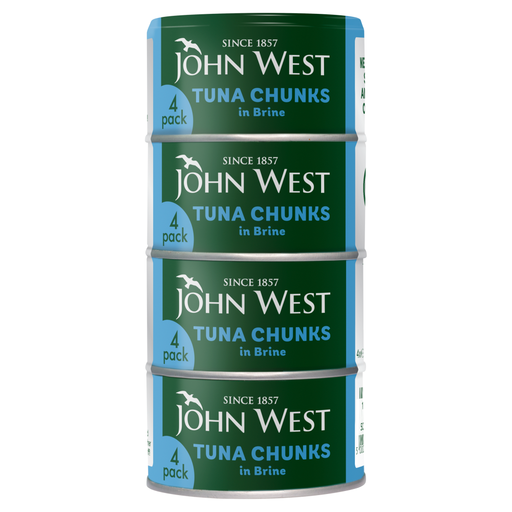 Image unavailable
Consider this four-can brine format if its can size suits your lunch portions.
The stated format is 4 × 125g. When comparing nutrition with other packs, check whether the figures on this pack refer to drained tuna.
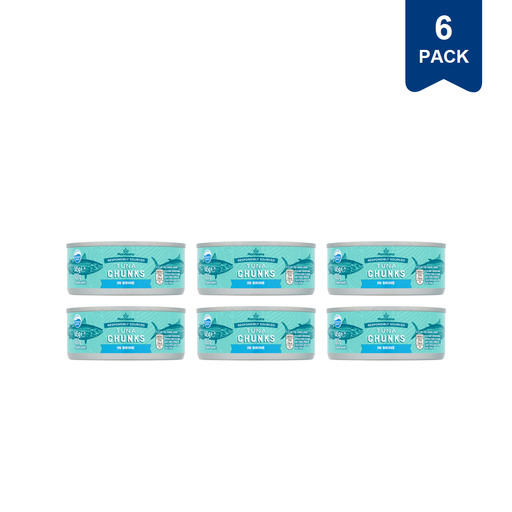 Image unavailable
Consider this brine option when several separately opened cans fit your household’s plans.
The product name indicates a 145g six-pack. Confirm the can count, drained quantity and nutrition figures on the exact pack.
No. The NHS says fresh and canned tuna do not count as oily fish. If you are planning meals around its oily-fish guidance, include an oily-fish portion separately.
For people who are pregnant or trying for a baby, the NHS advises no more than four cans of tuna or two tuna steaks a week because tuna can contain higher levels of mercury than other fish. That is guidance for those groups, not a limit stated for all adults.
Compare their drained quantities, then consider how much you will use each time a container is opened. For nutrition, compare the exact products on the same per-100g basis; the NHS explains that food labels provide per-100g figures and may also give per-portion figures.
Follow the instructions on that product’s label. For its cited spring-water tuna, M&S instructs shoppers to transfer unused contents to a non-metallic container, refrigerate them and eat them within two days; check other products for their own directions.
Tuna is fish, so check the ingredients and allergen information on the exact pack if fish allergy is relevant. Also read any product-specific warning about bones; the cited M&S tuna label warns that bones may remain.