Parents planning quick meals
Individual unopened tins can be kept for planned sandwiches, pasta or salads. Check how much tuna is in each tin and whether you can use an opened tin within its storage instructions.


Choose a tuna multipack when you can plan meals around its individual unopened tins. Compare drained weight and the exact label rather than pack count alone: spring-water, brine, sunflower-oil and no-drain packs serve different preferences and routines. If the person eating it is pregnant or trying for a baby, the NHS advises no more than four cans of tuna a week, regardless of the pack bought.
Individual unopened tins can be kept for planned sandwiches, pasta or salads. Check how much tuna is in each tin and whether you can use an opened tin within its storage instructions.
If packing medium, ingredients or salt matter to your household, compare the nutrition information per 100g on the exact products. A spring-water label alone does not tell you the salt content.
When the person eating tuna is pregnant or trying for a baby, plan how often they will eat it, not just how many tins to buy. The NHS advises a maximum of four cans of tuna a week for that person.
| Concern | What to check | Who this matters to |
|---|---|---|
| Quick meals without waste | Check the number of tins, drained weight, whether draining is needed and the instructions for leftovers. | If I am fitting lunches around caring for a new baby, I want tins I can open as needed without leaving more tuna than we can use. About 45% of consumers put ready meal ingredients and manageable portions first. |
| Ingredients and salt | Compare the packing medium, ingredients and salt per 100g on the exact labels. | When I use tuna in several dishes, I want to know what the fish is packed in and how its salt figure compares. For about 33% of consumers, checking ingredients and nutrition is the primary need. |
| Pregnancy-related intake | Count tuna eaten across meals during the week; the NHS advises no more than four cans weekly if the eater is pregnant or trying for a baby. | If that NHS guidance applies to me, a multipack should make meal planning easier without setting the pace at which I eat tuna. Keeping track of weekly intake comes first for about 22% of consumers. |
Tesco Groceries lists its spring-water four-pack as four 145g tins, but gives a drained weight of four 102g portions. The larger figure includes packing liquid.
Compare drained weights when deciding how much tuna a pack will provide for planned meals.
For the cited Tesco Groceries four-packs, the spring-water tuna lists 0.90g salt per 100g drained and the brine tuna lists 1.00g. The cited Sainsbury's spring-water pack lists 0.12g per 100g drained, so the medium alone is not enough for a like-for-like judgement.
Read the salt figure on each pack you are considering, using the same per-100g basis.
Opened-tin instructions differ: the cited Sainsbury's pack says to use its contents within one day, while the cited Tesco Groceries and Asda packs specify two days after transfer to a non-metallic container and refrigeration.
Open one tin at a time where practical, and follow the storage instructions on the product you bought.
A four-pack is a shopping format, not a recommended weekly portion. The NHS advises people who are pregnant or trying for a baby to have no more than four cans of tuna a week.
If that limit applies to the eater, count tuna in sandwiches and other meals as well as tuna eaten straight from a tin.
The cited range includes conventional tuna chunks and a separate no-drain format.
Princes appears in the research with tuna chunks and other prepared tuna formats.
The cited own-label spring-water and brine packs are both four 145g tins.
The cited own-label spring-water product is a four-pack of 145g tins.
The cited own-label tuna chunks in spring water come as four 145g tins.
The cited range includes spring-water tuna in single-tin and four-pack formats.
These packs offer spring-water, brine, sunflower-oil and no-drain choices for planning household meals. They are food options for the household, not recommendations for feeding tuna to a baby. Compare each pack's drained quantity and label if those details matter to your choice.
 Image unavailable
A four-tin spring-water option for meals planned across the week. Check the drained weight for the amount of tuna you can use, and follow the pack's instructions after opening; this is not identified as a no-drain product.
 Image unavailable
The no-drain format suits a meal where handling packing liquid is inconvenient. This is a three-tin, 100g-per-tin pack rather than a conventional four-pack; check its edible quantity before comparing pack sizes.
 Image unavailable
A four-tin option if brine suits the meals you have in mind. Read this pack's salt figure rather than using a value from another brine or spring-water product, and check its drained weight for portion planning.
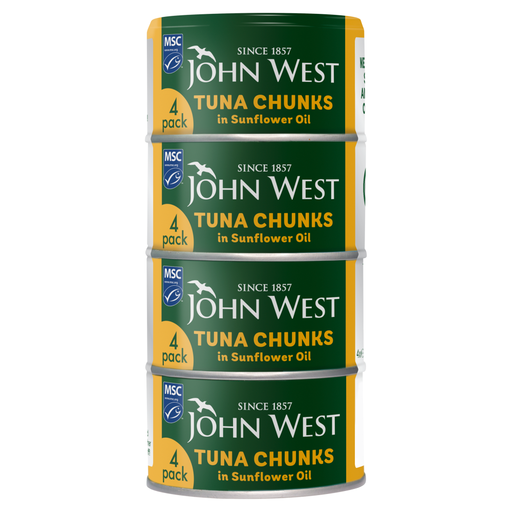 Image unavailable
This four-tin pack is for shoppers choosing tuna packed in sunflower oil. It is a different packing-medium choice from spring-water or brine tuna; compare the exact ingredients, nutrition label and drained weight.
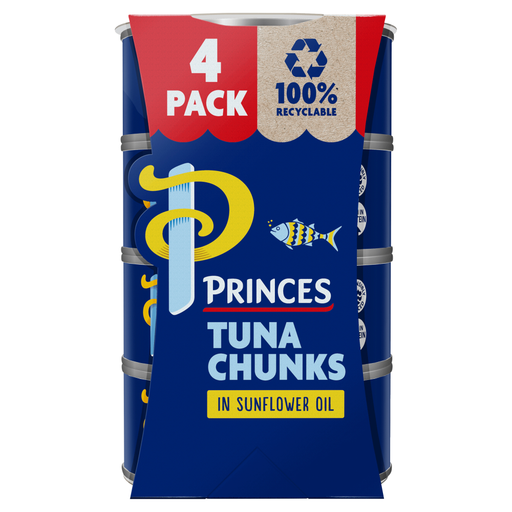 Image unavailable
A four-tin sunflower-oil option for meals planned around individual tins. Its 145g figure is the tin size, so check the pack's drained weight if you are comparing the amount of fish with another multipack.
Yes, but buying a multipack does not set a weekly eating target. The NHS advises people who are pregnant or trying for a baby to have no more than four cans of tuna a week; count tuna eaten across meals, not just tins opened at home.
No. The NHS does not classify fresh or canned tuna as oily fish, so do not count a tuna meal as an oily-fish portion.
Follow the instructions on the tin you opened. The cited Sainsbury's four-pack says to transfer the tuna to a non-metallic container, refrigerate it and use it within one day; the cited Tesco Groceries and Asda products specify two days after transfer and refrigeration. Do not apply one product's longer period to another.