Salt-conscious pancake cooks
If salt is your main consideration, compare the current nutrition panels for the tins you might use. Sainsbury’s product listings show why the packing liquid alone is not enough to make that choice.


For a lower-salt tuna pancake filling, compare the salt figures on the exact tins you are considering rather than choosing by a brine or spring-water description. Check that the figures use the same basis, such as per 100g drained, and account for salt in the other filling ingredients; a no-drain format may save preparation time but does not settle the salt comparison.
If salt is your main consideration, compare the current nutrition panels for the tins you might use. Sainsbury’s product listings show why the packing liquid alone is not enough to make that choice.
If you want to fill pancakes without a draining step, a ready-drained or no-drain format is worth considering. Check its salt figure separately before choosing it.
For several pancakes or planned leftovers, the number of tins and the drained quantity help you judge how much tuna you will have to work with.
Start with the current salt panel if reducing salt is your priority. Then decide whether less draining or enough tuna for several fillings matters more to your preparation.
| Concern | What to check | Who this matters to |
|---|---|---|
| Salt in the filling | Read salt per 100g on the current pack and check whether the figure is for tuna as sold or drained. Include other filling ingredients in your decision. | If I am keeping salt lower, I need to compare the tuna I will actually serve, not just its packing liquid. About 50% of consumers put that salt comparison first. |
| Tidy preparation | Check whether the exact tin is labelled ready-drained or no-drain; confirm its salt figure independently. | When I am assembling pancakes quickly, skipping the draining step matters most. For about 30% of consumers, ease of preparation is the primary concern. |
| Quantity for portions | Compare tin count and drained weight when planning several fillings or leftovers. | If I am feeding several people, I need enough tuna for the pancakes I plan to make. Having enough for those portions comes first for about 20% of consumers. |
Sainsbury’s lists 0.42g salt per 100g drained for its checked brine multipack and 0.75g per 100g for its checked ready-to-use spring-water tuna. Those figures should not be treated as a direct drained-weight comparison unless the label confirms an equivalent basis.
Compare the exact tins’ current salt figures on the same stated basis instead of using the packing liquid as a shortcut.
Pack size and drained quantity are not necessarily the same. This matters when you need tuna for several pancakes.
Check the tin count and drained weight before deciding how many packs to use.
Cheese, sauces and added seasoning can contribute salt alongside the tuna.
Consider the complete filling when comparing tuna labels, rather than treating the tuna figure as the whole dish.
Ingredients, nutrition information and after-opening instructions can differ between products. Tesco warns that its checked tuna chunks in brine can contain minor bones.
Read the exact pack for fish-allergen information, any bone warning and storage instructions before serving or keeping leftovers.
These ranges offer formats relevant to tuna fillings. Compare exact products rather than treating a brand or a packing medium as a salt specification.
The checked own-brand products include a brine multipack and ready-to-use tuna in spring water.
Tesco’s tinned-tuna range includes chunks and other formats.
Princes lists tuna chunks and sandwich tuna in spring-water formats.
Retailer tuna ranges include John West listings in spring water and brine, alongside no-drain formats.
M&S lists spring-water tuna chunks and other tinned-fish formats.
Asda’s tuna range provides another place to compare exact product labels.
These tuna tins cover no-drain chunks, multipacks and single-can options for pancake fillings. Their format and pack size can help narrow the choice; compare current salt labels on an equivalent basis before deciding which tin meets your priority.
 Image unavailable
The no-drain format suits a filling you want to assemble without draining each tin. Check the current pack’s salt panel and any bone warning before serving.
 Image unavailable
Four tins may suit several pancake fillings. Check the current salt panel and preparation instructions for this variant rather than assuming it is no-drain.
 Image unavailable
This single can is an option when you want tuna chunks without opening a multipack. Read its current salt figure and whether that figure refers to tuna as sold or drained before comparing it with other tins.
 Image unavailable
The four-tin pack is relevant when making several fillings. Compare its current salt panel with other tins on the same stated basis, and check the pack for any bone warning.
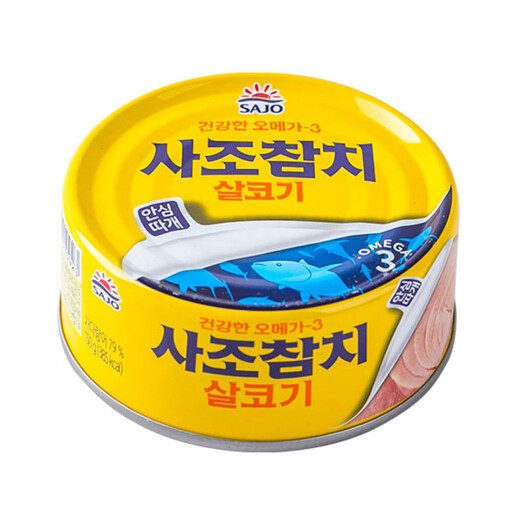 Image unavailable
A single 100g can may be useful for a smaller batch of filling. Confirm its packing medium and current salt panel on the exact pack before choosing it.
No. Sainsbury’s lists 0.42g salt per 100g drained for its checked brine multipack and 0.75g per 100g for its checked ready-to-use spring-water tuna. Check the current labels and compare figures only when their drained or as-sold basis is equivalent.
No. The NHS advises adults to have no more than 6g of salt a day; that is daily context, not a per-tin or per-pancake figure. Read the portion information on the tuna pack and consider the other ingredients in the filling.
Follow the instructions on the exact pack. Sainsbury’s checked brine multipack says to use opened tuna within one day, while the checked M&S product says within two days. Check the pack’s instructions for transferring and refrigerating any unused tuna.
No: tuna is fish. Check the exact pack’s allergen information, and take care with any bone warning when serving children or anyone who cannot safely manage bones; Tesco warns that its checked Tuna Chunks in Brine can contain minor bones.