For pasta, pizza or salad, check the sugars line on the exact tin rather than relying on the phrase ‘reduced sugar’: identified plain-tuna products from John West, Princes, Tesco and M&S list 0g or 0.0g sugars per 100g on their respective labels. Spring water gives you a plain base to season; brine calls for a closer look at salt, while oil-packed tuna needs to be considered alongside the oil already in the dish. A no-drain format changes preparation, not the need to check the current pack.
Who this choice matters to
Shoppers checking sugars
If you want tuna for an Italian-style dish without assuming that ‘reduced sugar’ describes the tin, the nutrition panel and ingredient list give you a more useful starting point. This matters particularly when moving from plain tuna to a flavoured or sauce-containing variety.
Cooks choosing a tuna base
For tomato pasta, pizza or a tuna-and-bean salad, the packing liquid affects how you use the tuna. Spring water leaves seasoning to the recipe; brine and oil make salt and added oil more relevant checks.
Hosts assembling food quickly
A no-drain tin may simplify preparation. If you are serving others or saving leftovers, also read the fish-allergen information, any bone warning and the opened-pack storage instructions.
What to check when buying
Start with sugars on the nutrition panel, then choose the packing liquid for the dish and decide whether avoiding draining matters to your preparation.
| Concern | What to check | Who this matters to |
|---|
| Sugars |
Read ‘of which sugars’ per 100g, noting whether the value is for drained tuna or the product as sold. Check ingredients when considering flavoured tins. |
If I want plain tuna for pasta without an unexpected sweet sauce, I need the sugars line for the exact tin rather than a ‘reduced sugar’ description. About 44% of consumers put confirming sugars first. |
| Packing liquid |
Choose between spring water, brine and oil; compare salt and fat on a like-for-like per-100g basis alongside the recipe's other ingredients. |
When the pasta already contains olive oil or the salad includes salty ingredients, I want the tuna's packing liquid to fit what is going into the dish. Getting that recipe fit right is the primary need for about 33% of consumers. |
| Preparation and handling |
Check for a no-drain format, the usable quantity, fish-allergen and bone information, and instructions for storing leftovers. |
For a quickly assembled spread, I would rather open and serve the tuna with little preparation, while knowing how to handle what remains. Roughly 23% of consumers prioritise that convenience and handling need. |
Common buying mistakes
-
Treating plain tins as interchangeable because they list 0g sugars
The packing liquid still affects the comparison. Tesco lists 6.4g fat and 159kcal per 100g for its sunflower-oil tuna, compared with 1.0g fat and 109kcal per 100g for its spring-water tuna; its brine and spring-water examples also list different salt values.
Compare the same per-100g basis for sugars, salt, fat and energy, then account for ingredients already in your recipe.
-
Reading 0g sugars as proof of ‘reduced sugar’
A sugars value describes the product on that label; it does not, by itself, show a reduction compared with another tuna product.
If sugars are your priority, choose by the current nutrition panel instead of assuming that a comparative phrase applies.
-
Leaving unused tuna in the opened tin
The identified Tesco and M&S product labels instruct shoppers to move unused contents to a non-metallic container, refrigerate them and consume them within 2 days.
Plan how much you will use, and follow the storage directions on the exact pack for any leftovers.
Brands to consider for plain tinned tuna
John West
Its No Drain Tuna Chunks with a Little Spring Water is a 3 x 100g option for assembling pasta or salad without a separate draining step.
- John West lists 0g sugars and 0.80g salt per 100g for this spring-water product.
- Those values do not describe every John West flavour or packing liquid; check the particular tin.
Princes
Its identified brine and spring-water products give cooks plain tuna options to mix into a sauce or salad.
- Princes lists 0.0g sugars per 100g drained for both Tuna Chunks in Brine and Sandwich Tuna in Spring Water.
- The brine product lists 0.9g salt per 100g drained; compare the exact product rather than treating the packing liquids as equivalent.
Tesco
Its identified plain-tuna products include brine, spring-water and sunflower-oil formats, making the packing liquid a useful point of comparison.
- Tesco lists 0g sugars per 100g for the identified examples in all three packing liquids.
- Their salt, fat and energy values differ. Tesco advises checking the physical pack because product information can change.
M&S
Its identified 160g Tuna Chunks in Spring Water is a plain option for dishes such as pasta bakes and salads.
- M&S lists 0.0g sugars and 0.75g salt per 100g for this product.
- Those figures apply to the identified spring-water tin; read the current pack when selecting another variant.
Tinned tuna selections on Joybuy
These tins cover spring-water, brine and sunflower-oil options for pasta and salads, including two John West no-drain formats. Use the packing liquid and preparation style to narrow the choice, then check the current pack's sugars and other nutrition values.
 No image available
John West No Drain Tuna Chunks in Springwater, 3 x 100g
A no-drain spring-water option when you want to add your own sauce or seasoning without a separate draining step. Check the sugars line and fish-allergen information on the current pack.
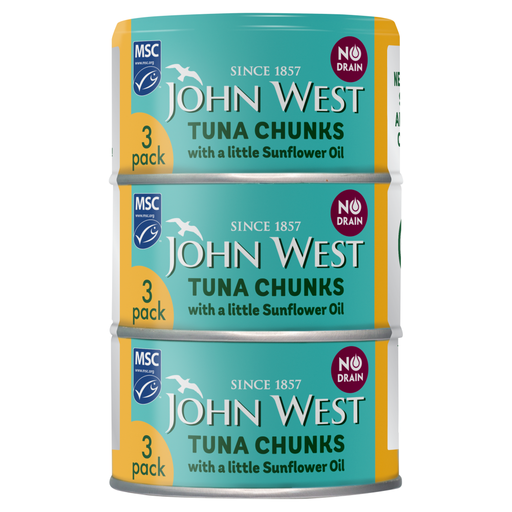 No image available
John West No Drain Tuna Chunks in Sunflower Oil, 3 x 100g
Consider this no-drain oil-packed option for a dish where you want oil with the tuna. If the recipe already includes oil, compare the pack's fat and sugars values before choosing it.
 No image available
John West Tuna Chunks in Springwater, 4 x 125g
A spring-water tuna choice for pasta or salad when you plan to add tomato, herbs or other seasoning. Follow this pack's preparation directions if avoiding a draining step is important.
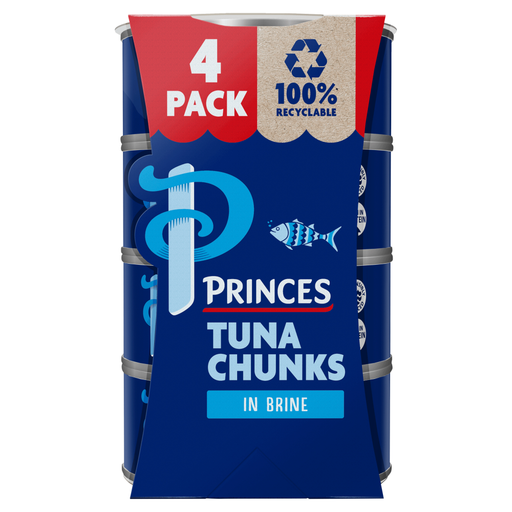 No image available
Princes Tuna Chunks in Brine, 4 x 145g
A brine-packed choice for pasta or other cooked dishes if you are happy to drain the tuna. Check the salt value alongside any salty ingredients in the recipe, as well as the current sugars line.
 No image available
Morrisons Fad Free Tuna Chunks in Spring Water, 145g
A spring-water option for a pasta dish or salad that you intend to season yourself. Compare the current pack's sugars and salt values with the other tins you are considering.
Questions about tinned tuna
Does 0g sugars mean a tuna tin is ‘reduced sugar’?
No: a 0g sugars line describes that product, not a reduction compared with another one. Several identified plain-tuna products list 0g or 0.0g sugars per 100g, so read the current nutrition panel and its drained or as-sold basis when choosing.
Should I choose spring water, brine or oil for tuna pasta?
Spring water works as a plain base when you are adding your own sauce or oil. Brine makes the salt line worth checking, while oil-packed tuna should be considered alongside any oil already in the pasta; compare nutrition values on the same per-100g basis.
What should I do with tinned tuna left after opening?
Follow the instructions on your tin. The identified Tesco and M&S labels say to transfer unused tuna to a non-metallic container, refrigerate it and consume it within 2 days.
Does tinned tuna contain a fish allergen?
Yes, tuna is fish. Check the allergen information on the exact tin, particularly for a flavoured variety, and read any warning about small bones before serving.


