Shoppers comparing sugars
If the tuna’s declared sugar content matters to you, compare nutrition panels for the exact products. Check whether each figure is for drained tuna before comparing it with another tin.


For a picnic lunch, compare the sugars figure on the exact tin rather than assuming that spring-water tuna has a particular value: the cited plain tins declare between 0g and less than 0.5g sugars per 100g. Choose a can size that fits the number of people eating, and keep opened tuna or prepared sandwiches cool during the picnic.
If the tuna’s declared sugar content matters to you, compare nutrition panels for the exact products. Check whether each figure is for drained tuna before comparing it with another tin.
A smaller can may help you open only what you plan to use. Tesco Groceries lists three 80g cans in its spring-water pack, each containing 56g drained tuna; compare that edible portion with your sandwich, wrap or salad plans.
Separate cans let you open portions as needed for a group or for later lunches. If you prepare tuna sandwiches or salads before leaving, plan how to keep them cool until they are eaten.
Start with the sugars figure and its measurement basis, then choose a portion format and plan how prepared food will stay cool.
| Priority | What to check | Your needs |
|---|---|---|
| Declared sugars | Compare sugars per 100g on the same drained or undrained basis. Read the ingredients if choosing between plain tuna and a flavoured product; additions to the finished lunch need their own labels checked. | I want to choose the tuna base by its declared sugars, then decide what goes into my sandwich or salad. The cited Tesco and John West spring-water products declare 0g per 100g drained, while Sainsbury’s declares less than 0.5g per 100g drained, according to their product listings. |
| Portion format | Check the number of cans, net weight and drained weight. Decide how many cans you expect to open at the picnic and what you will do with any leftovers. | For one lunch, I would rather check the edible portion than rely on the weight printed most prominently on the pack. Tesco Groceries lists 56g drained tuna in each can of its 3 x 80g pack; a group might instead use several separate cans. |
| Salt | Compare salt per 100g on a like-for-like basis alongside sugars. A sugars figure alone does not tell you the salt content. | If salt also matters to my choice, I need both figures from the exact tin. The cited John West four-pack lists 0.80g salt per 100g drained on Joybuy, while the cited Tesco product lists 0.90g per 100g on Tesco Groceries. |
| Picnic storage | Follow the tin’s instructions after opening. Keep foods you would normally refrigerate, including prepared sandwiches and salads, cool during the picnic. | If I make tuna sandwiches before leaving, I need a way to carry and hold them cool. The Food Standards Agency says bacterial risk increases after four hours or more at 8°C and above; in extremely hot weather, use food that has been out of the fridge within two hours. |
The cited plain spring-water tins do not all declare the same value: their sugars figures range from 0g to less than 0.5g per 100g. Bread, relish or other additions also affect the finished lunch.
Compare the exact tin’s nutrition panel on a like-for-like basis, then check the labels of anything you add.
The liquid contributes to a tin’s net weight. Tesco Groceries, for example, lists 80g net and 56g drained for each can in its three-pack.
Use drained weight, where stated, to work out how many cans fit the portions you plan to serve.
The Food Standards Agency says foods normally kept in the fridge must also be kept cool on a picnic. At 8°C and above, bacterial risk increases after four hours or more; in extremely hot weather, its guidance says to use food that has been out of the fridge within two hours.
Carry prepared tuna sandwiches and opened-tin leftovers in a cool bag or cool box with ice packs, and return remaining food to it promptly.
The NHS advises people who are pregnant to have no more than four cans of tuna or two tuna steaks a week because tuna can contain pollutants, including mercury. The Food Standards Agency explains that the can guidance is based on a medium can containing around 140g drained tuna.
Include tuna eaten at a picnic when considering the NHS weekly guidance, and check the drained quantity when cans differ in size.
The cited spring-water tuna comes as four separate 125g cans, a format to consider when opening portions at different times.
Princes has a plain spring-water tuna option for sandwiches and salads; check the pack size of the version you choose.
Tesco’s cited spring-water pack contains three 80g cans, with 56g drained tuna in each can.
The cited own-label spring-water tuna is a single 145g tin made with skipjack tuna.
The cited M&S spring-water tuna is a 160g tin to consider when a larger single pack fits the meal.
These Joybuy listings are for tuna chunks in spring water, including single tins and multipacks. Compare the current pack labels for sugars and portion size, especially where the nutrition or drained-weight basis matters to your choice.
 No image available
Four separate cans let you open portions as needed for a picnic or later lunches. The Joybuy listing declares 0g sugars and 0.80g salt per 100g drained. After opening, transfer unused tuna to a non-metallic container, refrigerate it and consume it within two days.
 No image available
Six separate 145g cans are a format to consider for several eaters or lunches. Check the drained weight on the pack to judge the edible portion, and compare its sugars figure on the same basis as other tins. Transfer unused tuna to a lidded non-metallic container, refrigerate it and consume it within two days of opening.
 No image available
The no-drain format avoids a draining step when assembling lunch, and the three cans can be opened separately. Check the nutrition panel’s measurement basis before comparing its sugars figure with drained-tuna values. Refrigerate opened tuna and consume it within two days, following the pack instructions.
 No image available
A single 145g tin avoids opening a multipack for one picnic meal. Check its drained weight if the edible portion is decisive. After opening, transfer unused tuna to a non-metallic container, refrigerate it and consume it within two days.
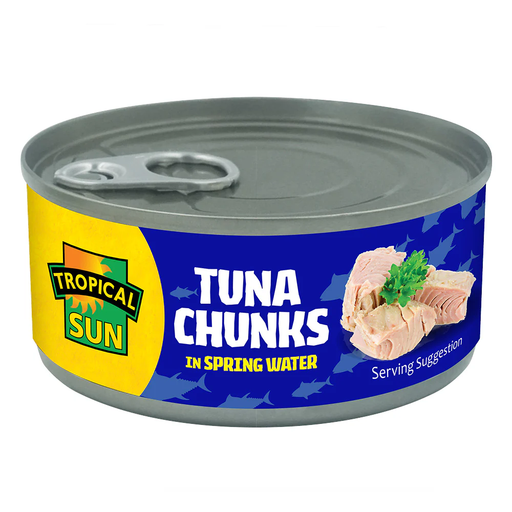 No image available
The listed 160g size gives a starting point for portion planning; check the pack for its can count and the basis of its nutrition figures before comparing it with drained-tuna products. The product information warns of possible traces of soybeans and wheat as well as fish, so check the current allergen label. Refrigerate unused tuna immediately after opening and consume it within two days.
No. The cited product labels range from 0g to less than 0.5g sugars per 100g, so check the exact tin and whether the figure refers to drained tuna. Do not assume the packing medium establishes a particular nutrition value.
The cited unopened tins have cool, dry storage instructions, but opening the tuna changes the plan: follow its refrigeration instructions for leftovers. Prepared tuna sandwiches and salads should be kept cool on a picnic, according to the Food Standards Agency.
Keep prepared tuna sandwiches and salads cool rather than planning to leave them warm. The Food Standards Agency says bacterial risk increases after four hours or more at 8°C and above; in extremely hot weather, use food that has been out of the fridge within two hours.
The NHS advises people who are pregnant not to eat more than four cans of tuna or two tuna steaks a week. The Food Standards Agency says the can guidance assumes a medium can of around 140g drained tuna, so consider the size of the cans eaten across the week, including at picnics.