Choose picnic tuna by checking the individual tin, not just the brand: the Marine Conservation Society says seafood sourcing depends on the species, where it was caught and how. Look for sourcing details and any MSC claim on the exact product. Spring-water chunks work for mixed fillings, while no-drain tuna avoids disposing of liquid outdoors; choose an oil-packed format if it suits the recipe.
Who is this for?
Picnic planners checking sourcing
If sourcing matters to you, look for the species, catch area or method where stated, and check any certification claim on the tin you intend to buy. The Marine Conservation Society considers what a fish is, where it comes from and how it was caught when assessing seafood.
People preparing lunch outdoors
For sandwiches, wraps or salads assembled away from a kitchen, consider whether you have somewhere to drain a conventional tin. A no-drain format avoids that step; once tuna is opened or made into a filling, follow its storage directions and keep the prepared food chilled.
Sandwich and salad makers comparing formats
Chunks can be mixed into a filling, while larger steak pieces suit a salad where you want distinct pieces of tuna. Check whether spring water, brine or sunflower oil suits the dish, and compare the nutrition information on the exact packs if it matters to your choice.
What should you check?
Start with the sourcing details on the particular tin, then choose a format that fits how and where you will prepare the picnic meal.
| Priority |
What to check |
Your needs |
| Sourcing |
Read the species, catch area and fishing method where stated. Check any MSC claim on the exact pack; the Marine Conservation Society assesses seafood using species, origin and method. |
I want enough detail about this particular tuna to assess its sourcing, rather than relying on the brand name alone. |
| Meal format |
Choose chunks for mixed sandwich or wrap fillings, or larger steak pieces when distinct pieces suit the salad. Check the packing medium against the recipe. |
For a filling, I want pieces that mix easily; for a salad, I may prefer the tuna to remain separate. |
| Outdoor preparation |
Check whether the tin needs draining and how much tuna it contains. A no-drain format avoids disposing of packing liquid at the picnic. |
If I am assembling lunch without a sink, I want to know whether I can open and portion the tuna without draining it. |
| Nutrition label |
Compare like-for-like figures on the exact products, using per 100g drained where given. Check the serving size and whether the tuna is packed in water, brine or oil. |
When choosing between packing media, I want the label figures for the versions I might actually put in the sandwiches. |
| Storage and allergens |
Read the unopened and after-opening storage instructions, and keep prepared tuna fillings chilled. Check the ingredients and fish allergen declaration before serving. |
I need a way to carry the prepared filling chilled and to check the label for anyone eating it. |
Picnic buying mistakes to avoid
-
Assuming all tuna has the same sourcing
The word ‘tuna’ alone does not identify the species, catch location or method. Those distinctions matter to the Marine Conservation Society’s seafood assessments.
Check the particular pack for those details and use the Marine Conservation Society’s Good Fish Guide when the information is specific enough to identify the source.
-
Applying a brand claim to every variant
Products under one brand can differ in certification claims, packing medium and other label details. For example, Sainsbury’s lists an MSC claim for a particular John West spring-water product, while M&S describes its spring-water tuna using its Forever Fish policy and pole-and-line sourcing.
Read the current listing and physical pack for the exact variant, especially if an MSC claim is part of your decision.
-
Counting tins instead of planning portions
Net weight, drained weight and format affect how much tuna is available for the sandwiches or salad you plan to make. A no-drain portion and a conventional tin need not serve the same number of people.
Check the stated weights and portion count against the meal, then choose chunks or larger pieces to suit how you will serve it.
-
Overlooking instructions after opening
Opened tuna and prepared fillings need more care than unopened tins. Storage and use-by instructions after opening can differ between products.
Keep prepared fillings chilled for the picnic and follow the directions on the tin for transferring, refrigerating and using any leftovers.
Brand and retailer references
These ranges offer different sourcing information and formats; check the individual product rather than assuming every tin from a brand has the same claims.
Princes
Princes lists MSC tuna chunks in spring water, brine and sunflower oil in its product catalogue, as well as drained tuna steak formats.
- Princes states that it has completed its commitment for all its tuna to be MSC certified.
- Check the MSC claim, cut and packing medium on the exact pack you choose.
John West
John West offers different tuna formats, including spring-water chunks and no-drain products.
- Sainsbury’s lists a specific John West spring-water product with an MSC-certified fishery claim; John West also offers can-code traceability.
- Use the individual product label to establish which sourcing claims apply to the variant in your basket.
Sainsbury's
Sainsbury’s own-label tuna includes 145g chunks in spring water and sunflower oil.
- Its spring-water listing states that the tuna comes from a fishery certified to the MSC environmental standard; its sunflower-oil listing describes pole-and-line catching.
- Check the sourcing claim and nutrition panel on the packing medium you select rather than transferring details between the two products.
M&S
M&S lists spring-water tuna chunks described as pole-and-line caught and sourced under its Forever Fish policy.
- The product listing gives a stated fishing method alongside the retailer’s own sourcing policy.
- If you specifically want MSC-labelled tuna, look for that claim on the exact pack; the Forever Fish description is not itself an MSC claim.
Tesco
Tesco’s tinned-tuna aisle includes own-label and branded products in different formats.
- The range gives shoppers formats and brands to compare for a picnic meal.
- Assess sourcing from the individual tin’s label or listing, not from its place in the wider aisle.
A Joybuy picnic option
This no-drain, sunflower-oil-packed option suits a picnic where you want to open portions without disposing of packing liquid. Check its current pack for the sourcing details that matter to you.
 No image available
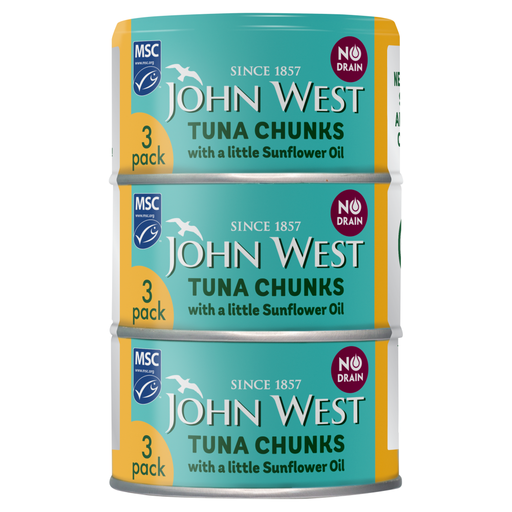
John West No Drain Tuna Chunks in Sunflower Oil, 3 x 100g
The no-drain format avoids a draining step when portioning tuna for picnic fillings.
The pack contains three 100g cans of chunks in sunflower oil. The listing claims sourcing from an MSC-certified fishery; check the current pack’s certification, species and catch details before relying on that claim.
Contains fish. The product description warns that some bones may remain and instructs refrigeration after opening and consumption within two days.
Joybuy
Frequently asked questions
Does an MSC claim on one tin apply to every tuna product from that brand?
No. Check the claim on the exact product you intend to buy. A brand’s sourcing statement does not tell you that every variant carries identical certification or catch details; the Marine Conservation Society also advises considering species, origin and fishing method.
Which tuna format works for a picnic sandwich or wrap?
Chunks mix into sandwich and wrap fillings. Spring-water chunks are an option when you plan to add other ingredients; a no-drain format avoids disposing of liquid outdoors, while oil-packed tuna suits recipes where you want the oil included. Check the portion size before choosing.
What should I do with tuna left after opening a tin?
Follow that tin’s directions for transferring and refrigerating unused tuna, and check its stated period for use after opening. Keep any prepared picnic filling chilled rather than applying one leftover rule to every product.
What if someone eating the picnic needs to avoid fish?
Tuna is fish. Check the current pack’s ingredients and allergen declaration before preparing or serving the meal.


