What matters when choosing?
Decide where you will prepare the tuna, then check how much usable fish you need and whether the packing liquid suits the dish. The groups below are organised by consumers’ primary picnic-buying concern.
| Concern |
What to check |
Who this matters to |
| Preparation and mess |
Look for no-drain or ready-to-eat wording, and check how the pack opens. |
If I am mixing food at the picnic rather than at home, I want to handle as little liquid as possible. About 31% of consumers put easy outdoor preparation first. |
| Group portions |
Check the number of tins, net and drained weights, and instructions for opened contents. |
When I am making food for several people, I need enough tuna without leaving an opened tin unused. Portion planning is the primary concern for about 31% of consumers. |
| Liquid and recipe fit |
Read the ingredients and compare nutrition on the same per-100g basis; check the fish allergen declaration. |
For a dressed salad, I may want spring-water tuna; for another dish, I may want the oil as part of it. About 23% of consumers chiefly choose by packing liquid, nutrition and recipe fit. |
| Sourcing claims |
Find the certification mark, catch-method statement or sourcing-policy wording on the specific pack. |
If a stated fishing method or certification determines what I buy, a general impression of the brand is not enough. Specific sourcing information comes first for about 15% of consumers. |
Tinned tuna on Joybuy
These packs cover no-drain chunks for preparation at the picnic, and spring-water, brine and sunflower-oil chunks for dishes prepared ahead. Choose by the packing liquid and pack size that fit your plan.
 No image available
John West No Drain Tuna Chunks in Springwater, 3 × 100g
Consider this pack if you plan to open tuna at the picnic and want to avoid draining it. It contains three 100g cans of spring-water tuna chunks. Check the current pack for its opening and storage instructions, and its fish allergen declaration.
View on Joybuy
 No image available
John West Tuna Chunks in Springwater, 4 × 125g
Consider these chunks for sandwiches or salads assembled before the picnic. The pack contains four 125g cans. Check the instructions for this specific pack before deciding how to handle its packing liquid, and check the fish allergen declaration.
View on Joybuy
 No image available
Morrisons Fad Free Tuna Chunks in Spring Water, 145g (6 packs)
Consider these spring-water chunks for a picnic dish prepared ahead. The product name describes 145g cans in a six-pack; confirm the can count on the current listing or pack when planning group portions. Check the drained weight and fish allergen declaration.
View on Joybuy
 No image available
Princes Tuna Chunks in Brine, 4 × 145g
This four-can pack is an option when you want chunks in brine for food prepared before leaving. Each can is labelled 145g. Plan how to drain the brine, and check the current pack’s nutrition and fish allergen declaration.
View on Joybuy
 No image available
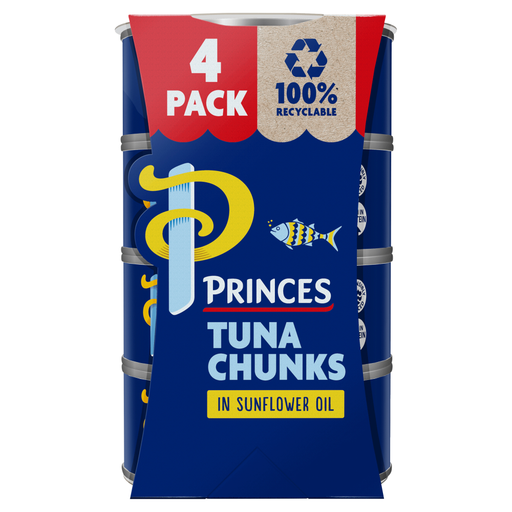
Princes Tuna Chunks in Sunflower Oil, 4 × 145g
Consider this pack when sunflower oil suits the picnic dish you are making. It contains four 145g cans of tuna chunks in sunflower oil. Check the nutrition panel for this exact variant, whether you intend to use the oil, and the fish allergen declaration.
View on Joybuy
Common questions
Which tuna pack is easier to use at a picnic?
A no-drain pack avoids draining tuna at the picnic site; Asda describes its listed John West No Drain spring-water chunks as ready to eat. If you are making sandwiches or salad at home, standard spring-water chunks are another option, provided you have a way to handle the liquid before packing.
Should I choose spring water or oil for picnic food?
Choose by whether you want the packing liquid in the finished dish, then compare the exact nutrition labels. Princes lists 171 kcal and 6.5g fat per 100g for its drained sunflower-oil tuna, compared with 122 kcal and 1g fat per 100g for its drained spring-water product; those values are specific to those variants.
What should I do with tuna left after opening a tin?
Follow the storage instruction on that pack. For its listed spring-water chunks, Sainsbury’s says to transfer unused contents to a non-metallic container, refrigerate and use within one day. Check the time stated on other products rather than applying that instruction to every tin.
What does NHS guidance say about tuna during pregnancy?
For pregnancy, the NHS advises no more than four cans of tuna or two tuna steaks a week because tuna can contain pollutants including mercury. That limit has a specific pregnancy context; it is not a general serving size for everyone at a picnic.
Does tinned tuna contain a declared fish allergen?
The listed tuna products identify tuna as fish in their ingredients or allergen information. Check the current label of the precise pack before serving it, particularly when preparing shared picnic food.


