For a picnic lunch, compare the drained weight and can count with the amount of tuna you will actually use; a larger pack is not automatically better value. Standard chunks suit food you can prepare where draining is convenient, while no-drain tuna reduces that step. Choose tuna in oil when it suits the recipe, and check its nutrition panel rather than assuming it matches tuna in spring water.
Who is this for?
Picnic planners feeding several people
If you are making a batch of sandwiches, wraps or salads, check how much drained tuna the cans provide and whether you will use the whole pack. Can count alone does not tell you how much tuna is available for the meal.
People assembling lunch with less mess
If you will make the food away from a sink or shortly before leaving, a no-drain or ready-drained format removes a preparation step. Check the stated pack format so it still fits the number of portions you need.
Shoppers checking ingredients and sourcing
If the packing medium or sourcing matters to you, read the ingredients, nutrition information and certification details on the particular tin. A statement about a brand does not replace the information on the pack you buy.
What should you compare?
Start with the amount and format needed for the picnic, then consider how you will prepare and serve the tuna.
Standard chunks
Choose when: You can drain the tuna while preparing sandwiches or salads for several people.
Bear in mind: Draining takes an extra step, and a multipack is useful only if its cans suit your plans.
No-drain tuna
Choose when: You want to add tuna to lunch without draining it first.
Bear in mind: Its practical advantage is preparation convenience; still check how much tuna the pack contains.
Tuna in oil
Choose when: Oil suits the sandwich or salad you intend to make.
Bear in mind: Packing media can differ on the nutrition panel, even within the same brand.
| Priority |
What to check |
Your needs |
| Usable amount |
Compare stated drained weights on the same basis. Check can count, can size and whether the whole multipack will be used. |
For a group picnic, I need enough tuna for the sandwiches or salads planned, without choosing by the number of tins alone. |
| Preparation |
Check whether the tin is labelled no-drain or ready-drained. Look at the portion format and any instructions to drain before use. |
If I am assembling lunch away from a sink, skipping the draining step matters more to me than it would when preparing everything at home. |
| Packing medium |
Check whether the tuna is in spring water, brine or sunflower oil. Read energy, fat and salt figures on a comparable per-100g basis, noting whether the label specifies drained weight. |
I want the tuna to work with the dressing or other ingredients in my picnic recipe. Princes lists 99 kcal and 0.5g fat per 100g drained for its spring-water chunks, compared with 180 kcal and 9.5g fat for its sunflower-oil chunks. |
| Sourcing information |
Look for the stated certification or sourcing details on the specific tin. Check the species and catch information where the pack provides them. |
If sourcing influences my choice, I want to see the relevant claim on the product I take home, not rely solely on a general brand statement. |
| Leftovers |
Read the tin’s instructions for opened tuna and plan how you will store any unused portion. |
I may not need a whole tin for the picnic, so I want a workable plan for the remainder rather than leaving an opened can in the picnic bag. |
Common buying mistakes
-
Judging a multipack by its can count
Nominal can sizes and drained weights can differ, so four tins do not necessarily provide the amount your picnic needs.
Compare the stated drained weight on the same basis, then decide whether you will use all the cans.
-
Choosing no-drain tuna without needing the format
No-drain tuna removes a preparation step, but that matters most when draining a tin would be awkward.
Think about where you will assemble the food. If you can drain tuna while preparing lunch at home, compare the usable amount in standard chunks too.
-
Assuming the packing medium changes only the recipe
Princes lists 99 kcal and 0.5g fat per 100g drained for its spring-water chunks, and 180 kcal and 9.5g fat per 100g drained for its sunflower-oil chunks.
Choose the packing medium for your recipe and compare nutrition panels on the same stated basis.
-
Leaving opened tuna in its can
Sainsbury’s instructions for its listed Princes tuna in brine say to put leftovers in a sealed container in the fridge and use them within two days.
Follow the instructions on your particular tin and arrange suitable storage for any tuna left after preparation.
Brand and retailer references
These examples show formats and label details worth comparing; a brand name alone does not settle the picnic choice.
Princes
Princes lists conventional spring-water chunks alongside a drained range described as ready to use.
- Its spring-water chunks are listed in several sizes, including 145g and 4 x 145g, giving shoppers different pack formats to consider.
- Princes says it has completed a commitment for all its tuna to be MSC certified. Check the certification information on the specific tin you choose.
John West
Tesco Groceries lists John West no-drain tuna chunks in spring water, a format to consider when draining would be inconvenient.
- The no-drain designation gives a clear preparation distinction from tuna that needs draining.
- Check the exact variant and pack label; do not assume every John West tuna tin is no-drain.
Tesco
Tesco Groceries lists own-label spring-water tuna in individual cans and multipacks.
- Its listed formats include a 145g can and a 4 x 145g pack, allowing a comparison of pack size and stated drained weight.
- Check the details of the pack you intend to buy rather than assuming the larger format suits your picnic.
Sainsbury’s
Sainsbury’s lists own-label tuna chunks in sunflower oil, a packing-medium option for recipes where oil is wanted.
- Its product information identifies the packing medium and provides pack-level details to inspect.
- Read the ingredients and nutrition panel of the specific product when comparing it with tuna packed in water or brine.
Tinned tuna options on Joybuy
These tins cover no-drain tuna, spring-water chunks, brine-packed chunks and tuna in sunflower oil for picnic sandwiches and salads. Use the format and pack size to narrow your choice, then check the particular tin’s label.
 Image unavailable
John West No Drain Tuna Chunks in Springwater, 3 x 100g
The no-drain format suits sandwiches or salads assembled when draining a tin would be inconvenient. The pack contains three 100g cans; check the label for the amount of tuna you need.
View on Joybuy
 Image unavailable
Princes Tuna Chunks in Brine, 4 x 145g
Four 145g cans offer separate tins for sandwiches or salads made for several people. This is a format to drain during preparation; check the drained weight when planning portions.
View on Joybuy
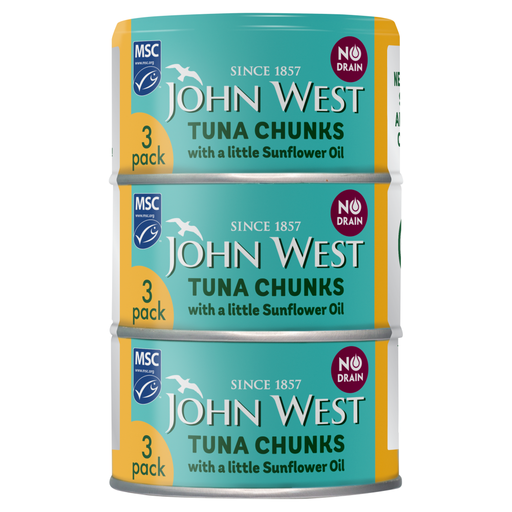 Image unavailable
John West No Drain Tuna Chunks in Sunflower Oil, 3 x 100g
This combines a no-drain format with sunflower oil for a recipe where that packing medium suits the other ingredients. The pack contains three 100g cans; read its own nutrition panel when comparing packing media.
View on Joybuy
 Image unavailable
John West Tuna Chunks in Springwater, 4 x 125g
Four 125g cans provide a spring-water option for picnic sandwiches or salads. Check this pack’s instructions if avoiding draining is important: its name does not identify it as no-drain.
View on Joybuy
 Image unavailable
Princes Tuna Chunks in Sunflower Oil, 4 x 145g
Four 145g cans provide an oil-packed option for sandwiches, salads or pasta. Check the can’s drained weight and the basis of its nutrition figures when comparing it with another format.
View on Joybuy
Picnic tuna questions
Does a multipack contain more usable tuna?
Not necessarily compared with another pack: check the can count and stated drained weight of each option. A multipack makes practical sense when you expect to use its cans, rather than choosing by pack size alone.
Should I use tuna in spring water or sunflower oil?
Choose the packing medium that suits your picnic recipe, then compare the labels if nutrition figures matter to your choice. Princes lists 99 kcal and 0.5g fat per 100g drained for its spring-water chunks, versus 180 kcal and 9.5g fat per 100g drained for its sunflower-oil chunks; those figures describe the named products, not every tuna tin.
How should I store tuna left after opening a tin?
Follow the storage directions on the particular tin. Sainsbury’s listing for Princes tuna in brine instructs shoppers to put leftovers in a sealed container in the fridge and use them within two days; it does not establish an outdoor storage period for a prepared picnic lunch.
Can I rely on a brand’s sourcing statement?
Check the certification or sourcing information on the specific tin. Princes states that it has completed a commitment for all its tuna to be MSC certified, but the pack is the place to confirm the claim relevant to your purchase.


