People preparing several picnic lunches
If you are making sandwiches, wraps or pasta salad ahead of time, consider how much drained tuna each tin provides and whether separate tins or one larger can better fit the portions you plan to make.


For sandwiches, wraps or salads made before a picnic, compare tinned tuna by drained weight, pack size and the exact product’s label, not just the weight printed on the front of the tin. A no-drain format is worth considering if you will open it away from a sink; chunk-and-flake sandwich tuna offers a different texture from standard chunks. Whichever format you choose, follow its instructions after opening and keep fillings that require chilling cold during transport.
If you are making sandwiches, wraps or pasta salad ahead of time, consider how much drained tuna each tin provides and whether separate tins or one larger can better fit the portions you plan to make.
If there will be nowhere convenient to drain a tin, a no-drain format may be easier to use. Check the opening method on the exact pack as well as its draining instructions.
If certification or catch method affects your choice, look at the particular tin. An MSC label and a stated pole-and-line catch method describe different product-specific claims.
Start with where you will open the tuna and how many lunches you are making. Then compare the usable quantity, packing medium and label details of the formats that fit.
| Priority | What to check | Your needs |
|---|---|---|
| Serving at the picnic | Check whether the exact pack says no-drain and how it opens. Standard chunks and sandwich tuna have different textures; Princes describes its Sandwich Tuna as a mixture of chunks and flakes. | If I am opening the tin away from a sink, draining and the opening method matter. For a mixed sandwich filling, I may prefer flakes to intact chunks. |
| Usable quantity | Compare drained weight, the number of tins and any stated cost per kg of drained tuna. Tesco lists 280g drained tuna in its 400g spring-water can; gross tin weight includes packing liquid. | For one lunch, a separate tin may be convenient. When making several portions, I want to know how much tuna the pack provides after draining. |
| Filling and nutrition label | Check whether the tuna is packed in spring water, brine or oil, and compare nutrition values on the same per-100g basis. Tesco lists 0.90g salt per 100g drained for its 400g spring-water product; Princes lists 0.85g per 100g drained for its spring-water chunks. | I want the packing medium to suit the filling I am making. If salt matters to my choice, I will compare the exact packs rather than assume all spring-water tuna has the same values. |
| Sourcing label | Look for an MSC label or a stated catch method on the specific product. Sainsbury’s describes its 4 x 145g spring-water tuna as sourced from fisheries independently certified to the MSC standard; M&S describes its spring-water chunks as pole-and-line caught. | If sourcing is a deciding factor for me, I want to identify the claim on the tin I am buying, not infer it from the retailer’s name. |
| Storage after opening | Read the pack’s refrigeration and use-by instructions for opened tuna. Tesco specifies a covered, non-metallic container and use within two days for its 400g product; Sainsbury’s specifies use within one day for its 4 x 145g pack. | If I am preparing lunch ahead of time or expect leftovers, I need a way to keep the opened tuna refrigerated and use it within that pack’s stated period. |
Packing liquid accounts for some of that weight: Tesco’s 400g spring-water tin lists 280g drained tuna.
Use drained weight when planning portions, and compare a stated cost per kg of drained tuna when assessing different pack formats.
Values differ between exact products. Tesco lists 0.90g salt and 24.9g protein per 100g drained for its 400g tin, while Princes lists 0.85g salt and 23.5g protein per 100g drained for its spring-water chunks.
Compare the panels on the packs you are choosing, using the same stated basis.
Opened tuna has refrigeration instructions that do not apply to an unopened cupboard tin. Prepared sandwiches or salads containing ingredients that require chilling also need suitable cold storage during the trip.
Follow the tuna pack’s instructions after opening. If the finished lunch needs chilling, arrange cold transport and observe its use-by date.
MSC certification and a pole-and-line catch statement describe different aspects of sourcing, and a claim on one product need not apply to another pack from the same brand.
Check the claim on the particular tin or its current product listing.
These examples show how formats and label details can vary by product; they do not describe every tin sold under each name.
Tesco lists spring-water tuna chunks in different pack formats, including a 400g tin.
Princes describes both spring-water tuna chunks and a separate Sandwich Tuna format.
John West describes its No Drain spring-water tuna as ready to eat from a twist-and-pull pack.
Sainsbury’s describes its 4 x 145g spring-water tuna chunks as sourced from fisheries independently certified to the MSC standard.
M&S describes its spring-water tuna chunks as pole-and-line caught under its Forever Fish sourcing policy.
These tins include a named no-drain pack, spring-water chunks, and brine- and oil-packed multipacks for different picnic fillings and portion plans. Check each pack’s opening and draining instructions before relying on it for serving away from a kitchen.
 No image available
The named no-drain format suits a lunch that will be assembled away from a sink. The pack contains three 100g cans; check the opening method on the exact cans if you will not have a can opener.
 No image available
Four separate tins offer portions for repeat picnic lunches using spring-water tuna chunks. Check this exact pack’s draining instructions before choosing it for a location without a sink.
 No image available
The four-tin pack can be portioned across several sandwiches or salads. These chunks are packed in brine rather than spring water, so check whether that medium suits the filling you plan to make.
 No image available
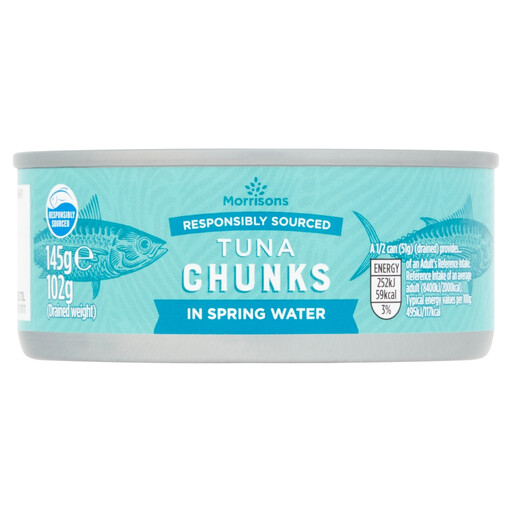
This single 145g tin is an option when you are planning one spring-water tuna lunch rather than opening a multipack. Check its opening and draining instructions if you intend to assemble the meal at the picnic.
 No image available
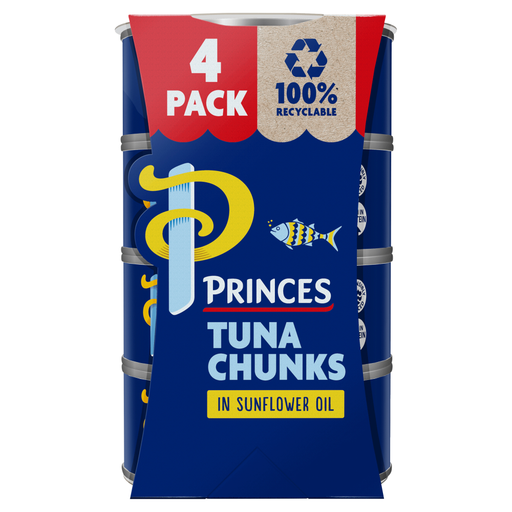
Four separate tins suit lunches made on different days. Sunflower oil is the packing medium, so consider how it fits the dressing or other ingredients; use the exact pack label for nutrition comparisons.
Use drained weight to work out how much tuna is available for sandwiches or salads. Tesco’s 400g spring-water tin, for example, lists 280g drained tuna; a stated cost per kg of drained weight also gives a common basis for comparing packs.
Consider a pack explicitly labelled no-drain. John West describes its No Drain spring-water tuna as ready to eat with a twist-and-pull opening; check the exact product’s opening instructions rather than assuming another tin works the same way.
Follow the particular pack’s refrigeration instructions. Tesco says to transfer leftovers from its 400g tin to a covered, non-metallic container and use them within two days, while Sainsbury’s specifies use within one day for its 4 x 145g spring-water pack.
Look for the claim on the exact tin or its current listing. Sainsbury’s describes its 4 x 145g spring-water product as sourced from fisheries independently certified to the MSC standard; M&S describes its spring-water chunks as pole-and-line caught. Those statements do not establish the claims for every product from either retailer.
Yes. NHS guidance says pregnant people should eat no more than four cans of tuna or two tuna steaks a week. Count tuna across the meals eaten that week, not just the picnic lunch.