Shared-meal shoppers
If several people will have tuna with pie and mash, the useful quantity is the fish left after draining. Check that the tins you plan to open provide enough for the meal.


For pie and mash night, a multipack lets you open only the tins needed and keep the rest sealed; a larger single can makes sense when the meal will use its drained contents promptly. Check drained weight, packing liquid and salt on the exact product, and plan how you will store any leftovers.
If several people will have tuna with pie and mash, the useful quantity is the fish left after draining. Check that the tins you plan to open provide enough for the meal.
If you use tuna occasionally, separate smaller tins can be easier to manage than opening one large can. The storage directions on the exact product matter if any tuna remains.
If salt, packing liquid, fish allergen information or sourcing claims affect your choice, compare the individual products rather than treating all tuna chunks as interchangeable.
| Concern | What to check | Who this matters to |
|---|---|---|
| Drained quantity | Compare drained weight with the portions you intend to serve. With a multipack, unopened tins can be kept for another occasion. | For a shared meal, I need enough fish after draining without opening more tins than we will use. About 36% of consumers put usable quantity first. |
| Nutrition and packing liquid | Read the ingredients and nutrition panel on the exact tin, including salt per 100g drained where stated. | If salt or packing liquid affects my choice, I want to compare labels rather than assume similar-looking tins match. Around 29% of consumers put nutrition and packing liquid first. |
| Sourcing claims | Look for certification or capture-method wording on the individual product, and distinguish it from a retailer's own sourcing policy. | When choosing tuna for the meal, I want the sourcing statement on the tin I actually buy. About 21% of consumers put sourcing credentials first. |
| Opened-tin leftovers | Match tin size to what you will use now, and read the product's refrigeration and use-by-opening instructions. | If I only need a little tuna, I would rather leave another tin sealed than have opened fish left over. Roughly 14% of consumers put avoiding leftovers first. |
A tin's labelled weight and its drained weight are different measures. Tesco's listed 400g spring-water can, for example, has a drained weight of 280g.
Check drained weight on the product you intend to serve, then work out how many tins the meal needs.
The checked Sainsbury's spring-water chunks list 0.12g salt per 100g drained, while the checked Asda chunks list 0.90g on the same basis. The packing liquid alone does not settle that comparison.
Read the nutrition panel of the exact product, using the same per-100g basis when comparing tins.
The checked product labels direct shoppers to refrigerate unused tuna in a non-metallic container and use it within the product-specific period of one or two days.
Choose separate tins if you may not use a large can promptly, or check its label before planning another meal with the leftovers.
These examples describe particular tuna products and pack formats, not every product made by each brand.
The checked Asda listing is for John West spring-water chunks in a 4 × 132g pack.
Princes lists spring-water tuna chunks in several pack sizes; the Joybuy selection below is a brine-packed four-pack.
Tesco's checked own-label spring-water tuna comes in a 400g can with 280g drained weight.
The checked own-label spring-water chunks come as four 145g tins, with stated pole-and-line and MSC sourcing claims for that product.
Asda's checked own-label spring-water chunks also come as four 145g tins.
The checked M&S product is a 160g tin of spring-water chunks. M&S describes it as pole-and-line caught under its Forever Fish policy.
These tuna chunks include spring-water multipacks, a single tin, a no-drain format and a brine-packed four-pack. Choose by how much you will use for pie and mash, then check the exact pack's drained weight and label.
 No image available
For a shared meal or several occasions, open the separate tins as needed and leave the others sealed.
Check the drained quantity for your portions. After opening, the listing directs you to refrigerate unused tuna in a non-metallic container and use it within two days.
 No image available
The separate tins let you decide how many to open for pie and mash, with any unopened tins kept for later.
Compare the listed salt and protein values per 100g drained with the exact alternatives you are considering. The listing directs you to refrigerate unused tuna from an opened tin and use it within two days.
 No image available
The three smaller tins may suit a meal that uses tuna in modest amounts rather than all at once.
The listing describes a no-drain format; check the instructions on the exact pack before serving. Compare its stated nutrition values on the drained basis used by other products.
 No image available
A single tin may suit a smaller tuna topping when you do not plan to open several cans.
Check its drained weight against the amount your meal needs. The listing directs you to refrigerate any unused tuna in a non-metallic container and use it within two days.
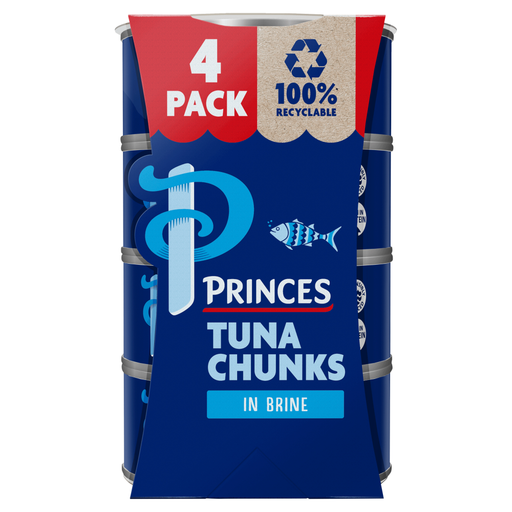 No image available
Four separate tins give you a choice of how many to open for the meal or later use.
This product is packed in brine, not spring water; check its ingredient and nutrition label if packing liquid or salt matters to you. The listing directs you to refrigerate unused tuna in a sealed container and use it within two days.
Choose a larger tin if the meal will use its drained contents promptly; otherwise, separate tins let you leave some unopened. Tesco's checked 400g can contains 280g drained tuna, so compare drained quantities rather than labelled can weights alone.
The packing liquid alone does not establish the salt level. The checked Sainsbury's and Asda spring-water chunks list different amounts of salt per 100g drained, so compare the nutrition panels of the exact spring-water or brine products you are choosing between.
Follow the exact product label. The checked listings direct shoppers to refrigerate unused tuna in a suitable container and use it within one or two days, depending on the product; several specify a non-metallic container.
No. The NHS states that fresh and canned tuna do not count as oily fish, so choose another fish if an oily-fish portion is what you intend to serve.
Check current NHS pregnancy guidance before deciding how tuna fits into the week; it states a limit of four cans of tuna or two tuna steaks a week. Fish is an allergen that must be declared when it is an ingredient under GOV.UK food-labelling guidance, so inspect the current product's ingredient and allergen information.