Students stocking their first cupboard
If tuna will be a regular ingredient, compare the number of tins with their drained weight and the meals you expect to make, rather than choosing by brand alone.


For a student move-in cupboard, spring-water tuna chunks offer a flexible starting point for sandwiches, pasta and jacket potatoes. Choose the number and size of tins around how often you will use them: smaller tins can mean fewer leftovers when cooking for one, while a multipack suits repeated meals. Check the drained weight and packing liquid, and plan to refrigerate any tuna left after opening.
If tuna will be a regular ingredient, compare the number of tins with their drained weight and the meals you expect to make, rather than choosing by brand alone.
A smaller tin may be easier to finish in one meal. If you open more than you need, allow space in the fridge for the leftovers.
Look for certification or a stated fishing method on the exact product you intend to buy; a claim for one tin does not describe a whole brand range.
Start with how much tuna you are likely to use at once, then choose a packing liquid and check any sourcing information that matters to you.
| Concern | What to check | Who this matters to |
|---|---|---|
| Usable quantity | Compare tin count and drained weight, particularly when packing liquids or formats differ. | When stocking a first cupboard, I want enough tuna for the meals I will actually make. About 33% of consumers put usable quantity first. |
| Portions and leftovers | Check the amount per tin and whether you can refrigerate any remainder in a suitable container. | If I usually cook for one and share a small fridge, finishing a tin in one meal matters. Roughly 25% of consumers make portion size and leftover handling their primary concern. |
| Quick meals | Choose a packing liquid and format that work for the sandwiches, salads or pasta you plan to make. | With limited time or kitchen equipment, I want an ingredient I can add to a simple meal. Around 25% of consumers prioritise that convenience. |
| Sourcing information | Check the exact tin for an MSC label or a stated fishing method, where these are important to you. | Before choosing a tin, I want to know what its sourcing label actually says. About 17% of consumers treat that information as their main buying concern. |
Tins can differ in size and in how much tuna remains after draining, so the front of a multipack does not tell you how much will go into meals.
Check both the pack contents and drained weight, then choose a quantity you are likely to use.
Once opened, unused tuna needs chilled storage. That can be awkward when fridge space is shared.
Follow the tin's instructions. Tesco's cited spring-water multipack directs users to transfer leftovers to a non-metallic container, cover, refrigerate and consume them within two days.
The nutrition figures can differ even within one brand's tuna-chunks range. Princes lists 99 kcal per 100g drained for its spring-water product and 180 kcal per 100g drained for its sunflower-oil product.
Choose the liquid for the recipe you intend to make, and compare the exact labels if the nutritional difference matters to you.
Tuna contains fish, and the John West spring-water product listed by Sainsbury's warns that some bones may remain.
Read the packaging for allergen and preparation information before use.
John West has spring-water chunks and no-drain variants relevant to quick cupboard meals.
Princes offers tuna chunks in spring water, brine and sunflower oil, giving shoppers a choice of packing liquids.
Tesco own-label spring-water chunks include single tins and multipacks.
Sainsbury's has a 4 x 145g own-label spring-water tuna-chunks pack with product-specific sourcing information.
Asda own-label spring-water chunks include a 3 x 80g format for shoppers considering smaller tins.
M&S describes its cited 160g spring-water tuna product as pole-and-line caught under its Forever Fish policy.
These spring-water and brine tuna tins cover single-tin, smaller-tin and multipack choices for a student cupboard. Match the format to your usual meal size and available fridge space after opening.
 Image unavailable
Four separate tins suit a cupboard stocked for repeated meals. Each tin is labelled 125g; compare the drained weight if the amount of tuna per meal matters to you.
Contains fish. Transfer any opened leftovers to a non-metallic container, refrigerate and consume within two days.
 Image unavailable
Three 100g tins offer a smaller amount to open at one time. If avoiding draining is important, check the directions on the can before choosing this variant.
Contains fish. Refrigerate any opened leftovers and consume within two days.
 Image unavailable
A six-tin pack suits students planning several tuna meals; consider whether that quantity fits your cupboard and meal plans. The listed size is 145g per tin.
Contains fish. Transfer opened leftovers to a non-metallic container, refrigerate and consume within two days.
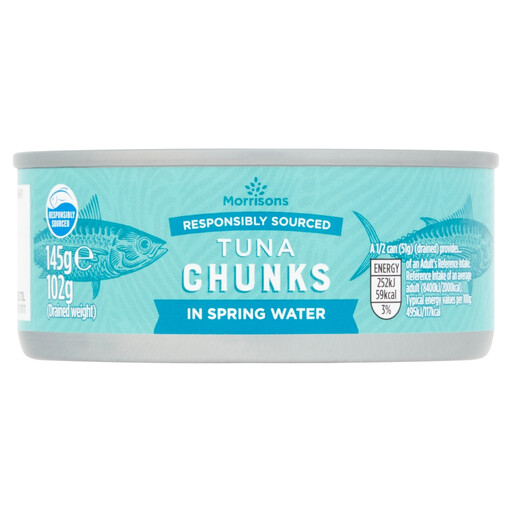 Image unavailable
A single spring-water tin is an option when you want to choose the quantity one tin at a time. Check its drained weight against the portion you plan to use.
Contains fish. Transfer any opened remainder to a non-metallic container, refrigerate and consume within two days.
 Image unavailable
Four tins provide a brine-packed alternative for repeated meals. Each is labelled 145g; check the exact salt information if the packing liquid affects your recipe choice.
Contains fish. Refrigerate unused tuna in a sealed container after opening and consume within two days.
Choose according to the dish and the exact product label. Spring water gives you a tuna base to season yourself; brine and sunflower oil are different packing liquids. In Princes' cited products, the spring-water chunks list 99 kcal per 100g drained and the sunflower-oil chunks list 180 kcal per 100g drained. Check the brine product's salt information if it matters to your choice.
Transfer it to a suitable non-metallic container, cover or seal it, and refrigerate it. The cited Tesco, Asda and Joybuy product directions say to consume opened leftovers within two days; follow the instructions on your own tin.
Yes, the cited tuna products declare fish. Check the exact packaging before use, as ingredient and allergen information belongs to the product you have in hand.
No. Check the exact product for an MSC label or stated fishing method. For example, Sainsbury's describes MSC-certified fisheries for its cited spring-water multipack; that statement does not establish the sourcing of every tin in its range.