Households keeping meals familiar
If tuna goes into an accepted pasta dish, sandwich or jacket potato, you may want to keep its packing liquid consistent while trying a different pack size.


For a familiar meal, start with a packing liquid the eater already accepts; if there is no established preference, plain tuna in spring water gives you a simple starting point without changing several ingredients at once. Choose a larger multipack when you use tuna regularly, or smaller tins when unfinished portions are likely. A no-drain format can remove a preparation step, but check the instructions for the exact pack.
If tuna goes into an accepted pasta dish, sandwich or jacket potato, you may want to keep its packing liquid consistent while trying a different pack size.
If you make tuna meals only occasionally or prepare one lunch at a time, individual tin size and the plan for any opened tuna matter more than the total number of tins.
If tuna is already part of several familiar meals, compare the number of tins, the amount in each tin and drained weight. A larger multipack is useful only if its portions fit how you cook.
Keep the accepted meal and packing liquid steady while deciding how many portions your household will use. Then compare tin size and preparation steps rather than treating every multipack as the same format.
| Concern | What to check | Who this matters to |
|---|---|---|
| Familiar flavour and texture | Check the packing liquid and chunk description. If a meal is already accepted, change one ingredient at a time. | If a change to a familiar pasta dish or sandwich could put the eater off, keeping the usual tuna format comes first. About 36% of consumers put familiar flavour and texture ahead of the other concerns here. |
| Unfinished tins | Match grams per tin to a usual portion and read the opened-tin storage instructions. | When one lunch rarely uses a whole tin, I need a portion I can finish or a plan for the remainder. Avoiding unfinished tuna is the primary concern for about 29% of consumers. |
| Multipack quantity | Compare tin count, grams per tin and drained weight where stated. | If tuna is used regularly, I want to know how much usable tuna each pack contains, not just how large the outer pack looks. About 21% of consumers make comparable multipack quantity their first concern. |
| Preparation mess | Check whether the exact product is no-drain and whether its packing liquid suits the meal. | For a quickly assembled meal, I would rather avoid a separate draining step. That convenience is the main priority for about 14% of consumers. |
Princes lists spring-water formats from 3 × 80g to 8 × 145g. The same word, “multipack”, can therefore describe quite different portion sizes and total quantities.
Check both tin count and grams per tin, then use drained weight where stated to compare the amount of tuna.
Spring water, brine and sunflower oil are different recipe inputs. In M&S product information, its sunflower-oil tuna and spring-water tuna also have different energy and fat values per 100g.
If an eater accepts a particular meal, keep its usual packing liquid while assessing a new pack format. Try another liquid separately.
The M&S spring-water four-pack label instructs shoppers to move unused contents to a non-metallic container, refrigerate them and eat them within two days.
Choose a tin size you can use, or plan the next meal before opening it. Follow the storage directions on the tin you buy.
Otherwise, an unfinished portion may have to be discarded.
The Food Standards Agency identifies fish as an allergen. The cited M&S tuna product also warns that it may contain bones.
Check the physical pack for allergen and bone warnings before serving, especially when cooking for a child or someone with a fish allergy.
These examples help distinguish specific tuna formats; they are not claims about every product made by each brand.
Its No Drain Tuna Chunks in Spring Water is relevant when a ready-to-use portion would simplify meal assembly.
Its spring-water range offers several documented portion and multipack sizes.
Tesco provides an own-label brine option for shoppers comparing standard four-tin formats.
Its documented spring-water four-pack and sunflower-oil product illustrate two different recipe inputs.
These packs cover spring-water tuna for familiar meals, smaller portions and sunflower-oil alternatives. Choose the packing liquid the eater accepts, then compare the individual tin sizes against the portions you prepare.
 Image unavailable
For households making familiar tuna meals regularly, this six-tin spring-water pack keeps individual tins separate. The listing identifies skipjack tuna, spring water and salt; check the pack for fish-allergen and opened-tin instructions.
 Image unavailable
For repeat meals where a four-tin format fits the household, this pack contains tuna, spring water and salt according to its listing. Its 125g tins offer a different portion size from the 145g option above; check the label for storage and fish-allergen information.
 Image unavailable
For smaller individual portions, this spring-water pack contains three 100g tins. If skipping the draining step matters, read the exact pack instructions before choosing it: the product description gives mixed directions on draining. Check the fish-allergen information too.
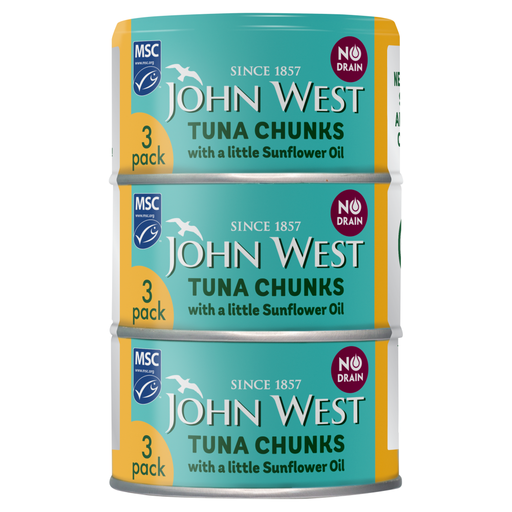 Image unavailable
For small meals where oil-packed tuna is already accepted, this pack has three 100g tins. Its description specifies no-drain use and ECOTWIST/SmartStrip opening packaging. Sunflower oil is a different recipe input from spring water; check the label for fish-allergen and storage information.
 Image unavailable
For regular meals that already use oil-packed tuna, this four-tin pack provides 125g tins. It is not the same packing-liquid choice as the spring-water packs. The listing warns that some bones may remain; check the pack before serving, along with its fish-allergen information.
Start with one the eater already accepts. If there is no established preference, spring-water tuna offers a plain starting point: the cited Princes and M&S products list tuna and spring water. Try brine or oil separately rather than changing the packing liquid and the rest of the meal together.
Follow the instructions on that tin. M&S says unused contents from its cited spring-water product should go into a non-metallic container, be refrigerated and be eaten within two days. Food Standards Scotland also advises checking food labels for storage directions.
Yes. The Food Standards Agency identifies fish as an allergen, so check the ingredients and warnings on the exact pack before serving. Do not serve tuna to someone with a fish allergy.
Not necessarily: the packing liquid changes the recipe input. M&S lists 99 kcal and 0.6g fat per 100g for its cited spring-water tuna, versus 189 kcal and 9.0g fat per 100g for its cited sunflower-oil tuna. Check the exact pack and introduce a different liquid separately if keeping the meal familiar matters.