Protein-focused meal planners
If tuna is going into regular lunches or dinners, compare the protein figure with its stated nutrition basis and the amount you expect to eat. A figure per 100g does not tell you the protein in your portion by itself.


Choose tinned tuna when you need a ready-to-eat cupboard ingredient, and compare protein using the label’s stated basis and the amount you will eat. Tinned steaks suit meals where intact pieces matter; chunks suit mixed dishes. Choose chilled or frozen tuna steaks instead when you want a fillet to cook and can follow its storage and preparation instructions.
If tuna is going into regular lunches or dinners, compare the protein figure with its stated nutrition basis and the amount you expect to eat. A figure per 100g does not tell you the protein in your portion by itself.
Tinned steak-style pieces suit a salad or plated meal where their shape matters. If you want a fillet to cook, look at chilled or frozen tuna steaks instead: a steak in a tin is preserved tuna.
Repeat meals make portion size and storage instructions worth checking. People who are pregnant or trying for a baby should also account for the NHS’s tuna guidance when planning how often to eat it.
Decide whether you need ready-to-eat tinned tuna or a fillet to cook, then compare the exact pack labels for the portion and meal you have in mind.
| Concern | What to check | Who this matters to |
|---|---|---|
| Protein in the portion | Compare tinned products on the same nutrition basis, such as per 100g drained, then check how much tuna you will eat. | When tuna is the protein component of a planned meal, I need to know what my portion provides, not just the figure on the front of the pack. About 31% of consumers put portion-level protein comparison first. |
| Pieces or cookable fillet | Distinguish tinned steaks from chunks; check chilled or frozen storage and cooking instructions if you want a fillet. | For a plated salad, intact tinned pieces may matter to me; for a fillet meal, I need fish I can cook instead. Roughly 25% of consumers make the product format their primary concern. |
| Packing medium | Compare energy, fat and salt on the exact spring-water, brine or oil-packed variant. | If I am choosing tuna for a particular recipe, the packing liquid and its labelled values affect which tin I pick. About 19% of consumers put that choice ahead of the other concerns. |
| Frequent use and storage | Check the fish-allergen declaration and instructions after opening. If pregnant or trying for a baby, follow the applicable NHS tuna limit. | When tuna appears often in my meals, I need to plan its frequency and handle leftovers as the pack directs. Approximately 25% of consumers put those checks first. |
Tesco Groceries lists 28.2g protein per 100g for both its compared Princes drained tuna-steak variants, but 122kcal and 1.0g fat for the spring-water version against 171kcal and 6.5g fat for the sunflower-oil version. Those figures describe those products, not every water- or oil-packed tin. The NHS advises people who are pregnant or trying for a baby to have no more than four cans of tuna or two tuna steaks a week; the Food Standards Agency describes the reference amounts as a medium can of about 140g drained or a 140g cooked steak.
A tinned tuna steak is preserved and ready to eat. Tesco Groceries describes its chilled yellowfin steaks as defrosted products that need refrigeration and cooking, so the two formats serve different meals.
Choose tinned steak or chunks for a no-cook meal. For a fillet meal, check the chilled or frozen product’s storage and cooking instructions before buying.
In the compared Princes tuna-steak listings at Tesco Groceries, the labelled protein is the same per 100g, while the sunflower-oil version has different energy and fat figures.
Compare the exact variants’ nutrition panels and choose the packing medium that fits the dish you intend to make.
A figure per 100g drained for tinned tuna is not directly equivalent to a figure for a chilled steak when cooked or a frozen steak as sold. Tesco Groceries uses these different bases across its tuna listings.
Read the basis beside each figure and check the drained weight or portion size before calculating protein for your meal.
The NHS has specific weekly tuna advice for people who are pregnant or trying for a baby; a protein figure does not replace that consideration.
If that guidance applies to you, plan within the NHS limit of no more than four cans or two tuna steaks a week.
Its tinned tuna range includes steak-style pieces and a No Drain format for shoppers seeking a ready-to-eat alternative to chunks.
Its cited products offer chunks and drained tuna steaks, including spring-water and sunflower-oil steak variants.
Its cited own-label chilled and frozen yellowfin steaks are options for a cookable fillet, not shelf-stable tinned tuna.
Its cited tinned Tuna Steak is an option when preserved steak-style pieces are the format you want.
These tinned chunks and steak-style products are for ready-to-eat meals. Choose by the pieces and packing medium you want, then use the exact pack’s nutrition basis and portion information for a protein comparison.
 Image unavailable
Consider these spring-water chunks when the tuna will be mixed into a sandwich, salad or pasta. The pack contains four 125g cans; check the drained weight and nutrition basis for the portion you plan to eat.
 Image unavailable
This single tin of spring-water chunks suits a mixed dish where intact steak-style pieces are not important. Check the drained amount alongside the protein figure when planning your portion.
 Image unavailable
Consider this No Drain chunk format for a quick salad or sandwich. The title identifies three 100g packs; read the pack’s nutrition basis before comparing its protein figure with drained-weight values on other tins.
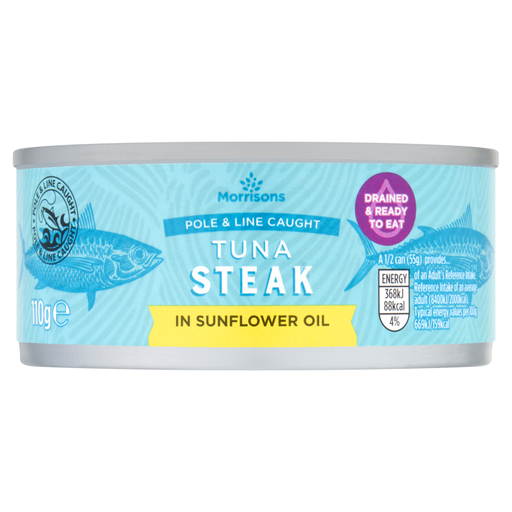 Image unavailable
Choose the steak-style format if larger pieces matter and sunflower oil suits your dish. The product title specifies 110g; confirm the pack’s drained or no-drain format, nutrition basis and instructions after opening.
 Image unavailable
This tinned steak format is for a meal where whole pieces and sunflower oil suit the recipe. Check the nutrition basis and drained amount on the tin to work out the protein in your portion.
No. A tinned steak is preserved tuna; choose a chilled or frozen tuna steak if you want a fillet to cook. Tesco Groceries describes its chilled yellowfin steaks as defrosted and gives refrigeration and pan-frying instructions.
Not in the two compared Princes drained tuna-steak listings at Tesco Groceries: both state 28.2g protein per 100g. Their other values differ, however: the sunflower-oil product lists 171kcal and 6.5g fat per 100g, compared with 122kcal and 1.0g fat for spring water. Check other products individually.
The NHS advises no more than four cans of tuna or two tuna steaks a week for people who are pregnant or trying for a baby. The Food Standards Agency describes the reference amounts as a medium can of about 140g drained or a 140g cooked steak.
Follow the instructions on your particular pack. The Joybuy listing for John West No Drain Tuna Steak in Spring Water says to refrigerate it after opening and consume it within two days; do not assume every tuna product has the same instruction.