Time-pressed weeknight cooks
A no-drain format cuts out a preparation step when adding tuna to pasta, jacket potatoes, wraps or salads. Check the packing liquid too: not every no-drain pack will suit the same recipe.


For a quick dinner with little draining, look for an MSC-labelled no-drain pack; if you use tuna regularly, a multipack of MSC-labelled chunks gives you several cans to keep in the cupboard. Check the label on the exact product, then choose spring water, brine or oil to suit the dish. A no-drain pack in sunflower oil will give a different result from one in spring water.
A no-drain format cuts out a preparation step when adding tuna to pasta, jacket potatoes, wraps or salads. Check the packing liquid too: not every no-drain pack will suit the same recipe.
Multipacks put several cans in the cupboard for recurring meals. Check the weight and packing medium of the exact pack so the portions work for the dishes you make.
The blue MSC label is a way to identify tuna from an MSC-certified fishery on an individual product. Look for it on the selected tin rather than relying on a statement about the brand’s wider range.
Check the sustainability label on the exact pack first. Then choose a format and packing liquid that fit how you will prepare dinner.
| Priority | What to check | Your needs |
|---|---|---|
| MSC label | Look for the blue MSC ecolabel on the tin or exact product page. The Marine Stewardship Council says it identifies tuna from a fishery certified against its sustainability standard. | I want a product-level signal, not just a general sustainability statement from the brand. |
| Preparation | Check whether the pack says no-drain and how it opens. Standard chunks may need draining before they go into a sauce, filling or salad. | On a busy evening, I would rather add the tuna straight to the dish than deal with liquid from an opened can. |
| Pack size | Read both the number of cans and the weight of each can. A 3 × 100g no-drain pack and a 4 × 145g chunks pack provide different portion formats. | Smaller ready-to-use portions suit a quick meal; several standard cans suit meals I make repeatedly. |
| Packing liquid | Check whether the tuna is in spring water, brine or oil, then read the exact ingredients and nutrition label. The liquid can change the salt, fat and flavour of the finished dish. | For pasta, I may want to add my own sauce; for a salad, I may prefer the oil already in the pack. |
| After opening | Follow the selected pack’s refrigeration and use-by instructions after opening. The cited John West No Drain pack in spring water specifies refrigeration and use within 2 days. | If I will use only part of a pack tonight, I need to know how to store the rest. |
An individual product still needs checking. In its February 2026 UK supermarket survey, the Marine Stewardship Council counted 138 MSC-labelled products among 271 shelf-stable tuna products surveyed.
Look for the blue MSC ecolabel on the exact tin or current product page.
Spring water, brine and oil give you different starting points for a recipe. Ingredients and nutrition information also depend on the product.
Decide whether you want to add your own dressing or sauce, then check the selected pack’s ingredients and nutrition label.
The storage instructions change once the pack is opened. Tuna also contains fish, an allergen.
Read the exact pack’s allergen and storage instructions; refrigerate leftovers and use them within its stated period.
These references describe particular ranges or own-brand commitments, not a guarantee about every tuna product a shop sells.
Its MSC-labelled No Drain chunks in spring water offer a 3 × 100g format for meals where avoiding a draining step matters.
The Princes catalogue lists MSC tuna chunks in spring water, brine and sunflower oil, including 4 × 145g formats.
A supermarket own-brand reference for shoppers considering MSC-labelled tuna alongside other groceries.
Another supermarket own-brand reference for shoppers looking for an MSC-labelled tin.
These options include a no-drain pack for a quick meal and larger packs of conventional chunks for repeated meals. The no-drain option is in sunflower oil, so choose it with that recipe difference in mind.
 No image available
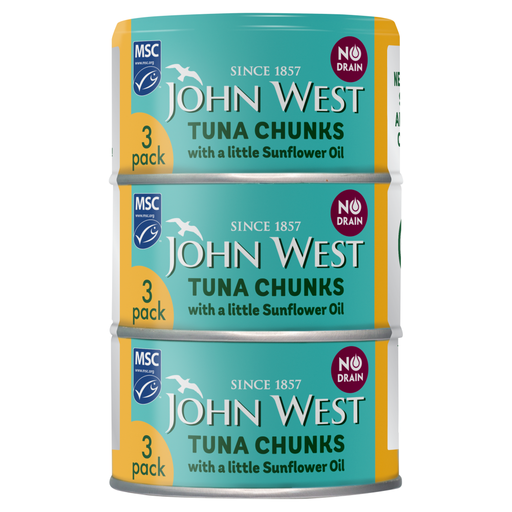
The no-drain format suits a meal where you want to skip draining the tuna. This pack contains three 100g portions in sunflower oil, which will affect the finished dish; check its MSC label and fish-allergen information on the exact pack.
 No image available
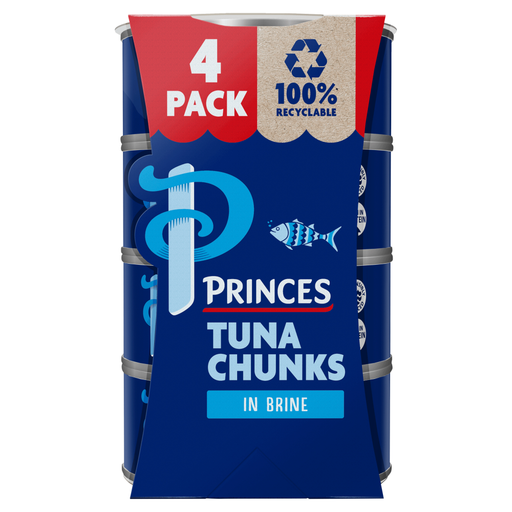
Four 145g cans suit repeated cupboard meals if you are happy to drain conventional chunks. Princes lists an MSC chunks-in-brine format at this pack size; check the label on the selected pack, along with its ingredients and salt information.
 No image available
This four-can pack offers conventional chunks in sunflower oil for recurring meals where that packing medium suits the dish. Princes lists an MSC format at 4 × 145g; check the exact pack’s label and ingredients before buying.
Look for the blue MSC ecolabel on the exact tin or product page. The Marine Stewardship Council says the label identifies tuna from a fishery certified against its requirements for fish stocks, environmental impact and management; a general brand statement is not a substitute for checking the selected product.
Yes. The Marine Stewardship Council’s February 2026 UK supermarket survey recorded 138 MSC-labelled products among 271 shelf-stable tuna products surveyed, or 51%. That does not mean every tin carries the label, so check the one you choose.
Choose by what you plan to add to the dish: spring water leaves room for your own sauce or dressing, while oil changes the flavour and fat content. For brine or oil, check the exact pack’s ingredients and nutrition information rather than assuming products have the same salt or fat values.
Follow the storage and use instructions on the exact pack. For example, the cited John West No Drain product in spring water says to refrigerate it after opening and consume it within 2 days.
No. MSC certification concerns sourcing, not intake guidance. The NHS advises people who are pregnant or trying for a baby to have no more than four cans of tuna a week or two tuna steaks a week because tuna contains higher levels of mercury than some other fish.