If organic ingredients are the priority for meal deliveries, check which ingredient carries the organic claim: olive oil described as organic does not make wild-caught tuna organic. For salt-conscious menus, compare the exact tins’ values on the same drained-weight basis rather than choosing by packing liquid alone. A no-drain format can remove a preparation step, but it still needs its own ingredient, nutrition and portion checks.
Who is choosing the tuna?
Organic-ingredient meal planners
For teams whose menus call for an organic ingredient, the practical question is whether the claim applies to the olive oil or another ingredient, rather than to wild-caught tuna. Fish4Ever makes that distinction for wild-caught fish.
Teams comparing salt content
For services preparing recurring recipient meals, the salt figure on each tin matters more than the words “spring water” or “brine”. Sainsbury’s lists different drained-basis values for its two formats.
Low-prep delivery teams
When meals or fillings must be assembled with limited handling, a pack expressly sold as drained or no-drain may avoid a draining step. John West and Princes describe such formats in their ranges.
What matters when buying?
Set the ingredient or menu requirement first, then compare the exact pack’s nutrition, preparation format and usable portion size.
| Concern |
What to check |
Who this matters to |
| Organic ingredient claim |
Identify the ingredient described as organic and check the product’s certification details. Do not read an organic olive-oil claim as an organic claim for wild tuna. |
For a menu that calls for an organic ingredient, I need to know precisely what the label covers before ordering. About 31% of consumers put confirmation of that ingredient claim first. |
| Salt in the finished portion |
Compare salt per 100 g drained on the same basis, then check the amount used in the planned portion. Sainsbury’s lists 0.12 g per 100 g drained for its spring-water tuna and 0.42 g for its brine version. |
If tuna appears regularly on my menu, the salt figure for the actual tin affects which one I choose. Roughly 31% of consumers make product-specific salt comparison their primary concern. |
| Preparation and handling |
Check whether the exact pack says drained or no-drain, and read its opening and after-opening instructions. |
When I am assembling several meals with little preparation space, avoiding a draining step matters. For about 23% of consumers, ease of handling comes first. |
| Portions and pack format |
Check the number and size of tins, drained weight where stated, and whether the pack fits the service’s portions. |
If I need predictable quantities across a meal run, I want a pack size that fits the portions being prepared. Around 15% of consumers prioritise portion planning. |
Buying pitfalls
-
Reading “organic olive oil” as “organic tuna”
The ingredients can carry different claims. Fish4Ever says wild-caught produce cannot be labelled organic because organic is a farming standard; UK organic-labelling rules published by the Department for Environment, Food & Rural Affairs also require the applicable production rules and certification to be met.
Read the ingredient list and certification information to establish exactly what the organic wording covers.
-
Assuming every spring-water tin has less salt
Sainsbury’s lists 0.12 g salt per 100 g drained for one spring-water product and 0.42 g for its brine counterpart, while Princes lists 0.85 g per 100 g drained for its spring-water tuna. The packing liquid alone does not determine the value.
Compare the exact products’ salt figures on the same per-100 g basis before choosing for a menu.
-
Leaving unused tuna in an opened tin
Marks & Spencer instructs users of its cited spring-water tuna to move unused contents to a non-metallic container, refrigerate them and eat them within two days. Instructions can differ between products.
Plan how much to open for each preparation session and follow the storage instructions on the pack in use.
-
Using one tuna choice for every recipient
Fish is an allergen, and some recipients have additional dietary considerations. The NHS gives specific weekly tuna limits for people who are pregnant or trying for a baby; these are not limits for every recipient.
Check the exact pack’s allergen information and the relevant recipient requirements before adding tuna to a meal.
Brands with relevant tuna formats
Fish4Ever
Its Wild Azores Tuna Steaks offer an oil-packed example for checking an organic ingredient claim.
- Abel & Cole lists organic extra-virgin olive oil in the cited product’s ingredients.
- Fish4Ever distinguishes that ingredient claim from the status of the wild-caught tuna itself.
John West
Its cited range includes No Drain Tuna Chunks in Spring Water MSC.
- John West presents that product as usable without draining.
- No-drain wording does not establish an organic ingredient claim or a particular salt level; check the exact pack.
Princes
Its cited products include spring-water chunks and a separate ready-to-use drained range.
- Princes lists tuna and spring water as the ingredients of its cited spring-water chunks.
- That product lists 0.85 g salt per 100 g drained, so compare its panel with any alternative rather than relying on the packing medium.
Sainsbury’s
Its cited spring-water and brine multipacks provide a like-for-like drained-basis salt comparison.
- Sainsbury’s lists 0.12 g salt per 100 g drained for its 4 × 145 g spring-water tuna and 0.42 g for its 4 × 145 g brine tuna.
- Those figures describe the specified products, not every tin in either format.
M&S
Its cited spring-water tuna provides product-level nutrition and after-opening instructions.
- Marks & Spencer lists 23.5 g protein and 0.75 g salt per 100 g for its cited tuna chunks.
- Check the current pack instructions when planning how unused contents will be stored.
Tinned tuna options on Joybuy
These options cover tuna in olive oil, spring-water multipacks and packs expressly described as no-drain. Choose by the ingredient claim, the exact nutrition panel and the handling needed for your meal service.
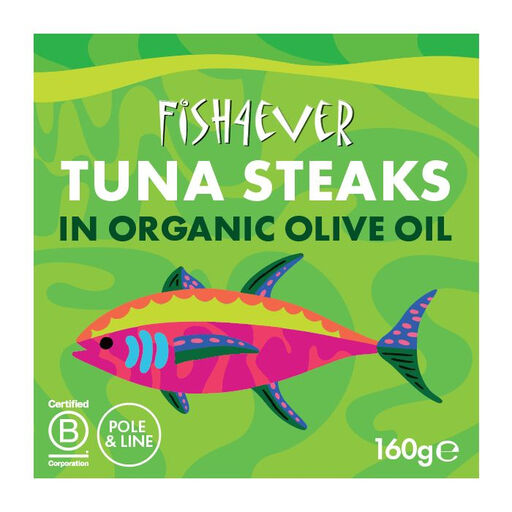 Image unavailable
Fish4ever Tuna Steaks in Organic Olive Oil, 160 g
Consider this 160 g tin when the meal plan calls for an olive-oil ingredient described as organic. That wording does not make the wild-caught tuna organic; check the label’s certification details for the intended claim. If portions or salt are being compared, confirm the drained weight and the basis of the nutrition figures on the pack.
View on Joybuy
 Image unavailable
John West No Drain Tuna Chunks in Springwater, 3 × 100 g
The no-drain format suits meal assembly where staff want to avoid draining tins. This pack contains three 100 g tins. For a salt comparison, check the nutrition basis on the exact pack rather than assuming that spring water indicates a particular salt value.
View on Joybuy
 Image unavailable
John West No Drain Tuna Chunks in Sunflower Oil, 3 × 100 g
This three-tin no-drain pack is another option when avoiding a draining step matters. Its stated packing medium is sunflower oil, not organic olive oil. Check the pack’s nutrition basis and drained weight if those affect menu or portion comparisons.
View on Joybuy
 Image unavailable
Morrisons Fad Free Tuna Chunks in Spring Water, 6 × 145 g
The six-pack format may suit batch meal preparation when 145 g tins fit the planned portions. Its product information gives nutrition on a per-100 g drained basis. Confirm the handling format on the exact pack if avoiding draining is important.
View on Joybuy
 Image unavailable
John West Tuna Chunks in Springwater, 4 × 125 g
This four-tin spring-water pack offers 125 g tins for portion planning, with nutrition described per 100 g drained. If the preparation plan requires a no-drain pack, confirm that designation on this exact variant before choosing it.
View on Joybuy
Frequently asked questions
Does tinned tuna in organic olive oil mean the fish is organic?
No: the olive oil and the fish are different ingredients. Fish4Ever says wild-caught produce cannot be labelled organic because organic is a farming standard. For a UK organic claim, check what the claim covers and the applicable certification; the Department for Environment, Food & Rural Affairs sets out the production and certification requirements.
Is spring-water tuna always the lower-salt choice?
No. Sainsbury’s lists 0.12 g salt per 100 g drained for its cited spring-water tuna and 0.42 g for its brine counterpart, but Princes lists 0.85 g per 100 g drained for its cited spring-water product. Compare the exact tins on the same nutrition basis.
What should happen to tuna left over after opening?
Follow the instructions for the tin being used. Marks & Spencer directs users of its cited spring-water tuna to transfer unused contents to a non-metallic container, refrigerate them and eat them within two days; do not apply that product’s period to every tin.
Do any recipients need a different tuna menu plan?
Some recipient requirements need checking separately from the general menu. The NHS says people who are pregnant or trying for a baby should have no more than four cans of tuna a week or two tuna steaks a week. Check the exact product’s fish-allergen information and the requirements relevant to each recipient.


