For a single-tin lunch, compare spring-water chunks by protein and salt per 100g drained, then check how much tuna you will use. An already-drained format can be more practical away from a sink, but check the pack format: the John West no-drain product considered here comes as 3 × 100g rather than one standalone tin.
Who this helps
Lunch planners comparing protein
If tuna is the base of your salad, sandwich or jacket potato, compare protein per 100g on the same drained-weight basis. The product information from Tesco, Princes and Sainsbury's shows why the front-of-pack can size alone is not enough for that comparison.
Consumers keeping an eye on salt
Spring-water packing does not tell you the salt content. The researched Sainsbury's tin lists 0.12g salt per 100g drained, while the Tesco and Asda tins each list 0.90g; check the current label when salt is a deciding factor.
Desk and packed-lunch eaters
If there is nowhere convenient to drain a tin, an already-drained portion may be easier to use. Check whether it is sold as one tin or as individual portions in a multipack, and whether you will finish the portion at lunch.
What matters when choosing
Start with the portion and nutrition basis on the current pack, then decide whether draining and sourcing information matter for your lunch.
| Concern | What to check | Who this matters to |
|---|
| Protein and packing medium |
Compare protein per 100g on a like-for-like drained basis, and check whether the tuna is packed in spring water or oil. |
If I am building a sandwich or salad around tuna, I want to know the protein in the fish I will eat. About 37% of consumers put this lunch-base need first. |
| Salt |
Read the salt figure per 100g drained on the current pack; spring-water tins can have different values. |
When tuna is a regular lunch ingredient, salt matters to me even if the tin says spring water. About 27% of consumers prioritise salt comparison. |
| Portion and draining |
Check the drained weight and whether the product is a single tin, a multipack, no-drain or already drained. |
At a desk without a sink, I want a portion I can use without awkward draining or unwanted leftovers. Around 18% of consumers put that convenience first. |
| Sourcing information |
Look for a certification or specific sourcing statement on the product you are buying, rather than relying on a general brand description. |
If sourcing influences my choice, I want the claim to apply to this tin. About 18% of consumers make product-level sourcing information their primary concern. |
Buying pitfalls
-
Assuming spring-water tuna has little salt
The Sainsbury's product information lists 0.12g salt per 100g drained, compared with 0.90g for the researched Tesco and Asda chunks. The packing medium does not settle the salt comparison.
Check salt per 100g drained on the tin you plan to buy, particularly if tuna appears often in your lunches.
-
Comparing can sizes instead of usable portions
A 145g can includes its packing liquid, while the researched M&S 120g steak is described as already drained. Those front-of-pack weights do not describe portions on the same basis.
Check the drained weight where stated, the nutrition panel's measurement basis and how much of the portion you will eat.
-
Counting canned tuna as oily fish
NHS guidance says fresh and canned tuna do not count as oily fish.
If the NHS oily-fish guidance is part of your meal planning, do not count this tin towards that portion.
-
Guessing how long an opened tin keeps
Opened-product instructions differ between the researched packs, so an unfinished portion needs its own storage plan.
Follow the current label for transferring, covering and refrigerating leftover tuna, and use it within that product's stated period.
Brands to consider
These product lines illustrate different portion and label considerations; a brand name alone does not establish the nutrition or format of every tin it sells.
John West
Its no-drain spring-water chunks are relevant when lunch is eaten away from a sink.
- John West describes the researched product as ready to use and lists 27g protein and 0.8g salt per 100g.
- This product is sold as 3 × 100g, not as one standalone retail tin.
Princes
Its conventional spring-water chunks include a 145g can for lunches where draining is practical.
- Princes lists 23.5g protein per 100g drained for the researched chunks.
- They need draining; the listed salt is 0.85g per 100g drained, so compare the label if salt matters.
Tesco
The researched 145g spring-water chunks provide a conventional ingredient for sandwiches or salads.
- Tesco lists 24.9g protein per 100g drained and states that this product is MSC certified.
- The listed salt is 0.90g per 100g drained, and the chunks need draining.
Sainsbury's
Its researched 145g spring-water chunks give salt-conscious shoppers a useful label comparison.
- Sainsbury's lists 26.1g protein and 0.12g salt per 100g drained for this product.
- It is a conventional chunks format that needs draining; check the current pack and local availability before planning a lunch around it.
Asda
The researched 145g spring-water chunks are another conventional single-can option.
- Asda lists 25g protein per 100g drained for this tin.
- Its listed salt is 0.90g per 100g drained, and the product information cautions that minor bones may remain.
M&S
The researched 120g tuna steak is an individual, already-drained format for salads where larger pieces appeal.
- Product information describes this steak as already drained and pole-and-line caught.
- Check its nutrition and portion against drained chunks rather than comparing the front-of-pack weights alone.
Joybuy tuna selections
These are single cans of tuna chunks in spring water for lunches where draining the tuna is practical. Compare their current labels and portions for the meal you are making.
 No image available
Morrisons Fad Free Tuna Chunks in Spring Water 145g
Consider these chunks for a sandwich, salad or pasta lunch if you want a single spring-water tin. The stated can size is 145g; check its drained-weight nutrition and current salt figure if either affects your choice. Follow the pack instructions if you leave any tuna for another meal.
View on Joybuy
 No image available
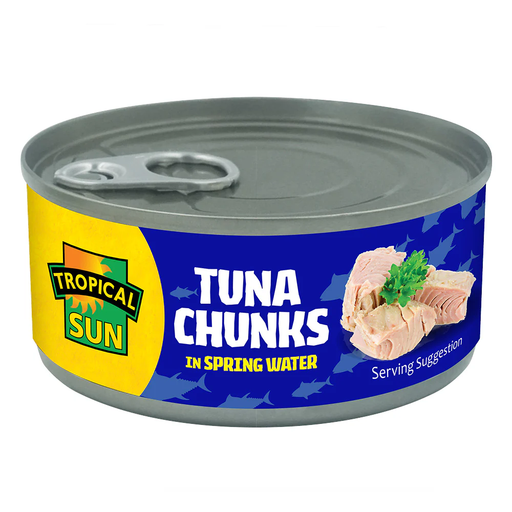
Topical Sun Tuna Chunks in Springwater 160g
This 160g single can is a spring-water chunks option for a lunch where you can drain the tuna. Before comparing its nutrition figures with drained-weight tins, check which weight basis the current label uses. Check the pack's allergen information if relevant to your household.
View on Joybuy
Questions about tinned tuna
Is tuna in spring water a useful lunch ingredient?
It can provide the tuna portion for a sandwich, salad or jacket potato, but choose the tin by its portion and nutrition label rather than the packing medium alone. Compare protein and salt on the same per-100g drained basis where available. NHS guidance says canned tuna does not count as oily fish.
Should I choose tuna chunks or steak for a salad?
Choose chunks if you want tuna to mix through the salad and can drain the tin. An already-drained steak format may suit a salad where you prefer larger pieces; check its portion and nutrition basis against the chunks you are considering.
What should I do with tuna left after opening?
Follow that tin's storage instructions rather than assuming every product has the same open-life period. The researched Tesco, Asda, Sainsbury's and M&S product information calls for unused tuna to be moved to a covered, non-metallic container and refrigerated; check the current label for when to use it.
What should I check on the label before serving tuna?
Check the fish-allergen declaration and any product-specific warnings. Some of the researched product information cautions that minor bones may remain, so read the current pack, particularly when serving someone else.


