Sugar-conscious retirement shoppers
If “reduced sugar” brought you to plain tinned tuna, start with the exact tin’s sugars line and ingredients. Once those meet your needs, salt and packing liquid may help distinguish the options.


For a retirement-shop cupboard, compare the exact tin rather than seeking a “reduced sugar” label: plain spring-water examples from Princes Food and Drinks and Marks & Spencer list less than 0.1g and 0g sugars per 100g respectively. Once you have checked sugars and ingredients, compare salt, packing liquid, usable portion size and opening and storage instructions. A low sugar figure alone does not establish that a tin is suitable for every dietary need.
If “reduced sugar” brought you to plain tinned tuna, start with the exact tin’s sugars line and ingredients. Once those meet your needs, salt and packing liquid may help distinguish the options.
If salt matters to your choice, compare figures for the portion you intend to eat. Spring-water tins do not all carry the same salt value.
If opening, draining or finishing a tin affects what you will use, check the opening instructions, usable quantity and directions for leftovers alongside the nutrition label.
For a retirement-shop cupboard, check the nutrition and ingredients on the exact tin, then consider how its portion and pack format fit your routine.
| Concern | What to check | Who this matters to |
|---|---|---|
| Sugars and ingredients | Read “of which sugars” per 100g and the ingredients list on the exact tin, particularly if it contains a sauce or flavouring. | If I am shopping for plain tuna because of a sugar concern, I want to check what the tin actually contains rather than rely on its packing liquid. About 38% of consumers would put that label check first. |
| Salt and packing liquid | Compare salt, fat and energy on the same per-100g basis, noting whether figures refer to drained contents. | When choosing between water, brine and oil, I may care more about salt or the effect of the packing liquid on the labelled nutrition than about a small difference in sugars; about 31% of consumers would make that their primary concern. |
| Preparation and portions | Check how the tin opens, whether draining is needed, its usable weight and its instructions for leftovers. | A tin is easier to work into my cupboard routine if I can open it, use the portion and store any remainder as directed. For about 16% of consumers, that practical fit would come first. |
| Sourcing | Look for a sourcing method or certification on the specific pack; assess its nutrition separately. | If a stated catch method or certification guides my purchase, I need to find it on the tuna I am choosing. That would be the leading concern for about 15% of consumers. |
Plain tuna can have very little labelled sugar without making a comparative “reduced sugar” claim. ASDA Groceries lists less than 0.5g sugars per 100g drained for both its brine and sunflower-oil four-packs, although their fat and energy figures differ.
Check sugars on the current tin, then compare the other nutrition values relevant to your choice on a like-for-like basis.
Sainsbury’s lists 0.12g salt per 100g drained for its spring-water four-pack, while Tesco lists 0.90g per 100g drained for its 3x80g spring-water product. The liquid name alone does not tell you the salt figure.
Read the salt line for the exact product and check the serving figure if you expect to eat a whole tin.
ASDA Groceries lists less than 0.5g sugars per 100g drained for both its sunflower-oil and brine four-packs. The oil version lists 6.4g fat and 160kcal per 100g drained, compared with 1.0g fat and 109kcal for the brine version.
Choose the packing liquid for the flavour and recipe you want, while comparing the full nutrition panel rather than sugars alone.
Opening a tin changes how its contents need to be stored. Fish is also an allergen; the Food Standards Agency identifies it as a potential risk for people with a fish allergy.
Follow the exact pack’s instructions for refrigerating and using leftovers, and check its allergen information before serving.
These examples show differences between specific plain-tuna products, not a nutrition profile for every tin sold under each brand.
An option to examine if a no-drain, ready-to-use format would make cupboard meals simpler.
A reference point for plain spring-water chunks offered in several pack formats.
An own-label spring-water format to consider if smaller individual tins suit your routine.
An own-label spring-water four-pack with product-specific sourcing statements.
Own-label brine and sunflower-oil four-packs offer a same-size comparison of packing liquids.
A spring-water option with a product-specific pole-and-line sourcing statement.
These spring-water and brine tins are options for comparing labelled sugars with salt, portion format and preparation needs in a retirement-shop cupboard.
 Image unavailable
For a plain spring-water tin, the listing gives tuna, spring water and salt as ingredients and states 0.0g sugars, 1.0g salt and 1.0g fat per 100g drained. Check the current label and follow its instructions for opened contents.
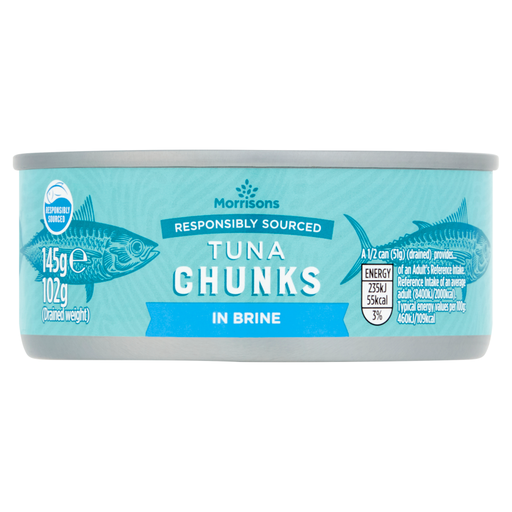 Image unavailable
For shoppers who prefer brine, the listing reports sugars as “Nil” and gives 0.9g salt and 1g fat per 100g drained. Its stated ingredients are tuna, water and salt; compare the current tin’s label with any spring-water alternative.
 Image unavailable
This spring-water multipack is an option if four individual tins suit your cupboard routine. The listing gives 0g sugars and 0.80g salt per 100g drained; check this pack’s draining instructions rather than assuming it is a no-drain variant.
 Image unavailable
The three-tin format may suit someone planning smaller portions. The listing gives 0g sugars and 0.80g salt per 100g; because its use instructions are not consistent about draining, check the exact pack before relying on the No Drain wording.
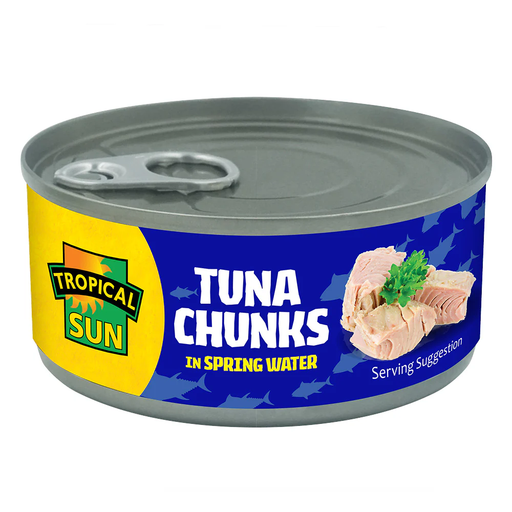 Image unavailable
This 160g spring-water tin is another plain-tuna option to compare. Its listing names tuna, spring water and salt, and gives 0g sugars and approximately 0.5g salt per 100g; confirm the nutrition figures on the exact pack before using them for a dietary comparison.
Not necessarily. Plain spring-water products from Princes Food and Drinks, Marks & Spencer and John West list less than 0.1g or 0g sugars per 100g. Check “of which sugars” and the ingredients on the exact tin; those figures alone do not establish a comparative “reduced sugar” claim.
No such conclusion follows from the packing liquid alone. Sainsbury’s lists 0.12g salt per 100g drained for its spring-water four-pack, while Tesco lists 0.90g per 100g drained for its 3x80g spring-water product. Compare the exact tins you are considering on the same basis.
No. The NHS states that fresh and canned tuna do not count as oily fish, so do not treat a tuna tin as an oily-fish portion when reading its fish guidance.
Tinned tuna contains fish. The Food Standards Agency identifies fish as an allergen that can pose a risk to people with a fish allergy; check the product’s ingredient and allergen information before serving it.
Follow the storage instructions on the exact pack, including how to refrigerate leftovers and when to use them. A portion size you can finish conveniently may be worth considering if you often have tuna left over.