Salt-conscious retirement-household shoppers
If reducing salt is the main reason for choosing a tin, compare the labelled amount per 100g on the products you are considering. The packing liquid alone does not settle the choice.


For a retirement household choosing tinned tuna with less salt, compare the salt figure per 100g on the exact pack rather than assuming spring water or a no-drain format is lower in salt. M&S lists 0.75g per 100g for its Tuna Chunks in Spring Water, while Princes lists 0.85g for its spring-water steaks and 0.9g for its brine chunks; the Princes products are different cuts, so compare similar tins and check the current label before choosing.
If reducing salt is the main reason for choosing a tin, compare the labelled amount per 100g on the products you are considering. The packing liquid alone does not settle the choice.
A no-drain format may make a quick meal simpler to assemble. Check its salt figure as well: John West lists 0.9g per 100g for its No Drain Fridge Pot Tuna Steak in Spring Water.
Tuna can be an ingredient in sandwiches, jacket potatoes, salads or pasta. If you are also planning your weekly fish choices, the NHS says canned tuna does not count as oily fish.
Start with the salt figure, then decide whether draining and portion handling fit the meals you plan to make. Read each nutrition panel on its stated basis before comparing figures.
| Concern | Buying check | Who this matters to |
|---|---|---|
| Salt on the label | Compare salt per 100g on the exact tin, noting whether the figure is for drained tuna. Use similar product types where possible. | If salt is my main concern, I want to compare tins by their labelled figures rather than choose one because it says spring water. About 42% of consumers put that salt comparison first. |
| Preparation and portions | Check whether the pack needs draining, its size and its instructions for storing leftovers. M&S says to transfer unused tuna to a non-metallic container, refrigerate it and eat it within two days. | When I need to put together a quick meal or save part of a tin, the format has to be manageable. For about 25% of consumers, preparation and portion handling are the primary concern. |
| Meal planning | Check protein per 100g on the chosen tin. If planning fish meals for the week, remember that the NHS does not class canned tuna as oily fish. | I may be choosing tuna for sandwiches or other routine meals while thinking about which fish to serve during the week. About 33% of consumers give this kind of meal planning priority. |
John West lists 0.9g salt per 100g for its No Drain Fridge Pot in spring water; M&S lists 0.75g per 100g for its Tuna Chunks in Spring Water. The words on the front of the pack do not replace the nutrition panel.
Use spring water to narrow your search if you wish, then compare the salt figures on the exact products.
Princes lists 0.85g salt per 100g drained for its spring-water tuna steaks and 0.9g per 100g drained for its brine chunks. Both the cut and the packing liquid differ.
Compare similar products within a range where possible, and let the labelled salt value decide between them.
The NHS says fresh and canned tuna do not count as oily fish, even though tuna can be used in everyday fish meals.
If following the NHS advice to include an oily-fish portion during the week, consider a separate option such as salmon, sardines or mackerel.
Sauces and other packaged ingredients can add salt to a tuna sandwich, salad or pasta dish. NHS salt guidance advises paying attention to salt in packaged foods and sauces.
Check the labels of accompaniments as well as the tin when comparing meal options.
Its Tuna Chunks in Spring Water provide a specific label to compare with other tins.
Its spring-water steaks and brine chunks show why the packing liquid and product type both need attention.
Its range includes brine chunks and a no-drain spring-water fridge pot.
Tesco Groceries lists own-label tuna chunks in spring water and brine, as well as tuna steak formats.
These spring-water tuna selections cover a no-drain multipack, a conventional multipack and a single tin. If less salt is the priority, use the current label and its per-100g basis to compare them.
 Image unavailable
Consider this format when avoiding the draining step matters more than choosing by packing liquid alone. Check the current salt figure per 100g and its stated basis before comparing it with drained-tuna values.
 Image unavailable
The four-tin format may suit a household planning tuna for several meals. Check the current pack's salt figure and whether its per-100g value refers to drained contents before comparing it with another tin.
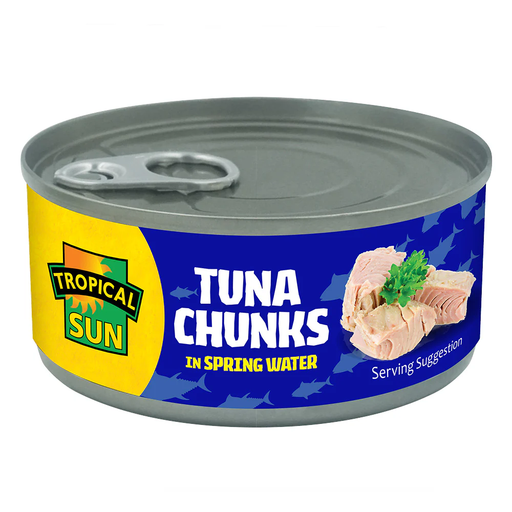 Image unavailable
The single-tin format is an option when a multipack is not needed. If comparing it with other spring-water tuna, check the current salt figure per 100g and whether the nutrition panel describes drained or undrained contents.
No. Princes lists 0.85g salt per 100g drained for its spring-water tuna steaks and 0.9g per 100g drained for its brine chunks, but these are different cuts. Compare the figures on the exact tins rather than applying that difference to every spring-water and brine product.
The figure alone does not establish that claim. M&S lists 0.75g per 100g for its Tuna Chunks in Spring Water; use the nutrition panel to compare it with other tins and consider the salt in the rest of the meal. GOV.UK and the Food Standards Agency advise using nutrition labels to compare salt content.
No. The NHS says fresh and canned tuna do not count as oily fish. Its weekly fish guidance includes a separate oily-fish portion.
Follow the instructions on the product you open. For its Tuna Chunks in Spring Water, M&S says to move unused contents to a non-metallic container, refrigerate them and eat them within two days.