People making breakfast in a hurry
If tuna is going on toast or into a breakfast bowl, check how much is left after draining and whether the tin needs draining at all. A larger can does not necessarily mean a larger amount of ready-to-eat tuna.


For a weekday breakfast, choose a single tin by checking its drained weight and nutrition panel against the amount you expect to eat. Tesco lists a 145g spring-water tin with a 102g drained weight, while Sainsbury's 145g tin lists less salt per 100g drained but was out of stock when checked. A larger tin may suit a different portion, so do not treat the can weight as the amount of tuna you will eat.
If tuna is going on toast or into a breakfast bowl, check how much is left after draining and whether the tin needs draining at all. A larger can does not necessarily mean a larger amount of ready-to-eat tuna.
Spring-water tins can have different salt figures. Tesco lists 0.90g salt per 100g drained for its 145g tin, while Sainsbury's lists 0.12g per 100g drained for its 145g tin. Compare the nutrition panels on the same basis.
A weekday tuna breakfast makes weekly intake worth checking. Consult current NHS and Food Standards Agency guidance when planning how often to eat it.
Start with the edible portion, then compare labels and preparation requirements. Pack weight alone does not answer how much tuna a breakfast will contain.
| Priority | What to check | Your needs |
|---|---|---|
| Portion size | Check both can weight and drained weight. Tesco Groceries lists 102g drained for its 145g spring-water tin; a different can weight does not establish the edible amount. | Will one drained tin provide the amount I want for breakfast, or would I need to keep some for later? |
| Salt and protein | Read the units and whether figures refer to drained tuna. Tesco Groceries lists 0.90g salt and 24.9g protein per 100g drained; Sainsbury's lists 0.12g salt and 26.1g protein on that basis. | I want to compare like-for-like nutrition figures, particularly if other parts of breakfast also contain salt. |
| Preparation | Check whether the product says to drain it and confirm the pack count. John West describes its no-drain spring-water product as ready to use, but that product is a three-pack. | On a rushed morning, less preparation matters to me—but I may still want to buy just one tin. |
| Ingredients and sourcing | Read the ingredient list and product-specific sourcing statements. Princes lists tuna and spring water for its 145g tin; Sainsbury's states pole-and-line catching and MSC certification for its listed tin. | I may want straightforward listed ingredients or a particular stated fishing method, and need to check the claim on the tin I choose. |
| Leftovers | Read the tin's instructions for storage after opening and its specified time for using leftovers. | If I will not eat the whole tin at breakfast, I need a plan for the remainder. |
Tesco Groceries lists a 145g can with a 102g drained weight. Those figures answer different questions about how much tuna is available for breakfast.
Check the drained weight before deciding whether one tin is the right amount.
Tesco Groceries lists 0.90g salt per 100g drained for its 145g tin, compared with 0.12g on the Sainsbury's 145g listing.
Compare salt using the same nutrition basis rather than judging by the packing liquid alone.
The Sainsbury's tin was marked out of stock when its listing was checked, so it may not be an immediate option for a planned breakfast.
Check the current listing or local shelf before relying on a particular tin.
John West's listed no-drain spring-water product is a three-pack. Its preparation format does not make it an individually sold tin.
If buying exactly one tin matters, check the pack count as well as the opening instructions.
These product-line examples provide points of comparison; a brand name alone does not establish the size, nutrition or sourcing of another tin.
Tesco Groceries lists a 145g single tin of skipjack chunks in spring water, with a 102g drained weight.
Sainsbury's lists a 145g skipjack tin in spring water and states pole-and-line catching and MSC certification for this product.
The M&S spring-water tuna-chunks listing is for a 160g tin and states a pole-and-line sourcing approach.
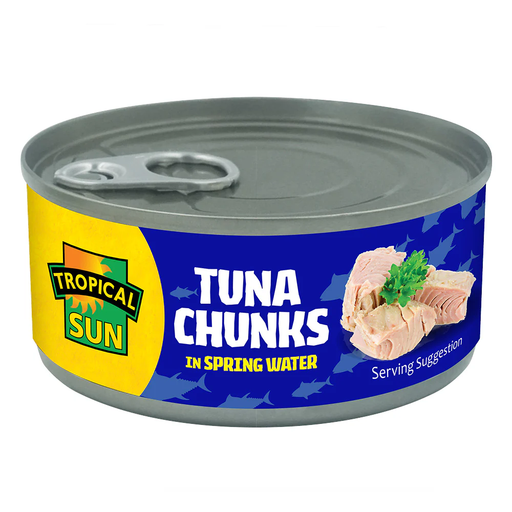
Princes lists a 145g spring-water tuna-chunks format.
John West describes its no-drain spring-water tuna as ready to use; the referenced product is a three-pack.
These are spring-water tuna tins in 145g and 160g formats for a single-tin breakfast choice. Check the drained amount on the pack before deciding which size suits your portion.
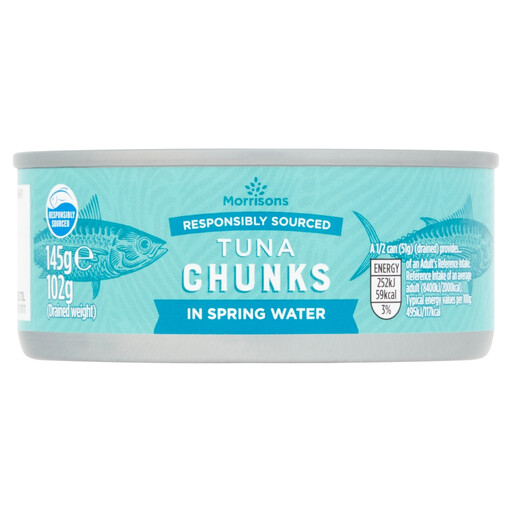 No image available
This 145g tin is a single-tin option for breakfast. Check its drained weight on the pack to judge the portion you will eat.
 No image available
This 160g tin offers a different can size for a single-tin breakfast. Check the drained weight before comparing its edible portion with a 145g tin.
No. The NHS says fresh and canned tuna do not count as oily fish, so a tuna breakfast does not fulfil the oily-fish part of its fish guidance.
Check current NHS and Food Standards Agency advice on weekly tuna intake before making it a five-day routine. Count tuna eaten at other meals as well as breakfast when considering that guidance.
Follow the storage and use-by instructions on your tin. If you expect leftovers, check those directions before opening it rather than assuming every product gives the same time limit.
Check the ingredient and allergen label: tuna is fish. Also read any bone warning; the Tesco product listing warns that its tuna may contain minor bones.