Check which ingredient an organic claim covers before choosing a tin: under the Soil Association’s Great Britain standard, wild-caught tuna cannot itself be sold as organic, although a tin may contain organic olive oil. For school lunches, choose a packing medium and pack size that suit the meals you plan, and assess any MSC label or catch-method claim separately from organic wording. Tuna contains fish, so check the current ingredients and allergen label, particularly when preparing food for someone with a fish allergy.
Who is choosing the tuna?
Organic-ingredient label checkers
Parents and students seeking an organic ingredient in a cupboard staple need to identify whether the claim applies to olive oil rather than wild-caught tuna. The distinction follows the Soil Association’s Great Britain organic standard and the ingredient wording on products such as Fish4Ever Azores tuna steaks.
School-week lunch planners
For sandwiches, wraps or pasta salads, the useful comparison is between packing media, ingredient lists and quantities that fit the meals being prepared. A multipack and a single tin may suit different plans, particularly if some tuna will be left after opening.
Sourcing-conscious tuna buyers
Shoppers looking for an MSC ecolabel, a pole-and-line statement or a retailer sourcing policy need to check which claim appears on the specific product. None of those claims establishes that its ingredients are organic.
What matters when buying?
Start with the claim you care about—an organic ingredient, a fishery-sourcing claim or a practical lunch format—then check the exact tin. The Soil Association’s Great Britain standard distinguishes wild-caught fish from organic agricultural ingredients; an MSC ecolabel and a catch-method statement address different questions again.
| Concern |
What to check |
Who this matters to |
| Organic wording |
Read the ingredients and certification wording to identify which ingredient is organic. Do not take organic olive oil to mean that wild-caught tuna is organic. |
If I am choosing a tin for its organic claim, I need to know whether it applies to the oil or the fish. About 36% of consumers would make that distinction their primary concern. |
| Lunch format |
Compare the packing medium, can size and quantity you will use. Follow the exact tin’s instructions for contents left after opening. |
When I am preparing several school lunches, the tin needs to fit the meals and the amount I will use. Around 29% of consumers would put lunch preparation first. |
| Sourcing evidence |
Look on the exact pack for an MSC ecolabel or a specific catch-method statement; check organic ingredients separately. |
If fishery sourcing drives my choice, I want a claim I can identify on the product rather than assume from its oil or brand. Roughly 21% of consumers would prioritise that evidence. |
| Allergens and fish choice |
Check the current ingredients and emphasised fish allergen. If choosing fish for variety, remember that the NHS does not count canned tuna as oily fish. |
For a household managing a fish allergy, the label can determine whether tuna is suitable at all; others may be planning different fish meals. About 14% of consumers would put these checks first. |
What is easy to overlook?
-
Reading organic olive oil as organic tuna
The Soil Association’s Great Britain standard says products from fishing wild animals cannot be sold as organic. Organic wording on a tuna tin can instead identify an agricultural ingredient, such as olive oil.
Read the ingredient list and certification wording to establish exactly what the organic claim covers.
-
Treating sourcing and organic claims as the same thing
An MSC ecolabel, pole-and-line wording and a retailer sourcing policy describe different aspects of a product. None, by itself, certifies organic ingredients.
Check the exact tin for the sourcing evidence you want, and inspect its ingredients separately if organic status matters.
-
Choosing by packing medium without reading the label
Spring water, brine, oil and added flavourings mean different ingredient lists. That matters when a tin is going into a particular lunch or must be checked for allergens.
Compare the current ingredients and decide whether the packing medium suits the meal; for an organic-oil choice, check that the oil itself is identified as organic.
-
Counting tuna as an oily-fish choice
The NHS states that fresh and canned tuna do not count as oily fish. Choosing tuna for a convenient lunch therefore does not make it an oily-fish portion.
If you are planning different fish meals for the household, account for that distinction when choosing what else to prepare.
Brands to consider
These examples show why the claim on an individual tin matters more than a brand name when choosing between organic ingredients, a short ingredient list and sourcing information.
Fish4Ever
An option for shoppers seeking wild tuna packed with an identified organic agricultural ingredient.
- The Organic Butchery lists Fish4Ever Azores tuna steaks with skipjack tuna and certified organic extra-virgin olive oil; it also describes the tuna as pole- or line-caught.
- The organic ingredient is the oil, not a claim that the wild-caught tuna is organic. Check the current tin if either claim is decisive.
Princes
A spring-water route for shoppers who want to compare a short ingredient list and multipack formats.
- Princes lists tuna and spring water as the ingredients of its Tuna Chunks in Spring Water.
- Princes’ company-wide statement about MSC-certified tuna is not an organic-ingredient claim. Check the certification and ingredients on the tin you choose.
M&S
An own-label example for buyers interested in a product-specific catch-method statement alongside spring-water packing.
- M&S describes its Tuna Chunks in Spring Water as pole-and-line caught under its Forever Fish policy.
- That description is not an organic claim or a statement about every M&S tuna product. Read the current pack for its ingredients and sourcing wording.
Sainsbury's
A place to compare own-label tuna packed in spring water, brine or oil.
- Sainsbury's lists tuna products in several packing media, giving shoppers different ingredient formats to compare.
- A category listing does not establish an organic claim for an individual tin. Check its own product label if certified organic ingredients are the reason for buying.
Tuna for school-week meals on Joybuy
These Joybuy selections are spring-water and brine tuna formats for planning school-week meals. If an organic ingredient is essential, assess that claim on the current product label rather than treating these packing media as evidence of it.
 Image unavailable
Morrisons Fad Free Tuna Chunks in Spring Water, 6 × 145g
The six-tin format suits a plan that uses tuna across several lunches. Each tin is 145g and packed in spring water; check the current ingredients and fish-allergen label before preparing food for someone with an allergy.
View on Joybuy
 Image unavailable
John West Tuna Chunks in Springwater, 4 × 125g
Four 125g tins offer separate cans for meals prepared on different days. This is a spring-water format, not an organic-ingredient claim; read the current ingredients and fish-allergen label.
View on Joybuy
 Image unavailable
John West No Drain Tuna Chunks in Springwater, 3 × 100g
The no-drain format may suit a lunch prepared without a separate draining step. The pack contains three 100g tins in springwater; check the current label for ingredients and the fish allergen.
View on Joybuy
 Image unavailable
Morrisons Fad Free Tuna Chunks in Spring Water, 145g
A single 145g tin suits a meal plan that does not call for a multipack. It is packed in spring water; if you use only part of the tin, follow its current after-opening instructions and check its fish-allergen label.
View on Joybuy
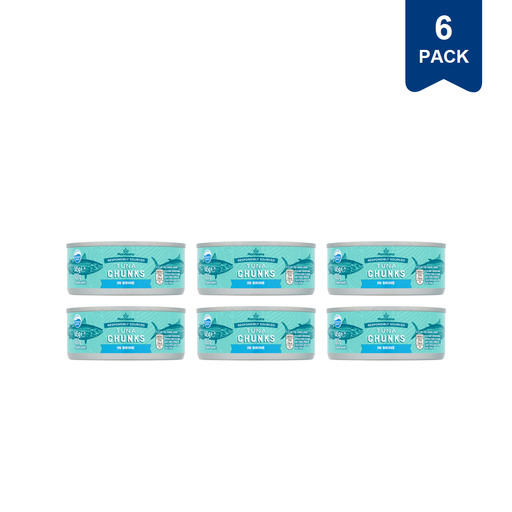 Image unavailable
Morrisons Fad Free Tuna Chunks in Brine, 6 × 145g
This six-tin pack is for shoppers choosing brine rather than spring water for multiple meals. Each tin is 145g; compare the current ingredients with the spring-water options and check the fish-allergen label.
View on Joybuy
Questions about tinned tuna
Can wild-caught tinned tuna be sold as organic in the UK?
Wild-caught tuna cannot itself be sold as organic under the Soil Association’s Great Britain standard for products from fishing wild animals. A tin can contain an organic agricultural ingredient, such as olive oil; read the current ingredients and certification wording to see precisely what the claim covers.
Does an MSC label mean the tuna has organic ingredients?
No. An MSC ecolabel concerns fishery sourcing, while an organic claim concerns certified organic production or ingredients. Check each claim separately on the exact tin.
Is tinned tuna suitable for someone with a fish allergy?
No. Tuna is fish and is not suitable for someone with a fish allergy. The Food Standards Agency says prepacked foods must list ingredients and emphasise allergens present in them; check the current pack, including on flavoured products.
Does tinned tuna count as oily fish?
No. The NHS states that fresh and canned tuna do not count as oily fish. Keep that distinction in mind if you are choosing different fish meals for the household.
What should I do with tuna left after opening a tin?
Follow the instructions on that product’s current label. For its Tuna Chunks in Spring Water, M&S instructs shoppers to transfer unused contents to a non-metallic container, refrigerate them and eat them within two days; instructions for another tin may differ.


