Households making sandwiches, wraps or pasta pots
Tuna can provide the fish element of a packed lunch. Bedfordshire Community Health Services NHS Trust advises including starchy food and fruit or vegetables too.


Plain tuna chunks in spring water are a flexible choice for sandwiches, wraps and pasta pots; a no-drain pack avoids a draining step, while chunks and flakes suit a mixed sandwich filling. Choose by the exact pack’s fish-allergen information, salt per 100g, tin size and instructions for leftovers. For a packed lunch, use tuna alongside a starchy food and fruit or vegetables, as NHS packed-lunch guidance advises.
Tuna can provide the fish element of a packed lunch. Bedfordshire Community Health Services NHS Trust advises including starchy food and fruit or vegetables too.
Tuna is unsuitable for a pupil with a fish allergy. GOV.UK identifies fish as an allergen that must be declared when it is an ingredient in UK prepacked food; check the physical pack each time.
A no-drain pack removes the separate draining step. Check the particular pack’s ingredients, allergen information and instructions for any tuna left after opening.
Start with whether tuna is suitable for the pupil, then compare the format, nutrition label and tin size against how the lunch will be prepared.
| Priority | What to check | Your needs |
|---|---|---|
| Fish allergy | Read the ingredients and allergen information on the physical pack. GOV.UK says fish must be clearly labelled when present in UK prepacked food. | If the pupil has a fish allergy, I need a lunch without tuna. |
| Lunch format | Choose plain chunks for a tuna base, a stated no-drain product to skip draining, or chunks and flakes for a mixed filling. Check the exact product rather than assuming every tin in a range has the same format. | I might use tuna in a sandwich one day and a pasta pot another; on a hurried morning, avoiding a draining step may matter more. |
| Lunch components | Plan a starchy base and fruit or vegetables alongside the tuna. Bedfordshire Community Health Services NHS Trust recommends including foods from these groups in a packed lunch. | For a tuna wrap or pasta pot, I want to plan the rest of the lunch as well as the filling. |
| Salt and portion | Compare salt per 100g on the same drained-product basis, then check how much tuna the planned portion uses. The reviewed Sainsbury’s 145g tin lists 0.12g salt per 100g drained; the reviewed Asda 4 x 145g pack lists 0.90g. | If salt matters in my household’s choice, a spring-water label alone does not tell me how the tins compare. |
| Tin size and leftovers | Check the tin or multipack size against one preparation session. Read the exact pack’s directions for transferring, refrigerating and using any leftovers. | A tin that fits the amount I usually prepare may be simpler than planning another use for opened tuna. |
Reviewed product labels differ: Sainsbury’s lists 0.12g salt per 100g drained for its 145g tin, while Asda lists 0.90g for its 4 x 145g pack.
Compare the current packs on the same per-100g basis and consider the portion you intend to use.
Tuna does not supply all the food groups in Bedfordshire Community Health Services NHS Trust’s packed-lunch guidance.
Put it in a sandwich, wrap or pasta pot and include fruit or vegetables.
Directions differ by product: the reviewed Sainsbury’s tin says to refrigerate and use within one day, while the reviewed Tesco 4 x 160g product says to transfer unused contents to a covered non-metallic container, refrigerate and consume within two days.
Follow the instructions on your pack and choose a tin size that fits your likely use.
Plain tuna still contains fish. GOV.UK identifies fish as an allergen that must be declared when it is an ingredient in UK prepacked food.
Do not pack tuna for a pupil with a fish allergy; read the physical pack’s allergen information each time.
These examples describe particular reviewed products, not every tuna product sold under each name.
Its reviewed No Drain Tuna Chunks with a Little Spring Water offers a distinct preparation format.
The reviewed range includes plain spring-water chunks and a separate Sandwich Tuna made with chunks and flakes.
Its reviewed own-label spring-water chunks come in a 4 x 160g multipack.
The reviewed own-label product is a 145g tin of skipjack tuna chunks in spring water.
The reviewed own-label spring-water tuna is a 4 x 145g pack.
The reviewed four-pack contains skipjack tuna chunks in spring water.
These options cover a stated no-drain format and plain tuna chunks in spring water for preparing sandwiches, wraps or pasta pots. Check each pack for fish-allergen information and directions after opening.
 No image available
The stated no-drain format removes a preparation step when making a tuna filling. This three-tin pack contains fish; follow the pack’s instructions for any tuna left after opening.
 No image available
A single tin of plain chunks is an option when making a sandwich or pasta filling without opening a multipack. It contains fish; compare the current pack’s salt label and follow its leftover-storage directions.
 No image available
This four-tin pack offers plain chunks for sandwiches or pasta pots. It contains fish; check the exact pack if a no-drain format matters, and refrigerate leftovers according to its instructions.
 No image available
Six 145g tins provide separate portions of plain chunks for repeated lunch preparation. The tuna contains fish; compare the current salt label and follow the opened-tin storage instructions.
 No image available
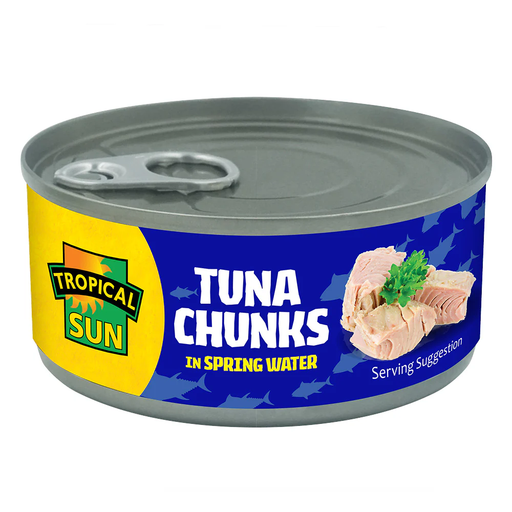
This 160g tin of spring-water chunks is an option for a sandwich, wrap or pasta filling. It contains fish; the product information says to drain the spring water and refrigerate unused tuna after opening.
No. Tuna is fish, so exclude it for a pupil with a fish allergy. GOV.UK says fish must be clearly labelled in the ingredients list when it is present in UK prepacked food; check the physical pack rather than relying on a range name.
No. Use it as one part of the lunch: Bedfordshire Community Health Services NHS Trust advises including a starchy food and fruit or vegetables alongside a protein food. A tuna sandwich, wrap or pasta pot can provide the base for that combination.
Follow that product’s storage instructions and refrigerate leftovers. The reviewed Sainsbury’s 145g tin says to use them within one day; the reviewed Tesco 4 x 160g product says to transfer them to a covered non-metallic container and consume within two days.
Yes. Check the individual school’s current lunch and allergy policy before sending a tuna packed lunch. Tuna contains fish, so also check the pupil’s own allergy requirements.