Parents preparing quick school lunches
A spring-water multipack can provide a plain filling for sandwiches, wraps or pasta salads prepared at home. If draining slows down assembly, look for a pack specifically labelled no-drain.


For a home-prepared school lunch, spring-water tuna makes a plain sandwich or pasta-salad filling when you can deal with any draining during preparation; a labelled no-drain pack removes that step. Choose brine or sunflower oil when its flavour or texture suits the recipe, comparing the current ingredients and nutrition label rather than treating the formats as interchangeable. Tuna contains fish, so check the pack and the school’s allergy arrangements before packing it.
A spring-water multipack can provide a plain filling for sandwiches, wraps or pasta salads prepared at home. If draining slows down assembly, look for a pack specifically labelled no-drain.
Tuna is fish, not shellfish. Check the current ingredient and allergen statement before it enters a lunchbox, and follow the child’s individual allergy arrangements and the school’s rules.
Check the number of tins and their drained weights when comparing standard packs. A no-drain format changes the preparation step, so decide whether that matters for your lunch routine as well as the amount of tuna you will use.
Start with the child’s and school’s requirements, then choose the packing medium and tin format that fit how you prepare lunch.
| Priority | What to check | Your needs |
|---|---|---|
| Fish and school rules | Read the current fish declaration on the pack. Confirm any individual allergy arrangements and school rules before packing tuna. | I need to know whether tuna is suitable for this child and their school, rather than relying on a previous purchase or an online listing. |
| Preparation | Look for an explicit no-drain claim if avoiding liquid matters. For other spring-water tins, check the directions for the particular variant. | When lunch has to be assembled quickly, I would rather not drain a tin at the point of preparation. |
| Packing medium | Compare ingredients and nutrition per 100g on the same stated basis. Sainsbury’s lists 180kcal and 9.5g fat per 100g drained for Princes tuna in sunflower oil, against 99kcal and 0.5g fat for its cited Princes spring-water pack. | A plain filling suits my sandwiches, but I might choose oil-packed tuna when its flavour and texture fit a pasta salad. |
| Amount to use | Check tin count, net weight and, where stated, drained weight. Decide how much an opened tin will contribute to the lunches you are preparing. | I want a tin size that fits the number of portions I am making without opening more than I need. |
| After opening | Follow the pack’s leftover-storage directions and check for a bones warning. Flake and inspect tuna before packing it for a child. | If I use only part of a tin, I need a plan for the remainder as well as a filling ready to pack. |
Tuna contains fish. Fish and shellfish are different categories, so the name of one allergy does not answer whether tuna is suitable for a particular child.
Read the current pack’s allergen statement and follow the child’s individual allergy arrangements and the school’s rules.
Liquid and pack format affect how much tuna is available for a filling. Net weight alone may not describe the portion you intend to use.
Check the stated drained weight where available, and consider whether avoiding the draining step matters to your routine.
In Sainsbury’s cited Princes products, tuna in sunflower oil lists 180kcal and 9.5g fat per 100g drained, while the spring-water pack lists 99kcal and 0.5g fat on that basis. Those figures describe these products, not every oil- or water-packed tin.
Choose the medium for the recipe, then compare the current labels using the same per-100g basis.
An opened tin needs different handling from an unopened store-cupboard tin, and some product labels warn that bones may remain.
Follow the actual tin’s storage instructions for leftovers, and flake and inspect the tuna before packing it for a child.
These range examples describe particular cited products; check the current pack when comparing a different size or variant.
Its cited range includes no-drain tuna in spring water for lunch preparation without a draining step.
The cited products include smaller spring-water tins and tuna in sunflower oil.
The cited own-label 4 x 145g multipacks include spring-water and brine variants.
Its cited own-label spring-water tuna comes in a 4 x 145g multipack.
The cited spring-water tuna offers another plain filling format to compare.
This composite order considers reduced draining, a plain sandwich filling and standard multipack use for school lunches. It is not an independent taste test, sales ranking or comparison of the whole market; individual product details come from John West, Joybuy, Tesco Groceries and ASDA Groceries.
| Rank | Tuna | Main specifications | Why it appears here | Platform |
|---|---|---|---|---|
| 1 | John West No Drain Tuna Chunks in Springwater 3 x 100g | No-drain spring-water format; John West lists 90% tuna. | John West and the cited retailer describe a format that avoids draining during lunch preparation. | Joybuy |
| 2 | Tesco Tuna Chunks in Spring Water 4 x 145g | Skipjack tuna and spring water, according to Tesco Groceries. | A plain spring-water multipack for fillings prepared at home; check its directions before allowing for draining. | Tesco |
| 3 | ASDA Tuna Chunks in Spring Water 4 x 145g | ASDA Groceries lists tuna and spring water. | Another standard spring-water multipack for planning several home-prepared fillings. | ASDA |
These options cover no-drain and standard spring-water tuna as well as sunflower-oil tuna for home-prepared school lunches. Check each pack’s fish declaration and directions before use.
 Image unavailable
The no-drain format avoids a draining step when preparing a sandwich or salad filling. This product contains fish; check the current label and the school’s allergy arrangements.
 Image unavailable
A spring-water multipack for planned sandwich or pasta-salad fillings. Check this variant’s pack directions before relying on it for preparation without draining, and check its fish declaration before packing.
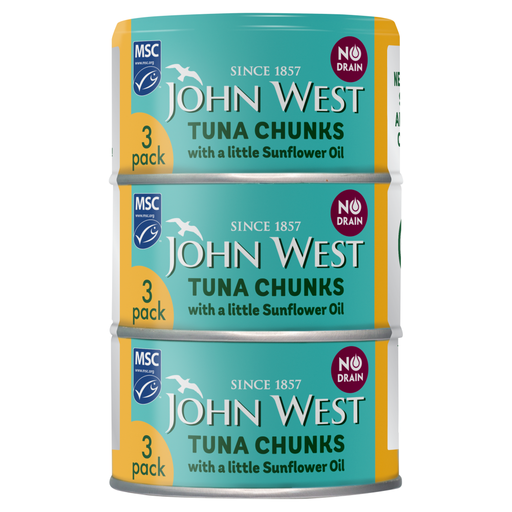 Image unavailable
This no-drain, oil-packed variant suits a filling where sunflower oil fits the recipe. When comparing its nutrition with spring-water tuna, check the basis stated on the current labels. It contains fish.
 Image unavailable
A six-tin spring-water pack for preparing several sandwich or pasta fillings at home. Allow for draining during preparation, and check the current fish declaration and leftover-storage directions.
 Image unavailable
An oil-packed multipack to consider when that medium suits the filling. Check and flake the tuna before packing it for a child: the product description warns that bones may remain. It contains fish.
No. Tuna is fish, not shellfish, but it still requires an allergen check. Read the current fish declaration and follow the child’s individual allergy arrangements and the school’s rules before including it in a packed lunch.
Spring water suits a plain filling, while a labelled no-drain spring-water pack avoids draining during preparation. Choose brine or sunflower oil when it fits the recipe, and compare current labels rather than assuming the variants have the same nutrition. Sainsbury’s cited Princes oil and spring-water products, for example, list different fat and energy values per 100g drained.
Follow the storage and use-after-opening directions on that tin. If you are preparing only one lunch, consider the amount you will use before opening it, and refrigerate any remainder as directed on the pack.
No. The NHS says that fresh and canned tuna do not count as oily fish, so a tuna packed lunch should not be counted as an oily-fish portion on that basis.