Households making lunch quickly
A small no-drain tin removes the separate draining step when making a sandwich, wrap or pasta salad. Check the tin size against the amount needed for that lunch rather than choosing on convenience alone.


Paying more for tuna loins makes sense if the pupil prefers substantial pieces; a plain spring-water steak suits a short ingredient list, while a small no-drain tin cuts out a preparation step. None of those formats guarantees a particular nutrition profile, so compare the exact tin’s ingredients, salt, packing medium, portion size and allergen information.
The useful distinction is what the pupil will eat and what the person packing lunch has time to prepare.
A small no-drain tin removes the separate draining step when making a sandwich, wrap or pasta salad. Check the tin size against the amount needed for that lunch rather than choosing on convenience alone.
Loins and steaks are worth considering when the pupil prefers recognisable pieces of tuna to chunks mixed into a filling. Check the exact product for any bones warning.
Tuna contains fish. A plain spring-water product may have a short ingredient list, while a flavoured variant needs its own check: John West’s sundried-tomato Infusions, for example, declares sulphites as well as fish.
Start with the texture and preparation format that suit the lunch, then compare labels for the exact variants under consideration.
| Priority | What to check | Your needs |
|---|---|---|
| Texture | Look for loins, steaks or chunks on the label. Check whether the tuna is packed in oil, water or brine. | If substantial pieces appeal to the pupil, I would consider loins or steaks. For a mixed sandwich filling, chunks may do the job. |
| Preparation and portion | Check whether draining is needed, how much is in each tin and whether the pack gives a drained weight. | On a rushed morning, I want fewer preparation steps; if I am packing one lunch, I also want to know how much an opened tin provides. |
| Nutrition label | Compare salt and fat on the same per-100g basis, noting whether the figures refer to drained tuna. Check the packing medium rather than relying on a premium label. | When choosing between oil, spring water and brine, I want to compare the exact products, not assume that a loin or steak has a particular nutrition profile. |
| Ingredients and allergens | Read the ingredients, fish declaration and any precautionary allergen statement for the exact flavour and pack. | If an ingredient or allergen matters in our household, I need to check flavoured tuna separately from plain tuna. |
| Use after opening | Check the pack’s instructions for unused contents and look for any bones warning. Confirm the school’s current packed-lunch policy where relevant. | If a tin will cover more than one lunch, I need a way to store the remainder as the pack directs. |
Loins in olive oil and steaks in spring water offer different textures and packing media; the word ‘premium’ does not tell you their salt or fat content.
Choose the format for the attribute you value, then compare the exact products’ nutrition panels on the same basis.
Tuna contains fish, and added flavourings can change the ingredient and allergen declarations. John West’s sundried-tomato Infusions declares sulphites as well as fish.
Read the ingredients and any precautionary statement whenever the flavour or pack changes.
The NHS states that fresh and canned tuna do not count as oily fish.
If including oily fish is a separate household aim, do not count a tinned-tuna lunch towards it.
A tin that supplies more tuna than the lunch needs will leave opened contents to store. Some tuna products also carry a warning that bones may be present.
Check the amount needed, read any bones warning and follow that pack’s instructions for unused tuna.
These product lines illustrate different formats; a brand name alone does not determine the ingredients or nutrition of every variant.
Its No Drain range includes tuna steaks in smaller tins and flavoured Infusions variants.
Its examples include albacore tuna loins in olive oil and tuna steak in spring water.
Its plain tuna chunks in spring water provide an option for fillings where whole loin pieces are not important.
These options include no-drain chunks in spring water and tuna steaks in sunflower oil for secondary-school lunch fillings. Choose by the texture and preparation format needed for the particular lunch.
 Image unavailable
For a sandwich or salad filling when avoiding a draining step matters, this pack contains three 100g tins of tuna chunks in spring water. Tuna contains fish; check the exact label and its instructions for opened contents.
 Image unavailable
Consider this steak format for a pupil who prefers distinct pieces of tuna in a sandwich or salad. It is packed in sunflower oil; check the tin’s drained weight and nutrition panel if portion size or fat content matters. Tuna contains fish.
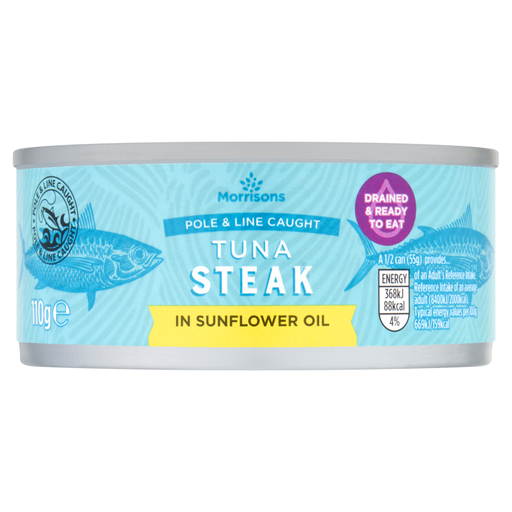 Image unavailable
This 110g sunflower-oil tuna-steak tin is an option for a sandwich or salad filling. If preparation time matters, check the exact pack to establish whether any draining is needed. Tuna contains fish.
No. A premium description may refer to the fish or the form of the pieces, not a set salt or fat content. Compare the nutrition panels for the exact loins, steaks or chunks you are considering, using the same per-100g basis.
No. The NHS states that fresh and canned tuna do not count as oily fish. A tinned-tuna packed lunch therefore does not fulfil a separate aim to include oily fish.
Tuna contains fish, so do not treat it as suitable for a child with a fish allergy. Follow the child’s individual allergy plan and medical advice, and check the exact product label and any precautionary statement.
Yes. Ingredients can change with the flavour: John West’s sundried-tomato Infusions declares sulphites as well as fish. Read the declaration on the exact variant rather than relying on a plain tuna tin’s label.
Follow the opened-pack storage and use instructions on the exact tin. Check them before choosing a larger can if you expect to use only part of it for one lunch.