Organic-ingredient label checkers
You want to know precisely which ingredient is certified organic. Joybuy’s Fish4ever ingredient listing names skipjack tuna and organic olive oil separately, making the label wording central to this choice.


Choose tuna packed in certified organic olive oil when the organic ingredient and an oil-packed serving format are your priorities; choose an MSC-labelled tin when that sourcing label matters more to you than organic oil. An organic claim on the oil does not automatically describe the fish, so check the ingredient and certification wording alongside the species, format and product-specific sourcing claims.
You want to know precisely which ingredient is certified organic. Joybuy’s Fish4ever ingredient listing names skipjack tuna and organic olive oil separately, making the label wording central to this choice.
Species, fillet or steak format, and packing oil matter when tuna will be served in a salad or on a simple plate. Check those details on the individual tin rather than assuming all oil-packed products are alike.
You want the exact product’s fishing-method, certification or traceability information alongside its ingredients and species. These claims can differ between lines from the same brand.
If you are choosing between tuna in organic olive oil and an MSC-labelled tin, decide which claim matters most, then compare the exact products you would use.
| Concern | What to check | Who this matters to |
|---|---|---|
| Organic ingredient | Read the ingredients and certification wording to establish whether organic describes the oil or another ingredient, rather than the tuna. | I want to choose an organic ingredient without mistaking the packing oil’s claim for a claim about the fish. About 36% of consumers put that distinction first. |
| Species and format | Compare the named species, fillets or steaks, packing oil and drained weight where stated. | For a salad or a simple plate, I care about the fish and format I will serve, not just the size of the tin. About 29% of consumers make serving format their primary concern. |
| Sourcing details | Look for MSC labelling, fishing-method statements or traceability information on the exact product. | I want a sourcing claim I can identify on the tin I am buying, rather than a general impression of the brand. About 21% of consumers prioritise that evidence. |
| Everyday use | Check the packing medium, salt information, usable quantity and instructions for storing an opened tin. | When I use tuna regularly, it needs to fit the dishes I make and the portions I can use. About 14% of consumers put those practicalities first. |
In Joybuy’s Fish4ever listing, the ingredients distinguish skipjack tuna from certified organic olive oil. The claim for one component should not be applied to the other.
Read the ingredient list and certification wording. GOV.UK says that using ‘organic’ in UK food labelling or advertising requires inspection and certification.
MSC labelling, pole-and-line fishing, Fair Trade wording and boat traceability describe different things and may apply to particular product lines.
Check the species, fishing-method statement and certification or traceability details on the exact tin.
A tin’s total weight includes its oil or other packing medium, while fillets, steaks and other formats serve different purposes.
Compare drained weight where it is given, and consider whether you will use the olive oil in the finished dish.
Organic packing oil and sourcing claims do not change the NHS guidance on tuna consumption during pregnancy.
If you are pregnant, follow the NHS limit of no more than four cans of tuna or two tuna steaks a week.
A brand to examine if organic olive oil is your priority. Its individual UK listings identify tuna packed in organic olive oil.
An olive-oil-packed tuna option to compare when species and serving format matter more than an organic-ingredient claim.
A reference point for shoppers considering an MSC-certified tuna route rather than organic olive oil.
A reference point when can-code traceability is a priority.
This tuna-steak option is for shoppers who want an explicitly identified organic packing oil and a format for salads or simple dishes.
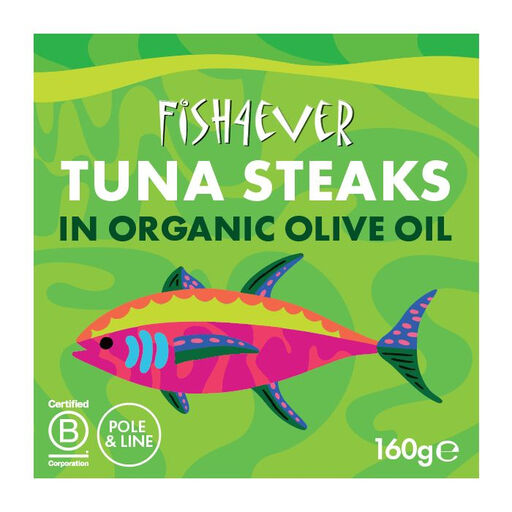 Image unavailable
The steak format and olive-oil packing suit shoppers planning to serve tuna in salads or simple dishes.
Joybuy lists skipjack tuna (65%), organic olive oil (33.5%) and sea salt (1.5%); its ingredient wording identifies certification for the organic oil, not for the fish.
If usable fish quantity or fishing-method details will determine your choice, check the exact tin for those particulars before comparing it with another product.
Not necessarily. Joybuy’s Fish4ever listing identifies skipjack tuna and organic olive oil separately, so its oil claim should not be read as certification of the fish. GOV.UK says use of ‘organic’ in UK food labelling or advertising requires inspection and certification; check which ingredient the wording covers.
Start with the species, fish format, ingredients and drained weight where stated. Then check claims on each exact product: Ocado’s Fish4Ever listings, for example, describe yellowfin and skipjack products with different Fair Trade, pole-and-line or traceability details.
The NHS advises eating no more than four cans of tuna or two tuna steaks a week during pregnancy. That guidance still matters when a tin contains organic olive oil or carries a sourcing label.
Follow the storage instructions on the exact product. Joybuy’s Fish4ever product information calls for refrigeration after opening, so check its label when planning to keep leftovers.