What to check when choosing
Settle allergen suitability before comparing salt. Once a tin meets your allergy requirements, use its nutrition panel rather than its packing medium or convenience format to judge the salt figure.
| Concern |
What to check |
Who this matters to |
| Allergen suitability |
Read the current pack’s ingredients, declared allergens and any precautionary statement. Exclude tuna for anyone with a fish allergy. |
If I am avoiding an allergen, I need to establish whether this exact tin is suitable before considering its salt content. About 46% of consumers put allergen suitability and pack checks first. |
| Comparable salt level |
Compare the exact tins’ salt figures on the same basis, preferably per 100g drained, and consider the portion used. |
When choosing tuna for a meal, I want to compare its salt contribution without assuming spring water means reduced salt. Roughly 36% of consumers make comparable salt levels their primary concern. |
| Ingredients and format |
Read the ingredient list and choose the chunks, steaks or no-drain format that fits the meal, after the essential allergy and salt checks. |
If I want a straightforward ingredient list or less draining during preparation, the format affects which tin I pick. Around 18% of consumers prioritise ingredients and ease of use. |
Spring-water tuna on Joybuy
These selections are spring-water tuna chunks, including one no-drain format. Their packing medium is a starting point for choosing a format, not proof of reduced salt or allergy suitability; check the exact pack before use.
 No image available
John West Tuna Chunks in Springwater, 4 x 125g
A four-can spring-water option if you want tuna chunks for several meals. Tuna contains fish and is unsuitable for someone with a fish allergy; compare the current pack’s salt panel and check any precautionary allergen wording before use.
View on Joybuy
 No image available
John West No Drain Tuna Chunks in Springwater, 3 x 100g
Consider the no-drain format if less preparation matters to you. It is still fish; check the current pack’s allergy information and the basis of its salt figure before comparing it with drained tuna.
View on Joybuy
 No image available
Morrisons Fad Free Tuna Chunks in Spring Water, 6 x 145g
The six-pack may suit a plan to use tuna chunks across several meals. As with any tuna, exclude it for a fish allergy and read each current pack’s salt and precautionary allergen information.
View on Joybuy
 No image available
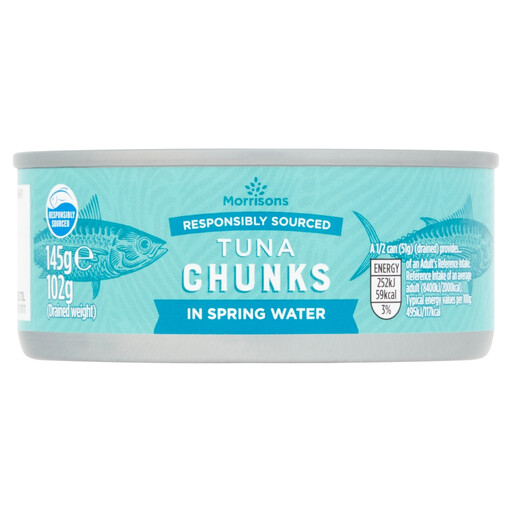
Morrisons Fad Free Tuna Chunks in Spring Water, 145g
This single 145g can is an option when you do not want the six-pack variant. Check its own salt panel rather than assuming the two pack formats have identical labelling, and review the current allergy information; tuna is fish.
View on Joybuy
 No image available
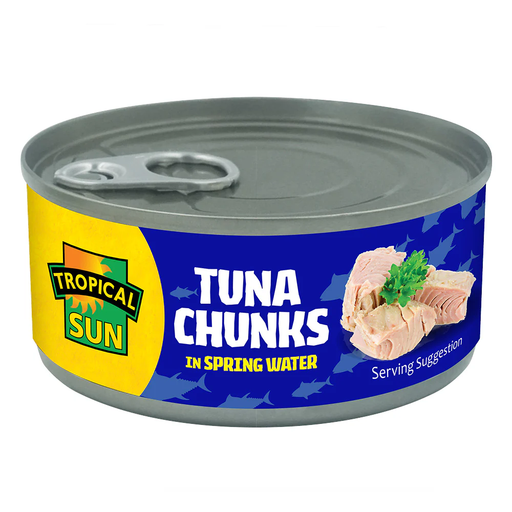
Topical Sun Tuna Chunks in Springwater, 160g
A 160g spring-water tin to assess by its own label. Tuna contains fish; also check the current pack for precautionary wording relevant to soybeans or wheat, and establish the salt figure’s basis before a like-for-like comparison.
View on Joybuy
Questions about salt and allergies
Can someone with a fish allergy eat tinned tuna?
No. Tuna is fish, whatever its salt level or packing medium. Check other ingredients and precautionary statements for any additional allergies that matter to the person eating it.
Is spring-water tuna always lower in salt than brine tuna?
No general rule follows from the packing medium. Princes lists 0.85g salt per 100g drained for its spring-water chunks, while an Asda listing gives 0.90g per 100g drained for Princes brine chunks; compare the current labels of the exact tins you are choosing.
What allergy information should I check when ordering online?
Check the listed ingredients, declared allergens and any precautionary statement, then read the physical pack when it arrives. Tesco and Sainsbury’s caution that product information and ingredients can change.
What is the general UK adult salt guidance?
The NHS advises adults to have no more than 6g of salt a day, including salt already in food and salt added during cooking. Use the tin’s nutrition panel and the amount you plan to eat when considering its contribution; follow individual clinical advice where applicable.
Can I ignore a ‘may contain’ warning if the allergen is not an ingredient?
Do not ignore a warning relevant to your allergy. The Food Standards Agency explains that precautionary allergen labelling communicates possible unintended allergen presence; assess the named allergen against your individual allergy-management advice.


