Cooks plating tuna as a separate component
If you want visible fish pieces beside eggs, beans and toast, start with a product labelled steaks, loin or fillets. Choose its packing medium to suit the rest of the plate.


If tuna will sit beside the eggs, beans and toast, choose labelled steaks or fillets for recognisable pieces; chunks make more sense when you plan to mix the fish into a dish. An oil-packed option suits a richer addition, while a spring-water steak suits a plainer one. Check the exact pack for ingredients, nutrition, sourcing claims and serving instructions rather than treating “premium” as a quality guarantee.
If you want visible fish pieces beside eggs, beans and toast, start with a product labelled steaks, loin or fillets. Choose its packing medium to suit the rest of the plate.
A no-drain steak in spring water offers recognisable pieces without an oil-packed serving. Compare the exact pack’s salt and serving instructions before adding it to a breakfast with other seasoned foods.
Look for a certification label or a catch-method statement on the particular product. Neither tells you the size of its pieces or how it will taste, so check the cut and ingredients separately.
Decide how you will serve the tuna, then compare packs on the same nutrition basis and check any instructions that affect preparation or leftovers.
| Priority | What to check | Your needs |
|---|---|---|
| Piece format | Look for steaks, loin or fillets when plating the fish separately; consider chunks when mixing it through another dish. Check the pack rather than relying on “premium”. | I want the tuna to remain recognisable beside eggs and toast, rather than disappear into the beans. |
| Packing medium | Compare olive oil, sunflower oil, spring water or brine on the exact cans. Marks & Spencer describes its olive-oil tuna steak as rich and flaky; the cited John West spring-water steak lists 1g fat per 100g. | A richer fish component appeals to me, or I would rather start with the plainer taste of spring water. |
| Nutrition basis | Compare protein, fat and salt per 100g on like-for-like bases, noting whether figures refer to drained tuna or the whole product. Check the portion you will actually serve. | If bacon, sausages or beans are also on my plate, I want to see the tuna’s salt figure before choosing a pack. |
| Sourcing claim | Check the particular can for the MSC blue fish label or an explicit catch-method statement. The Marine Stewardship Council explains its label in terms of fishery stock, environmental-impact and management requirements. | I care about the fishery behind this product, but I still need to choose the cut and packing medium separately. |
| Serving and storage | Read whether the product needs cooking, whether it needs draining, and what to do after opening. Do not assume instructions for one tuna product apply to another. | For a quick breakfast, I need preparation instructions that fit the time I have; I also want to know how to keep any leftovers. |
Chunks can work well mixed into eggs, beans or a hash, but they do not offer the same distinct-piece presentation as a labelled steak or loin.
Decide whether the tuna will be a separate component or mixed in before choosing the format.
Marks & Spencer describes its olive-oil tuna steak as rich and flaky. That flavour choice is separate from deciding which nutrition profile suits the breakfast.
Compare the exact oil-packed and spring-water products’ per-100g labels, using the same drained or whole-product basis.
The tuna’s salt contributes to a plate that may also contain bacon, sausages or beans; the packing medium alone does not tell you the salt figure.
Read salt per 100g and per serving on each candidate pack.
Retailer sourcing statements and product-specific labels answer different questions. A historical policy does not identify the certification or catch method of the can in your hand.
Check the current pack or its product page for the claim that matters to you.
These examples illustrate formats and label details to compare, not a judgement about every product made by each brand.
Its Tuna Steak in Olive Oil is an example of an oil-packed steak for serving as a separate fish component.
Its No Drain Fridge Pot Tuna Steak in Spring Water is a reference for a steak-format option without oil packing.
Its Tuna Chunks in Sunflower Oil illustrate the mixing-in route when intact plated pieces are not the aim.
Tesco Groceries lists tuna steaks and chunks across oil, spring-water and brine categories, providing formats to compare.
These oil- and brine-packed steaks and olive-oil fillets are options to consider when tuna will be a visible addition to breakfast. Check each product’s preparation instructions before serving it.
 No image available
Consider this steak format when you want to plate the tuna separately. The product information permits serving it cold or gently warmed; follow its instructions if warming it.
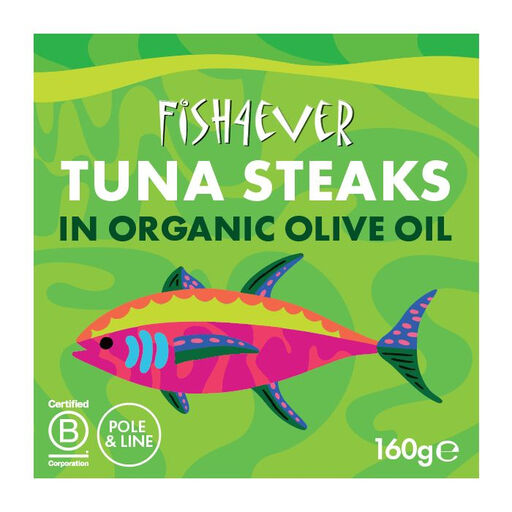 No image available
The steak format and olive-oil packing suit a separately plated fish component. If sourcing influences your choice, check the claim on the exact can; follow its refrigeration instructions after opening.
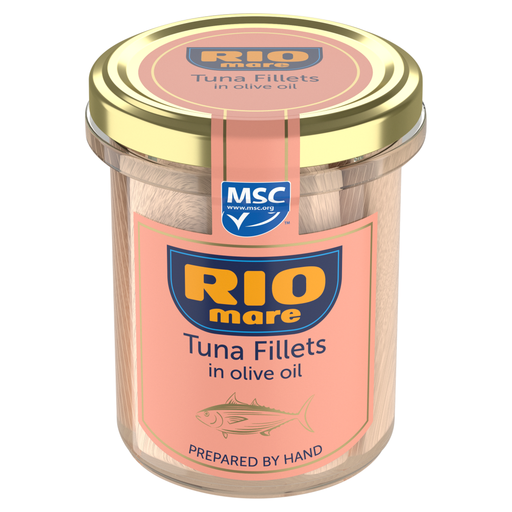 No image available
Fillets offer another format to consider for serving tuna as a separate component. The 180g glass jar is packed in olive oil; compare nutrition figures on a consistent whole-product or drained basis, and check the jar for opened-storage instructions.
 No image available
This brine-packed steak format is for a cooked fish addition, not immediate serving from the can. The product instructions say to cook it thoroughly until piping hot and not to eat it raw; after opening, refrigerate it in a covered container and consume within 24 hours.
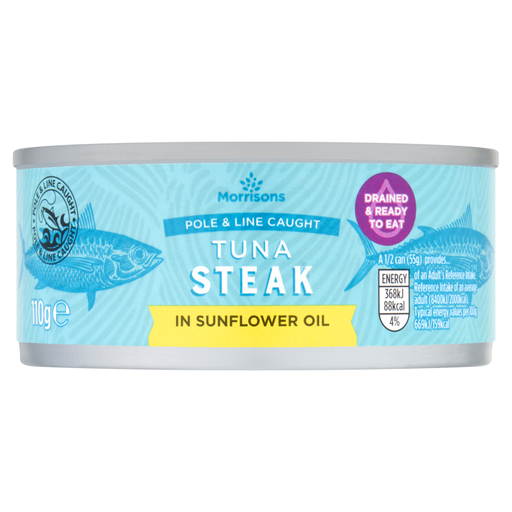 No image available
The steak format suits a separately plated tuna addition, with sunflower oil named in the product. Check the exact pack’s draining directions before relying on no-drain convenience: the title says “Drained”, while the product description says “No Drain”.
Choose oil packing if you want a richer fish component, or spring water if you prefer a plainer one without added oil. Marks & Spencer describes its olive-oil tuna steak as rich and flaky; John West lists 1g fat per 100g for its cited spring-water steak. Compare the exact packs before deciding.
Follow the instructions for the particular product; the word “steak” does not settle how to prepare it. For example, Tropical Sun Tuna Steaks in Brine instructs buyers to cook the product thoroughly until piping hot and not to eat it raw.
No. The NHS states that fresh and canned tuna do not count as oily fish, regardless of whether the tuna is packed in oil.
Follow the NHS guidance on tuna quantity during pregnancy: no more than four cans of tuna a week or two tuna steaks a week. The NHS links this limit to tuna’s mercury content; an oil, water or sourcing label does not replace the guidance.
Follow the opened-pack instructions for the tuna you bought. For the cited John West Fridge Pot, the Ocado listing says to replace the lid, refrigerate it and use it within two days; other packs can have different directions.