What matters when choosing?
For one- or two-person households seeking fillet-like pieces in tinned tuna, start with the cut and portion, then compare the liquid and product-specific label.
| Concern | What to check | Who this matters to |
|---|
| Piece size |
Look for steak or fillet wording and check that the format suits your dish; tinned fish is not a raw fillet. |
If I want tuna to remain visible in a salad or on a jacket potato, the cut comes before convenience. About 31% of consumers put discernible pieces first. |
| Portions and preparation |
Compare the pack weight, individual portions, draining instructions and storage directions after opening. |
When I am making one lunch, I would rather open a suitable portion than plan around a larger leftover tin. Avoiding extra handling is the primary need for about 25% of consumers. |
| Liquid and nutrition |
Check whether the tuna is packed in water, brine or oil, and compare nutrition per 100g on the exact labels. |
If the tuna is going into pasta, I may want the oil; for another dish, the label values may matter more. Roughly 25% of consumers put liquid and nutrition first. |
| Sourcing and labelling |
Read the pack for species, ingredients, the fish-allergen declaration and any product-specific catch or certification claim. |
I want to know what the particular tin says about its fish and sourcing, rather than rely on a brand-wide impression. For about 19% of consumers, that label assurance is the main concern. |
Tinned tuna selections on Joybuy
These tuna steaks are packed in sunflower or olive oil. They are options to consider when an oil-packed, ready-to-eat tin suits the meal, rather than substitutes for raw fresh fillets.
 No image available
Tropical Sun Tuna Steaks in Sunflower Oil
Consider this sunflower-oil tuna when the recipe calls for a tinned steak format. Check the current pack for its portion and storage directions if you will not use it all at once.
View on Joybuy
 No image available
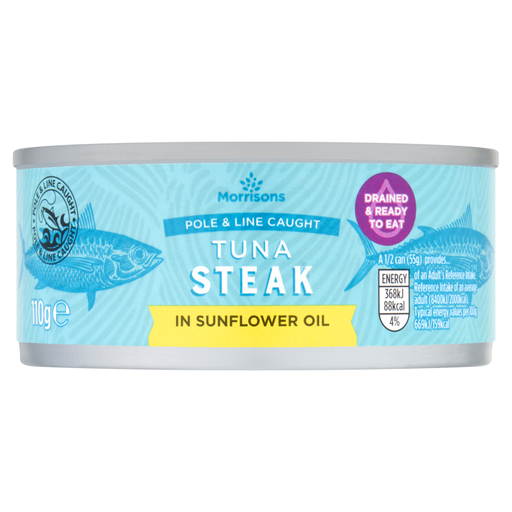
Morrisons Drained Tuna Steaks with Sunflower Oil 110g
The single 110g tin may fit a meal planned around a smaller portion of oil-packed tuna. The product title says drained, while its description says no-drain, so check the pack before relying on either preparation method.
View on Joybuy
 No image available
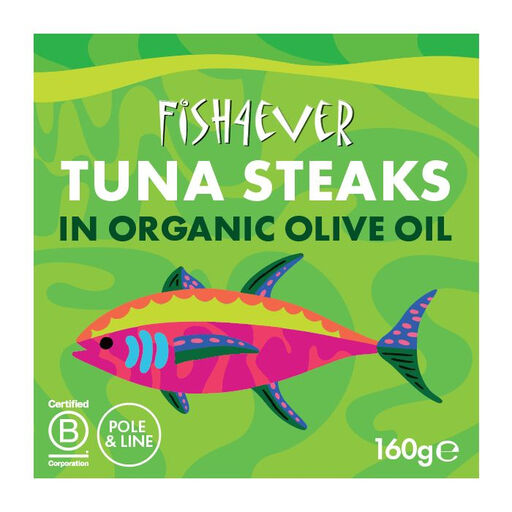
Fish4ever Tuna Steaks in Organic Olive Oil 160g
This 160g olive-oil tin is an option for a meal where oil-packed tuna suits the dish. Its title says steaks but its description also refers to chunks; check the expected piece format if intact, fillet-like pieces are your priority.
View on Joybuy
Questions about tinned tuna
Are tinned tuna steaks the same as fresh fillets?
No. Tinned steaks and fillets are preserved, ready-to-eat fish, whereas a raw fresh fillet is bought to cook. Choose by the meal you intend to make, not the word steak alone.
Should I choose spring water or sunflower oil?
Choose by the recipe and the exact nutrition label. Marks & Spencer lists 99 kcal and 0.6g fat per 100g for its spring-water tuna steak, compared with 159 kcal and 6.4g fat per 100g for its sunflower-oil steak; that comparison does not establish the values of other brands.
What should I do with tuna left after opening a tin?
Follow that product's directions for transferring, covering, refrigerating and using the remainder. Storage instructions differ between products, so check them before choosing a tin that will take more than one meal to finish.
How do I check whether a tuna product has MSC certification?
Look for the claim on the specific pack rather than assuming it applies across a brand. In its UK Tuna Shopper Report, the Marine Stewardship Council reported that 138 of 271 shelf-stable tuna products examined in February 2026 carried its label; that category finding does not identify the certification status of another tin.
Where should I check for fish-allergen information?
Read the current product's ingredients and allergen declaration. GOV.UK explains that food businesses must identify regulated allergens, including fish, and the exact pack is the place to check the product you intend to use.


