Shared-flat cupboard stocker
You want several separate tins for meals, but do not yet know how often your flatmates will use them.


A four-tin pack is a starting point when a student is moving into a shared flat and nobody yet knows how quickly the tuna will be used. Consider a larger multipack once use and cupboard space are clearer; in either case, check the drained weight rather than treating the weight on the outer pack as the amount available for meals.
You want several separate tins for meals, but do not yet know how often your flatmates will use them.
You want to know how much tuna remains after draining, not just the weight printed on the multipack.
You are setting up a shared kitchen and would rather choose a ready-drained format for quick lunches than drain a standard tin.
For a first cupboard shop, choose a tin count you can use, then compare drained quantity, preparation and any dietary considerations.
| Concern | What to check | Who this matters to |
|---|---|---|
| Number of tins | Check the tin count and whether regular household use justifies storing a larger pack. Princes lists spring-water formats of 4 x 145g, 6 x 145g and 8 x 145g. | When a flat is new, I would rather start with several separate tins than commit to a large stock-up. About 36% of consumers put pack size first. |
| Usable quantity | Compare stated drained weights for the exact products: Tesco Groceries lists 4 x 10²g drained for its 4 x 145g spring-water pack. | If I am planning meals from each tin, the amount left after draining matters more to me than its net weight. Drained quantity is the primary concern for about 29% of consumers. |
| Preparation and filling medium | Check whether the tuna is packed in spring water, brine or oil, or labelled no-drain; read the exact ingredients and nutrition panel. | With a shared kitchen to keep tidy, I want a lunch ingredient that needs little preparation. Roughly 21% of consumers prioritise ease of use. |
| Consumption planning | Consider who will eat the tuna. The NHS advises no more than four cans a week for people who are pregnant or trying for a baby. | If that guidance applies to me, I need to plan how often I will eat tuna before choosing a large pack. About 14% of consumers put dietary planning first. |
Net weight and drained weight answer different questions. Tesco Groceries lists 4 x 145g net but 4 x 10²g drained for its spring-water four-pack.
Use the drained figure when planning how much tuna will be available after opening.
Princes lists spring-water packs of up to 8 x 145g, but an unfamiliar household may not use that many tins regularly.
Consider starting with four tins, then reassess once you know your household’s use and storage space.
A larger pack also occupies cupboard space until it is used.
Spring-water, brine, oil and no-drain products are distinct choices. Their ingredients and nutrition figures need to be checked on the specific tin.
Choose the filling medium for the meal you intend to make and read that product’s label.
The NHS says fresh and canned tuna do not count as oily fish. It also advises people who are pregnant or trying for a baby to have no more than four cans of tuna a week.
Plan purchases around the people eating the tuna, rather than treating a larger multipack as a reason to eat it more frequently.
Asda Groceries lists a John West tuna-chunks-in-brine pack of 4 x 132g.
Princes Food and Drinks lists spring-water tuna chunks in formats including 3 x 80g, 4 x 145g, 6 x 145g and 8 x 145g.
Tesco Groceries lists own-label tuna chunks in spring water as 4 x 145g, with 4 x 10²g drained.
Sainsbury's lists own-label tuna chunks in spring water and brine in 4 x 145g packs.
Asda Groceries lists the John West 4 x 132g brine pack, with ingredients and storage guidance on its product page.
M&S lists a 160g spring-water tuna tin. M&S describes it as pole-and-line caught and traceable under its Forever Fish policy.
These selections are four-tin tuna-chunk packs in different filling media, plus a smaller three-tin no-drain option. Check the drained quantity on the pack when deciding how much tuna you need.
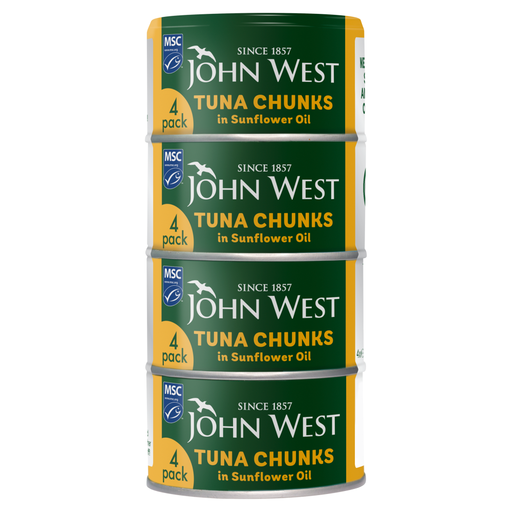 No image available
Consider this if you want four separate tins and prefer tuna packed in sunflower oil. The pack contains 4 x 125g tins; check its drained weight when planning portions.
 No image available
Consider this four-tin pack if springwater is your preferred filling medium for meals such as salads or sandwiches. It contains 4 x 125g tins; check the drained weight for the usable quantity.
 No image available
Consider this if you want four separate 145g tins and prefer brine-packed tuna for meals such as sandwiches or pasta. Check its drained weight before comparing the amount available with another four-pack.
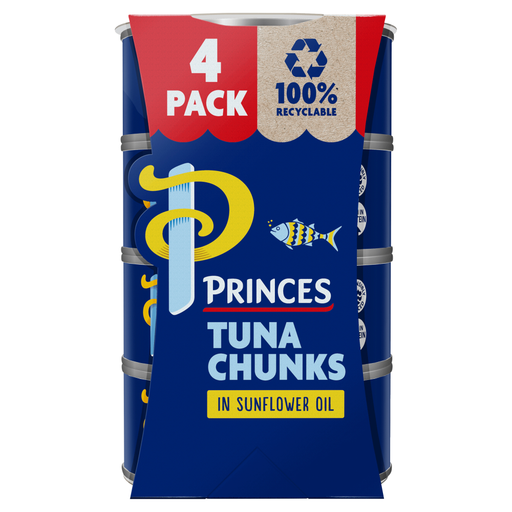 No image available
Consider this when you want a four-tin cupboard pack with tuna in sunflower oil. Each tin is labelled 145g; use the pack’s drained-weight figure to plan the amount for meals.
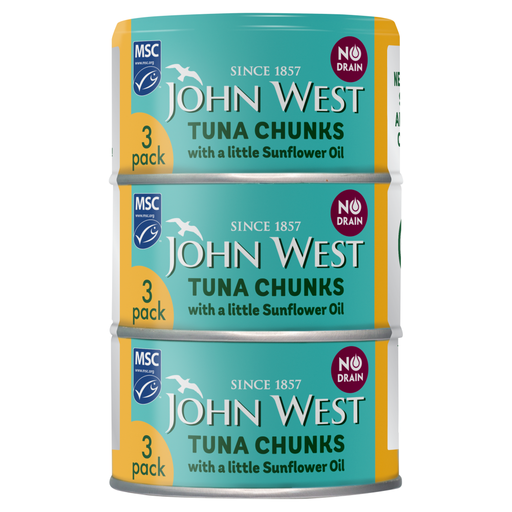 No image available
Consider this smaller multipack if avoiding a draining step matters more than stocking four tins. Its no-drain format contains three 100g tins of tuna in sunflower oil.
A four-pack is a starting quantity when shared-household use is still unknown. If the flat uses tuna regularly and has cupboard space, Princes Food and Drinks lists larger spring-water formats of 6 x 145g and 8 x 145g; check the drained quantity of the pack you choose.
Use drained weight when you want to know how much tuna remains after removing packing liquid. Tesco Groceries lists its spring-water four-pack as 4 x 145g net and 4 x 10²g drained; do not apply that drained figure to other packs.
Refrigerate unused tuna and follow the storage directions on the exact product. Asda Groceries’ listing for John West Tuna Chunks in Brine 4 x 132g says to refrigerate unused product and consume it within two days.
A larger pack should still be planned around intake guidance. The NHS advises people who are pregnant or trying for a baby to have no more than four cans of tuna a week.
No. The NHS says that fresh and canned tuna do not count as oily fish, so a tuna multipack does not replace an oily-fish choice.