Students stocking a cupboard
If you are buying tins for several meals after moving in, compare the stated drained quantity and consider whether a single tin or multipack fits what you will use.


For flexible cupboard meals, start with standard tuna chunks and check the drained quantity to see how much tuna each tin or multipack provides. Choose a no-drain format when avoiding the draining step matters more to your routine, or check the exact tin for a sourcing label if that is a priority; neither feature applies automatically across a brand.
If you are buying tins for several meals after moving in, compare the stated drained quantity and consider whether a single tin or multipack fits what you will use.
If kitchen equipment or clean-up time is limited, a product explicitly labelled no-drain may suit sandwiches, wraps, salads or pasta without a separate draining step.
If sourcing affects your choice, look for an MSC ecolabel or a catch-method statement on the specific product rather than relying on the retailer or brand name.
For a move-in cupboard, decide how much usable tuna you need, then whether preparation, meal texture or a specific sourcing claim changes your choice.
| Concern | What to check | Who this matters to |
|---|---|---|
| Drained quantity and portions | Check the drained weight, where stated, rather than treating total can weight as tuna. For a multipack, check both the tin size and pack count. | If I am stocking up for several meals, I want to know how much tuna I can use after draining. About 46% of consumers put usable quantity and portions first. |
| Less draining and washing-up | Look for an explicit no-drain or ready-to-use description; check the pack size against the meals you plan to make. | With a newly set-up kitchen, I may need to put lunch together without a sieve or much clean-up. For about 27% of consumers, that low-mess preparation is the primary need. |
| Meal fit and texture | Check whether the product contains chunks or flakes, and read nutrition figures for the exact product on the basis stated on its label. | If I want a sandwich filling or noticeable chunks in pasta, the format needs to suit that dish. Meal fit comes first for about 18% of consumers. |
| Specific sourcing information | Check the individual tin for an MSC ecolabel or a product-specific catch-method statement. | When choosing a tin, I may want to identify its stated sourcing before settling on a format. About 9% of consumers make that their primary concern. |
Brine, spring water or sauce contributes to the filled weight. Two tins of similar size need not provide the same quantity of tuna after draining.
Compare stated drained quantities where available, and choose a pack size you can use for the meals you have planned.
Princes describes its Sandwich Tuna as a mix of chunks and flakes, while John West describes its No Drain range as ready to use. Those distinctions affect texture and preparation.
Choose chunks when you want pieces in a dish, a chunk-and-flake format for a filling if that texture appeals, or an explicitly no-drain tin to skip draining.
A sourcing statement for one product does not establish the catch method or certification of another. The Marine Stewardship Council counted MSC labels on 138 of 271 shelf-stable tuna products available in its February 2026 UK review, not on every product.
If MSC certification matters to you, check the individual product for the blue ecolabel. Read other sourcing statements with their product-specific scope in mind.
Tesco lists own-label tuna chunks alongside other tinned-tuna formats, giving cupboard shoppers several pack types to inspect.
Sainsbury's Tuna Chunks in Brine is an own-label option for meals that call for standard chunks.
Princes lists standard chunks in brine and a separate Sandwich Tuna format.
John West offers a No Drain format for shoppers who want to skip a preparation step.
M&S provides product-specific sourcing information for its 160g Tuna Chunks in Spring Water.
Asda is another retailer students may consider when assembling a move-in shop.
These options include standard chunks, no-drain chunks and seasoned flakes for cupboard meals. Choose by the preparation and texture your meals call for.
 Image unavailable
Choose this format when you want tuna chunks for a quick meal without a separate draining step.
The pack contains three 100g tins in springwater. Check the tin when serving, as the product information warns that some bones may remain.
 Image unavailable
This four-tin pack suits cupboard meals such as sandwiches, salads and pasta when you want springwater tuna chunks.
Each tin is 125g. Check the instructions for this exact pack before relying on it as a no-drain option.
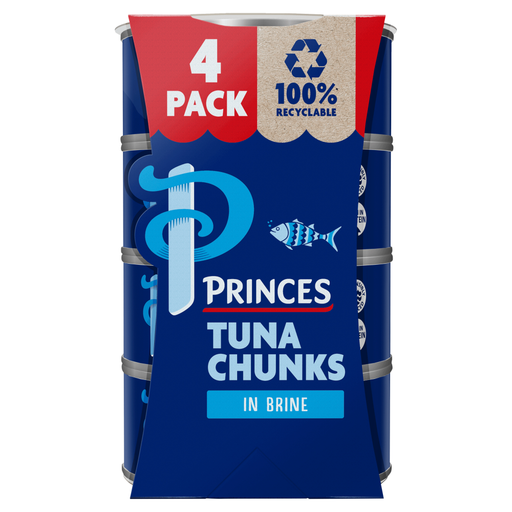 Image unavailable
This pack offers standard chunks for students planning several sandwiches, salads or pasta meals.
It contains four 145g tins in brine. Use the pack's drained quantity when working out how many portions it will provide.
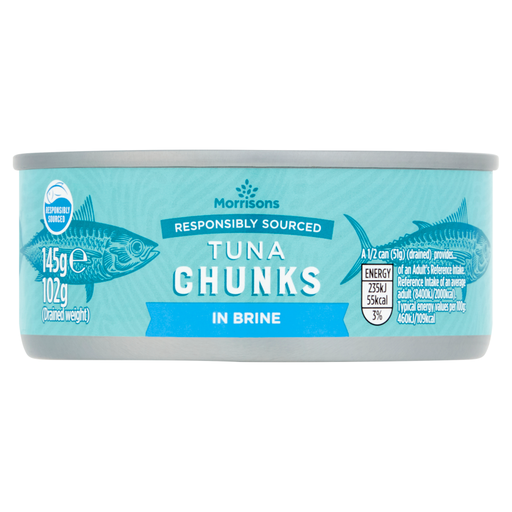 Image unavailable
A single tin may suit a cupboard shop when you want tuna chunks for a planned sandwich, salad or pasta meal.
This is a 145g tin in brine. Check the contents when serving, as the product information warns that some bones may remain.
 Image unavailable
Choose these seasoned flakes for a meal where adobo-style sauce fits better than plain tuna chunks.
The tin is 180g. Check its ingredient and allergen declaration, particularly if fish, soybeans or wheat are relevant to your household.
Check the drained weight, where stated, to compare the quantity of tuna rather than the total weight of tuna and packing liquid. For a multipack, check how many tins it contains and whether you will use them.
An explicitly no-drain product is useful when you want to add tuna to a sandwich, salad or pasta without draining it first. Check the exact variant rather than assuming every tin from the same brand works that way.
Follow the storage and use-by-after-opening instructions on that product's label. Transfer leftovers to a suitable container and refrigerate them as directed; instructions can differ between products.
Tuna is fish, so check the ingredient and allergen declaration on the exact tin, particularly when shopping for a shared flat. Seasoned products may have additional ingredients that also need checking.
No. Look for the blue MSC ecolabel on the individual product you intend to buy; a label or sourcing statement on one tin does not establish certification for the rest of a brand's range.