What matters when choosing tuna?
Check sugars on the exact variant first, then choose between packing media and compare salt and usable portions. When comparing nutrition panels, keep figures stated per 100g drained separate from figures stated simply per 100g.
| Concern |
What to check |
Who this matters to |
| Sugar in the exact tin |
Read sugars on the nutrition panel and check whether the ingredients describe plain tuna or a dressed or flavoured product. |
When I am stocking my cupboard for the first time, I want to know whether a sugar claim changes my choice of plain tuna. About 37% of consumers would put that reassurance first. |
| Water or oil |
Compare fat and energy on the same stated nutrition basis; check which packing medium suits the meal. |
For sandwiches or salads, I may prefer a plain spring-water base rather than oil-packed chunks. Choosing the packing medium for fat and energy would be the main concern for about 27% of consumers. |
| Salt |
Compare salt per 100g drained for the exact variants rather than judging by “brine” or “spring water” alone. |
If I am deciding between brine and spring water, I want to see how their salt figures differ. About 18% of consumers would make that comparison their priority. |
| Portions and leftovers |
Check drained weight, can size and the instructions for storing tuna after opening. |
When a tin is for one meal, I need a portion I can use without leaving more than I can store as directed. For about 18% of consumers, portion planning would come first. |
Joybuy tuna selections
These selections cover plain spring-water chunks, a brine-packed multipack and a sunflower-oil multipack. Choose the packing medium for your meal, then check the exact tin’s nutrition panel and drained weight.
 No image available
Morrisons Fad Free Tuna Chunks in Spring Water, 6 x 145g
A spring-water multipack to consider if you are stocking tuna for several meals. The pack contains six 145g cans; check the drained weight on the packaging when planning edible portions.
View on Joybuy
 No image available
John West Tuna Chunks in Springwater, 4 x 125g
Four spring-water tins for meals where you want plain tuna without choosing an oil-packed variant. The stated 125g is the can size; consult the pack for the drained quantity if that determines your portion.
View on Joybuy
 No image available
John West No Drain Tuna Chunks in Springwater, 3 x 100g
Consider this three-can No Drain format if avoiding a separate draining step matters to your meal preparation. Its nutrition figures are stated per 100g; check the label’s basis before comparing them with figures stated per 100g drained.
View on Joybuy
 No image available
Princes Tuna Chunks in Brine, 4 x 145g
A four-can brine-packed option if that seasoning suits your meals. Check sugars and salt on this exact variant’s current label rather than applying figures from another Princes product; use drained weight to plan portions.
View on Joybuy
 No image available
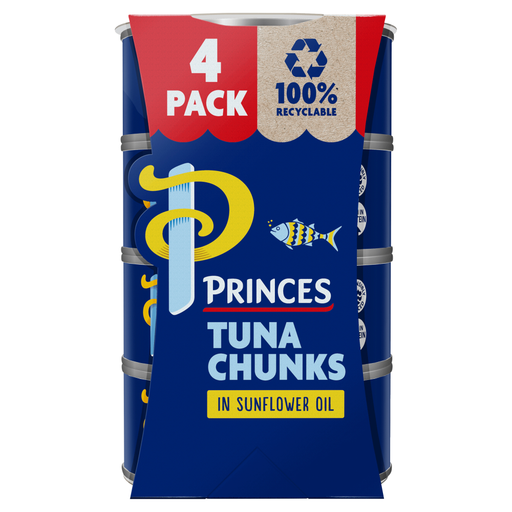
Princes Tuna Chunks in Sunflower Oil, 4 x 145g
Choose this four-can format when sunflower oil suits the recipe, rather than treating low sugars as a reason to overlook the packing medium. Check whether the current nutrition panel uses a drained-weight basis before comparing its figures with water-packed tuna.
View on Joybuy
Frequently asked questions
Do I need to seek out “reduced sugar” tinned tuna?
Not solely on the basis of plain tuna’s sugar content. Tesco Groceries lists 0g sugars per 100g drained for its spring-water and brine examples, while Princes Food and Drinks lists less than 0.1g for its spring-water and sunflower-oil chunks. Check the exact label, particularly for dressed or flavoured tuna.
Should I choose spring water, brine or oil?
Choose by the meal and the figures on the products you are comparing. In the Princes Food and Drinks examples, spring-water chunks list 0.5g fat and 99kcal per 100g drained, against 9.5g fat and 180kcal for sunflower-oil chunks. If choosing brine, compare its salt figure with that of the particular spring-water tin.
How should I store tuna left in an opened tin?
For the Tesco Groceries products described here, move unused tuna to a non-metallic container, cover it, refrigerate it and eat it within two days. Follow the directions on your chosen tin, as storage instructions can differ.
Which allergen should I check on tinned tuna?
Tuna is fish, and the Tesco Groceries examples identify fish in their ingredients. If you need to avoid fish, check the allergen information on the exact product rather than relying on its packing medium or a sugar claim.
Does pregnancy change how much tuna the NHS advises eating?
Yes. NHS pregnancy guidance advises no more than four cans of tuna or two tuna steaks a week because tuna can contain pollutants, including mercury. A reduced-sugar label does not change that guidance.


