For a toddler dinner, plain tuna in spring water is a practical starting point if you want to control what else goes into the meal, but its salt content still needs checking on the exact tin. Choose a pack that fits the amount you plan to use, follow its instructions for leftovers, and check for bones before serving. Tuna contains fish, so a child with a known fish allergy needs their individual allergy advice rather than a different tuna tin.
Who is this for?
Parents making a quick, plain dinner
If you want tuna to mix into a familiar meal, NHS recipe guidance uses drained tinned tuna in spring water in a dish for children aged 12 months and over. You still need to prepare a texture your child can manage and check for bones.
Parents comparing salt and ingredients
If keeping the ingredient list straightforward matters to you, compare the current labels rather than relying on the words “spring water”. Named spring-water tins from Sainsbury’s, Tesco and Princes declare different amounts of salt per 100g.
Parents planning around leftovers
If a whole tin is more than you need for one meal, compare drained amounts and the instructions for opened contents. Named Sainsbury’s products specify use within one day after opening, while named Tesco, Asda and M&S products specify two days; follow the tin you buy.
What matters when choosing a tin?
Start with the label and the amount you will use, then consider how the tuna will fit into the meal. A packing liquid or front-of-pack description cannot settle those questions on its own.
| Concern | What to check | Who this matters to |
|---|
| Ingredients and salt |
Read the ingredient list and compare salt per 100g on the same declared basis. For context, NHS food-label guidance calls 0.3g or less per 100g low salt; this is not a toddler serving allowance. |
If I want a plain ingredient for dinner, I need to know how much salt the particular tuna contributes rather than judge it by its packing liquid. About 31% of consumers put ingredients and salt first. |
| Texture and bones |
Choose tuna you can flake or mash into the planned dish, and inspect it for bones before serving. |
When I mix tuna into my toddler’s meal, I want a texture they can manage and time to check each portion. Texture and bone checks are the primary concern for about 31% of consumers. |
| Pack size and leftovers |
Compare drained weight with the amount you plan to use; read the exact pack’s refrigeration and use-after-opening instructions. |
A large tin could leave me with more tuna than the meal needs, so I would plan another use before opening it. Roughly 23% of consumers prioritise pack size and leftover handling. |
| Sourcing statements |
Check the fishing-method or certification statement on the specific product, not just the brand name. |
If a stated fishing method matters to my storecupboard choice, I want to see it on the tin I take home. It is the first consideration for about 15% of consumers. |
Mistakes to avoid
-
Assuming spring-water tuna is always low in salt
Sainsbury’s 4 x 145g spring-water tuna declares 0.12g salt per 100g drained, while named Tesco and Asda spring-water products declare 0.90g per 100g. The packing liquid does not tell you the salt figure.
Compare salt on the current labels using the same per-100g basis, then consider the amount you will serve.
-
Serving chunks without checking them
Named Asda and M&S product listings warn that bones may remain. NHS toddler recipe guidance mashes the drained tuna.
Inspect the tuna for bones, then flake or mash it into a texture your child already manages.
-
Opening a large tin without a plan for the rest
Opened-product instructions differ: named Sainsbury’s listings specify use within one day, while named Tesco, Asda and M&S listings specify two days after refrigeration.
Check the drained amount before buying. If you expect leftovers, follow the storage container, refrigeration and timing instructions on that tin.
Tuna left over beyond the pack’s stated period may have to be discarded.
-
Overlooking a known fish allergy
Tuna is fish. A different packing liquid or brand does not make tinned tuna an allergen-free substitute.
For a child with a known allergy, follow their individual allergy plan or clinician’s guidance and check the current product label.
Brands to compare by product label
These brands offer relevant tuna formats, but ingredients, nutrition declarations and storage instructions belong to individual products, not entire ranges.
John West
Its range includes spring-water chunks and no-drain formats for shoppers comparing preparation and pack size.
- The Asda listing for John West Tuna Chunks in Spring Water names tuna, spring water and salt.
- That listing warns that bones may remain; check the label and inspect the tuna before serving.
Princes
Princes offers spring-water, brine and sunflower-oil tuna, allowing a choice of packing liquid for the planned dish.
- Princes lists tuna and spring water as the ingredients of its named spring-water chunks, with 0.85g salt per 100g drained.
- Its named brine product includes salt and declares 0.9g per 100g drained; check each format separately.
Tesco
Tesco’s spring-water range includes compact multipacks, making drained amount useful to compare.
- Tesco Groceries lists 56g drained per can for its 3 x 80g Tuna Chunks in Spring Water.
- That product declares 0.90g salt per 100g; a small can is not, by itself, a lower-salt choice.
Sainsbury’s
Sainsbury’s spring-water tuna comes in more than one pack format, so match the drained amount to the meal.
- Its named 4 x 145g spring-water product declares 0.12g salt per 100g drained.
- The named product instructs shoppers to refrigerate leftovers and use them within one day.
Asda
Asda has own-label spring-water tuna in single-can and multipack formats.
- Asda Groceries lists tuna and spring water as ingredients of its named 145g single can.
- The same product declares 0.90g salt per 100g drained and warns that bones may remain.
M&S
M&S spring-water chunks are an option for shoppers checking a stated sourcing claim on a particular product.
- The Marks & Spencer listing names skipjack tuna and spring water and states a pole-and-line sourcing claim.
- It warns that bones may remain. Check the current pack for its ingredients and instructions.
Spring-water tuna options on Joybuy
These tins are spring-water tuna options for meals in which you plan to flake or mash the fish. Compare their pack sizes and current labels before choosing; none is an alternative for a child with a known fish allergy.
 Image unavailable
John West No Drain Tuna Chunks in Springwater 3 x 100g
The no-drain format may suit a meal where you want to flake tuna without pouring off liquid. The pack is labelled 3 x 100g; check the can’s salt declaration and portion information, and inspect for bones before serving. Contains fish.
View on Joybuy
 Image unavailable
Morrisons Fad Free Tuna Chunks in Spring Water 145g (6 Packs)
For repeated meals using spring-water tuna, check the current pack quantity and drained amount before deciding how many tins you need. The product name specifies 145g and “6 Packs”; compare salt on the current label, and inspect and flake the tuna before serving. Contains fish.
View on Joybuy
 Image unavailable
John West Tuna Chunks in Springwater 4 x 125g
The 4 x 125g format gives you separate tins to open as needed for meals. Compare the drained amount and salt declaration on the current pack with the portion you plan to use; inspect for bones and flake or mash before serving. Contains fish.
View on Joybuy
 Image unavailable
Morrisons Fad Free Tuna Chunks in Spring Water 145g
This 145g tin is an option when you want spring-water chunks to flake into a meal. Check its drained amount against what you expect to use and read the current salt and leftover instructions. Inspect for bones before serving. Contains fish.
View on Joybuy
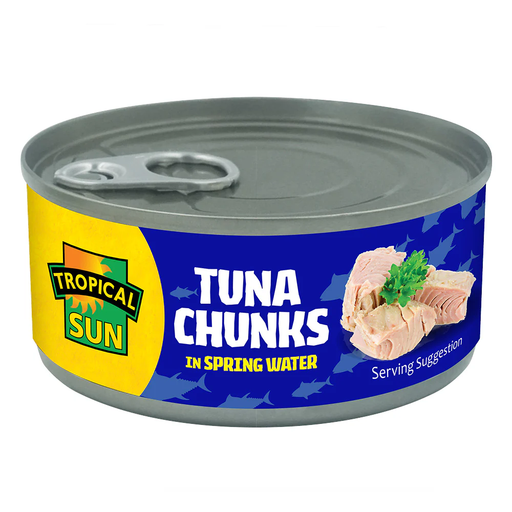 Image unavailable
Topical Sun Tuna Chunks in Springwater 160g
This 160g tin may suit a meal for which you will flake spring-water tuna and plan for any leftovers. Check the current label before comparing its salt figure with drained-weight declarations. Contains fish; the product information also cautions that small bones may be present and mentions possible traces of soybeans and wheat.
View on Joybuy
Questions about toddler dinners
Can tinned tuna go into a toddler dinner?
NHS recipe guidance includes a dip made with drained tinned tuna in spring water for children aged 12 months and over. For your child’s meal, check for bones and flake or mash the tuna into a texture they can manage; follow any individual feeding or allergy advice.
Is tinned tuna a concern for a child with a fish allergy?
Yes. Tuna is fish, and changing brands or packing liquids does not remove that concern. Follow the child’s individual allergy plan or clinician’s guidance and check the current label, including any other allergen statements.
How should I handle tuna left after opening a tin?
Follow the instructions on the specific tin. Named Sainsbury’s products instruct use within one day after refrigeration, while named Tesco, Asda and M&S products specify two days. Check the pack’s directions for transferring and storing any unused contents.
Is tuna in spring water always lower in salt?
No; the packing liquid does not establish the salt content. Sainsbury’s named 4 x 145g spring-water product declares 0.12g salt per 100g drained, compared with 0.90g per 100g on named Tesco and Asda spring-water products and 0.85g on Princes’ named product. Compare the current labels on the same basis.


