Parents making a quick meal from cupboard staples
A plain tin can be mixed into a familiar family meal. Check the pieces for bones and serve an amount appropriate to the child and meal; M&S warns that its tuna chunks may contain bones.


A single tin of plain tuna chunks in spring water is a flexible choice for a toddler dinner if the child can eat fish. Check the exact tin’s ingredients, salt declaration, drained weight and any bone warning before buying; one tin is not automatically one toddler portion. Flake and inspect the fish before serving, and store unused tuna as the label directs.
A plain tin can be mixed into a familiar family meal. Check the pieces for bones and serve an amount appropriate to the child and meal; M&S warns that its tuna chunks may contain bones.
Fish is an allergen, so check the current label. The NHS advises introducing foods that can trigger allergies one at a time and speaking to a GP or health visitor first if a child has an allergy, eczema or a relevant family history.
A single tin may provide more than one toddler dinner needs. Compare drained weight and the storage directions: M&S instructs shoppers to move unused tuna to a non-metallic container, refrigerate it and eat it within two days.
Start with the fish-allergy question, then compare the current labels and the amount of tuna the meal will use. A single retail tin describes the pack, not a serving for one child.
| Concern | What to check | Who this matters to |
|---|---|---|
| Fish allergy | Check the current allergen label. Do not serve tuna to a child with a known fish allergy; the NHS advises seeking GP or health-visitor advice before a first introduction when allergy risk factors apply. | If fish is new to my child, I need to consider their allergy history before putting tuna in dinner. About 36% of consumers put fish-allergy suitability and safe introduction first. |
| Ingredients and salt | Read the ingredient list and compare salt per 100g on the same basis. Tesco declares 1.0g per 100g drained for its 160g spring-water tin; M&S declares 0.75g per 100g for its 160g tin. | For a plain meal base, I want to know what is packed with the tuna and how much salt the label declares. About 29% of consumers make that their primary concern. |
| Portions, bones and leftovers | Check drained weight, flake and inspect the fish, and follow the opened-tin storage instructions. Tesco lists 112g drained weight for its 160g tin; M&S warns that its chunks may contain bones. | When dinner uses only some of a tin, I need a plan for the remainder as well as fish that is checked before serving. For about 21% of consumers, portions and handling come first. |
| Single-tin format | Confirm that the item is one conventional tin rather than a multipack or fridge pot. Tesco lists single spring-water tins alongside both other formats. | If I am buying just one tin for this meal, the pack format matters more to me than a familiar product name. Roughly 14% of consumers put finding the right single-tin format first. |
The weight on a tin describes the product, not how much one child should eat. Tesco, for example, lists 112g drained tuna in its 160g tin.
Serve an amount appropriate to the child and meal, then store any remainder according to that product’s label.
Spring water does not tell you the salt value. Tesco declares 1.0g salt per 100g drained for its 160g tin, while M&S declares 0.75g per 100g for its 160g tin; check the stated basis when comparing labels.
Read the current nutrition panel and avoid adding salt to the toddler’s portion.
M&S states that its tuna chunks may contain bones. Being canned does not remove the need to check the fish before serving it to a toddler.
Flake the chunks and inspect them before mixing the tuna into the meal.
The NHS states that fresh and canned tuna do not count as oily fish.
If an oily-fish choice is part of the household’s meal plan, choose it separately rather than counting the tuna tin towards it.
Tesco lists single spring-water tuna tins as well as multipacks and other tuna formats.
M&S lists a 160g single tin of skipjack tuna chunks in spring water.
Tesco lists Princes Tuna Chunks in Spring Water in a 145g single format.
Tesco lists a John West No Drain Fridge Pot Tuna Steak with a Little Spring Water 110g for shoppers comparing tuna formats.
These single spring-water tuna tins suit shoppers looking for a plain base to add to a toddler dinner. Check each current label for allergens and salt, and plan how you will use any tuna left after the meal.
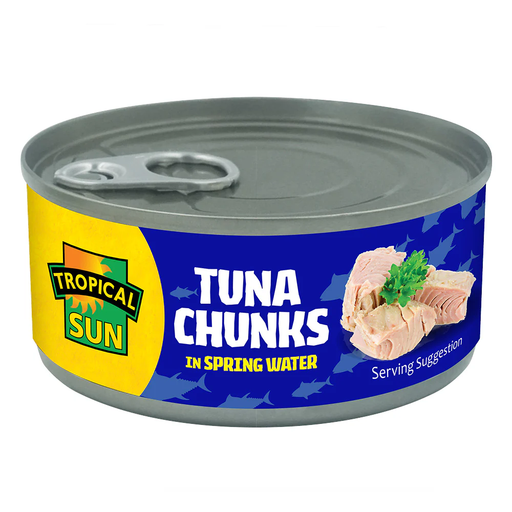 No image available
A single tin of chunks for mixing into a meal when you can use or store any remainder as directed. The listed ingredients are tuna, spring water and salt; the description also flags possible soy and wheat traces. Check the current label for relevant allergies and its salt declaration, and flake and inspect the tuna before serving.
 No image available
This single 145g tin offers chunks to mix into a meal, with directions for storing what remains. Its listed ingredients are skipjack tuna, spring water and salt, and the listing declares 1.0g salt per 100g drained. Transfer unused tuna to a non-metallic container, refrigerate it and consume it within two days; inspect and flake the fish before serving.
Yes, if the child can eat fish: use an amount appropriate to the meal, and flake and inspect the tuna before serving. Do not serve it to a child with a known fish allergy. Check any bone warning on the tin; M&S, for example, says its tuna chunks may contain bones.
No. The NHS states that fresh and canned tuna do not count as oily fish, so choose an oily-fish option separately if that is what you intended for the meal.
No. Tuna is fish, while shellfish is a separate allergen category. The Tesco and M&S spring-water tuna ingredient lists identify fish, not shellfish; always check the current label, particularly when managing an allergy.
Follow that tin’s storage instructions. The M&S 160g tuna listing says to transfer unused contents to a non-metallic container, refrigerate them and eat them within two days; the Morrisons 145g product listing gives the same handling and two-day instruction.
The Food Standards Agency reported in 2024 that a 2018 review of the most toxic form of mercury in the diets of very young children did not identify concerns. That finding does not change the need to check whether the child can eat fish and to prepare the particular tin appropriately.