For plain tinned tuna, seeking a reduced-sugar claim is less useful than checking the label: the Princes, M&S and John West examples examined list 0g or 0.0g sugars per 100g drained. For one or two people, choose a tin size that fits the meal, then compare spring water, brine and oil by their ingredients and nutrition panels. Check the storage instructions if you expect leftovers.
Who this is for
Shoppers checking sugar labels
If you are searching for reduced-sugar tuna, start by distinguishing plain chunks from tuna with a dressing or other added ingredients. Princes, M&S and John West list 0g or 0.0g sugars per 100g drained for the cited plain products; read the label of the tin you choose rather than applying those figures to every tuna product.
One- or two-person households
Individual tin size and drained weight matter when a single lunch or meal for two might leave unused tuna. Compare the pack format with your meal plan and check the tin’s instructions for storing leftovers.
Shoppers comparing nutrition and fish types
Compare energy, fat and salt on the same per-100g basis when choosing a pack liquid. If the distinction between tuna and oily fish matters to your shopping plans, NHS guidance says fresh and canned tuna do not count as oily fish.
What to check when buying
For plain tuna, confirm the sugars and ingredients first, then choose a portion size and pack liquid that suit the meal.
Spring water
Choose when: You want plain tuna to add to a dish without oil from the pack.
Bear in mind: Check the individual tin’s salt content and whether it needs draining; Princes lists 99kcal and 0.5g fat per 100g drained for its spring-water chunks.
Brine
Choose when: Tuna packed in water and salt suits the dish you are making.
Bear in mind: Princes lists 0.9g salt per 100g drained for its brine chunks, compared with 0.85g for its spring-water chunks.
Sunflower oil
Choose when: Oil-packed tuna suits your salad or pasta dish.
Bear in mind: Princes lists 180kcal and 9.5g fat per 100g drained for its sunflower-oil chunks, versus 99kcal and 0.5g for its spring-water chunks.
| Concern |
What to check |
Who this matters to |
| Sugars and ingredients |
Read “of which sugars” per 100g drained and the ingredients on the exact tin, especially if it contains a dressing or flavouring. |
If I searched for reduced-sugar tuna, I want to know whether a plain tin meets that need before relying on the search term. About 40% of consumers put confirming sugars and ingredients first. |
| Portions and leftovers |
Compare the number of tins, net and drained weights, and any no-drain format; check the instructions for unused contents. |
For a meal for one or two, I want a tin I can use without leaving an awkward portion behind. Around 30% of consumers make portion size and avoiding leftovers their primary concern. |
| Pack liquid and nutrition |
Compare energy, fat and salt per 100g drained on like-for-like labels, then choose the pack liquid for your dish. |
When deciding between spring water, brine and oil, I care about how the pack liquid fits the recipe and the nutrition I am comparing. About 30% of consumers put that trade-off first. |
Buying pitfalls
-
Using “reduced sugar” as the only filter
The cited plain spring-water, brine and sunflower-oil examples list 0g or 0.0g sugars per 100g drained, yet their other nutrition values and ingredients differ.
Check sugars on the exact tin, then compare its pack liquid, salt and portion size. Read dressed or flavoured tuna labels separately.
-
Comparing packs without checking usable portions
A multipack, a large tin and smaller individual tins may suit different meal plans even when their total pack weights look similar.
Compare drained weight and the number of tins with the portions you expect to use.
-
Leaving unused tuna in the opened tin
The cited M&S and John West product instructions call for unused contents to be transferred to a container, refrigerated and eaten within two days.
Follow your tin’s storage instructions, or choose a smaller portion if you are unlikely to use the remainder in time.
An opened portion also needs space in the fridge and a plan for the next meal.
-
Counting tuna as oily fish
NHS guidance says fresh and canned tuna do not count as oily fish.
If you are shopping for an oily-fish portion, choose an oily fish separately rather than counting the tuna tin towards it.
Brands to consider for label and format comparisons
Princes
Princes provides nutrition labels for comparable tuna chunks in spring water, brine and sunflower oil.
- Princes lists 0.0g sugars per 100g drained for these plain variants, making pack liquid and other nutrition values more useful points of comparison.
- Its sunflower-oil chunks list 180kcal and 9.5g fat per 100g drained, against 99kcal and 0.5g for its spring-water chunks; the comparison applies to these products, not the whole range.
John West
John West has conventional tuna chunks and no-drain formats to compare when preparation and individual portions matter.
- The cited 4 × 125g spring-water and brine listings each report 0g sugars per 100g; their separately packed tins may suit meals made one at a time.
- Those listings give different salt values: 0.80g per 100g for spring water and 0.90g for brine. Check the exact variant’s label.
Tesco
Tesco’s own-label spring-water tuna appears in several tin and multipack sizes, making it relevant to portion planning.
- Tesco lists spring-water options including 80g, 145g, 400g and 4 × 145g formats.
- Ingredients and nutrition can change with reformulation; Tesco advises checking the product label for current details.
M&S
M&S provides a labelled spring-water four-pack for comparing nutrition and storage instructions.
- Its cited tuna chunks list 0.0g sugars, 23.5g protein and 0.75g salt per 100g.
- The product information says bones may be present and instructs shoppers to refrigerate unused contents and eat them within two days.
Joybuy tuna selections
These spring-water tuna options include individual tins, multipacks and a no-drain format. Match the amount you will use to the pack, and check the exact label if sugars are decisive for your choice.
 Image unavailable
John West No Drain Tuna Chunks in Springwater, 3 × 100g
The no-drain format suits a meal where you want to skip draining a tin. Three separate 100g tins let you open one at a time; check the label if a particular sugar value matters to you.
View on Joybuy
 Image unavailable
John West Tuna Chunks in Springwater, 4 × 125g
Four separate 125g tins suit meals planned across several days. The Joybuy listing reports 0g sugars and 0.80g salt per 100g drained; follow its refrigeration and two-day use instructions for any opened-tin leftovers.
View on Joybuy
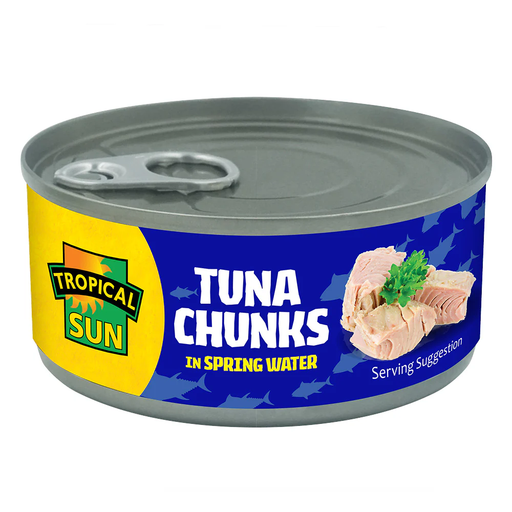 Image unavailable
Topical Sun Tuna Chunks in Springwater, 160g
This single 160g spring-water tin is an option when its size fits the meal. Before comparing its nutrition figures with drained-weight labels on other tins, check what the per-100g figures on this product’s label refer to.
View on Joybuy
 Image unavailable
Morrisons Fad Free Tuna Chunks in Spring Water, 6 × 145g
Six separate 145g tins suit a household planning several tuna meals while opening only the tins it needs. Consider whether the total quantity fits those plans, and check the current tin label for its sugar value if that determines your choice.
View on Joybuy
 Image unavailable
Morrisons Fad Free Tuna Chunks in Spring Water, 145g
This single 145g spring-water tin is worth considering when a multipack exceeds your meal plan. Read its current sugar value on the label if that is a deciding factor, and follow the tin’s instructions for any leftovers.
View on Joybuy
Common questions
Do I need to seek out reduced-sugar tinned tuna?
For plain tuna chunks, start with the label rather than a reduced-sugar search term. The cited Princes, M&S and John West spring-water, brine and sunflower-oil products list 0g or 0.0g sugars per 100g drained; check dressed or flavoured products individually because their ingredients differ.
Should I choose tuna in spring water instead of oil?
Choose according to the dish and the nutrition values you want to compare. Princes lists 99kcal and 0.5g fat per 100g drained for its spring-water chunks, versus 180kcal and 9.5g for its sunflower-oil chunks; those figures describe the matched Princes products, not every tin.
What should I do with tuna left after opening a tin?
Follow the instructions on your product. The cited M&S and John West listings instruct shoppers to transfer unused contents to a container, refrigerate them and eat them within two days.
Does tinned tuna count as oily fish?
No. NHS guidance says fresh and canned tuna do not count as oily fish, so choose a different fish if an oily-fish portion is what you are shopping for.


