Choose tinned tuna chunks when you need a ready-to-eat ingredient that can be added in a small amount to a familiar meal; a tinned tuna steak offers a more identifiable piece without the preparation of raw fish. Choose a chilled tuna fillet when you can store and cook it as directed and the eater is willing to try a distinct cooked-fish portion. Whichever format you choose, introduce unfamiliar food without pressure and check the pack for allergens, bones and storage instructions.
Who each format may suit
Families introducing tuna gradually
A small portion beside accepted foods gives a hesitant eater a chance to encounter tuna without making it the whole meal. The NHS advises offering foods again on another occasion rather than forcing a child to eat.
Families making quick, repeatable meals
Ready-to-eat tinned tuna can be portioned into a sandwich, pasta or a jacket potato with little preparation. Check the chosen tin’s instructions for storing anything left after opening.
Families ready to serve a cooked fillet
A chilled tuna steak is a distinct fish portion rather than an ingredient mixed through a meal. It suits a household that can refrigerate and cook raw fish as directed and is prepared for the eater to decline its texture.
What matters when choosing tuna
Decide whether the meal calls for tuna mixed into familiar food, a recognisable tinned piece or a cooked fillet; then check the particular product’s packing medium and serving instructions.
Tinned chunks
Choose when: You want to add a small amount of ready-to-eat tuna to a familiar meal.
Consider: Loose pieces may not appeal to someone who dislikes mixed or flaky textures.
Tinned tuna steak
Choose when: A more identifiable piece might be easier to offer, but you still need a ready-to-eat format.
Consider: The word steak does not make it a fresh fillet; check the pack for bone and storage warnings.
Chilled tuna fillet
Choose when: You want to serve a cooked fish portion and can follow the chilled product’s cooking instructions.
Consider: Raw fish needs refrigeration and cooking, and a larger, firmer piece may be a greater change for the eater.
| Concern |
What to check |
Who this matters to |
| Texture and acceptance |
Compare loose chunks, a defined tinned piece and a cooked fillet. Start with a small portion beside accepted foods. |
If I am introducing fish at a familiar meal, I want a manageable texture without making tasting compulsory; about 31% of consumers put gradual texture acceptance first. |
| Preparation and leftovers |
Check whether draining or cooking is required and read the exact instructions for storing opened fish. |
When dinner needs little preparation and a refusal could leave food unused, I want an amount I can readily serve; roughly 31% of consumers prioritise convenience and avoiding waste. |
| Packing medium |
Read the ingredients and compare nutrition per 100g drained on the exact spring-water, brine or oil-packed product. |
If the child notices the flavour of the packing liquid, I want tuna that works in the meal they already eat; around 23% of consumers put packing medium and recipe fit first. |
| Serving conditions |
Check the fish allergen declaration and bone warnings. Where pregnancy advice applies, consult NHS tuna guidance. |
If fish allergy is a concern, I am serving a young child or pregnancy limits apply, those conditions shape my choice; about 15% of consumers make safety or special conditions their primary concern. |
Buying and serving pitfalls
-
Assuming every tuna steak is a fresh fillet
A tinned tuna steak can be ready to eat, while the cited chilled M&S yellowfin steaks are raw and must be cooked. The same word on the front of a pack does not tell you how to prepare it.
Check whether the fish is canned or chilled, then read its cooking and storage instructions.
-
Treating packing liquids as interchangeable
Spring water, brine and oil affect the ingredients and nutrition shown on a particular pack, as well as how its contents fit a recipe. Do not assume that figures for one product apply to another.
Choose a packing medium that works for the meal and compare the exact labels per 100g drained.
-
Overlooking bones
The cited John West tinned tuna and chilled M&S tuna both carry warnings that bones may remain; a description such as boneless does not remove the need to check before serving.
Inspect the fish, break it into manageable pieces where appropriate and supervise young children while they eat.
-
Making an unfamiliar fish meal compulsory
A refusal does not mean tuna must be removed from future meals. The NHS advises that accepting an unfamiliar food can take repeated offers, while University Hospitals Dorset NHS Foundation Trust advises against forcing a child to eat.
Offer a small amount alongside accepted food and try again on another occasion without pressure.
Brands to consider for different tuna formats
John West
Its no-drain tinned tuna is relevant when you want a ready-to-eat piece or chunks with little preparation.
- John West describes its no-drain tuna steak in brine as ready to open and use.
- It is still tinned fish, not a fresh fillet. The cited retailer listing warns that bones may remain.
Princes
Princes lists several canned-tuna formats, including chunks and tuna steaks.
- The range offers different piece sizes and packing media to compare for a particular meal.
- Check the chosen pack rather than applying the ingredients or nutrition of its sunflower-oil chunks to its other tuna products.
Sainsbury's
Its cited spring-water tuna chunks are an own-label tinned option for meals where you want to add pieces of fish.
- The cited product lists skipjack tuna and spring water.
- Its instructions say to transfer leftovers to a non-metallic container, refrigerate and use within one day of opening. Follow the current pack’s directions.
M&S
The cited range includes both tinned tuna steaks and chilled yellowfin steaks, making the preparation difference worth checking.
- The tinned spring-water steak is a canned option, while the chilled yellowfin steak is a separate raw-fish product.
- The cited chilled yellowfin steaks must be cooked and kept refrigerated at 0°C to +5°C.
Tinned tuna options on Joybuy
These tinned chunks and tuna steaks offer different piece formats and packing media for meals where ready-to-eat tuna is useful. Compare each pack’s instructions before deciding how to serve or store it.
 Image unavailable
John West No Drain Tuna Chunks in Springwater, 3 × 100g
Consider the chunk format when you want to add a small amount of tuna to a familiar meal. The title specifies a no-drain spring-water product; check its fish allergen information and follow the pack’s instructions for opened tuna.
View on Joybuy
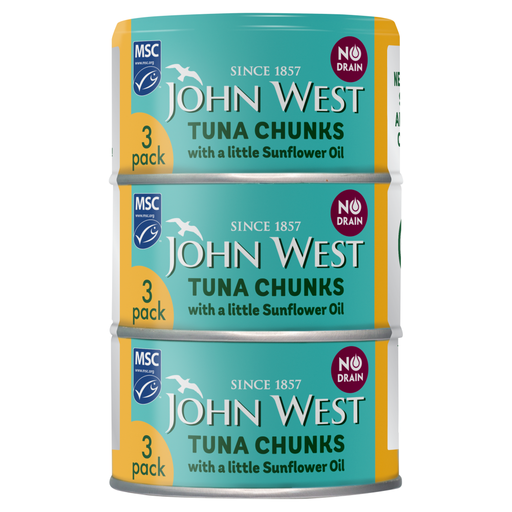 Image unavailable
John West No Drain Tuna Chunks in Sunflower Oil, 3 × 100g
Consider these chunks if the recipe calls for tuna packed in sunflower oil rather than spring water. The pack is labelled no-drain; check its allergen information and inspect the fish for bones before serving.
View on Joybuy
 Image unavailable
Tropical Sun Tuna Steaks in Sunflower Oil
The tinned steak format is worth considering when a distinct piece may suit the eater better than loose chunks. This variant is packed in sunflower oil; check the fish allergen information and the instructions for any contents left after opening.
View on Joybuy
 Image unavailable
Morrisons Fad Free Tuna Chunks in Spring Water, 145g (listed as 6 packs)
Chunks in spring water are an option for adding tuna to a familiar meal. Check the number of tins and total quantity for this listing before ordering, as well as the fish allergen and opened-storage instructions.
View on Joybuy
 Image unavailable
Morrisons Fad Free Tuna Chunks in Spring Water, 145g
This 145g tin offers a chunk format for adding tuna to a familiar meal without choosing the multipack listing. Check its fish allergen information and follow the pack’s directions for storing leftovers.
View on Joybuy
Questions about tuna for fussy eater meals
Is a tinned tuna steak the same as a fresh tuna fillet?
No. The cited M&S tuna steak in spring water is a tinned product, whereas its chilled yellowfin tuna steaks are raw and must be cooked. Check whether the pack is canned or chilled and read its cooking directions rather than relying on the word steak.
What if a fussy eater refuses tuna?
Offer a small amount alongside accepted food without forcing them to eat it. The NHS advises that children may need many offers before accepting an unfamiliar food, so you can try it again on another occasion.
How should opened tinned tuna and chilled tuna steaks be stored?
Follow the instructions on each pack because they differ. The cited Sainsbury's spring-water chunks say to transfer leftovers to a non-metallic container, refrigerate and use within one day; the cited chilled M&S yellowfin steaks must be kept at 0°C to +5°C and eaten within 24 hours of opening.
Are there pregnancy-related limits for tuna?
Yes. NHS guidance for people who are pregnant or trying for a baby says to eat no more than four cans of tuna or two tuna steaks a week because tuna has higher mercury levels than other fish.


