What matters when choosing
Decide whether the shop is mainly for flexible cupboard meals or a particular fresh-fillet dish; then check pack yield, storage instructions and the label details that matter to you.
Tinned tuna
Choose when: You want unopened cans for meals spread over time rather than a fixed cooking date.
Bear in mind: Chunks and tinned steaks are not chilled fresh fillets, and the contents of an opened can need prompt refrigerated use.
Fresh tuna fillets or steaks
Choose when: A planned cooked meal calls for the fresh fillet or steak format.
Bear in mind: Chilled packs have a use-by date, so buying several requires a meal plan or space to freeze them in time.
| Concern |
What to check |
Who this matters to |
| Storage and usable portions |
Check drained weight per can and the instructions for storing and using tuna after opening. |
If I am stocking the cupboard for meals on different days, I need cans whose portions I can use without leaving too much from an opened pack. About 50% of consumers put storage and manageable leftovers first. |
| Fresh fillet meals |
Check the fillet or steak format, use-by date and whether you can freeze packs before that date. |
For a particular cooked dish, I want a fresh fillet rather than ready-to-use tinned chunks, and I can plan when to cook it. Fresh-steak meals are the primary need for about 30% of consumers. |
| Ingredients and format |
Compare packing liquid, ingredients, salt per 100g and fish-allergen labelling on the current pack. |
When I buy the same tuna regularly, I want to know whether it comes in water, brine or oil and what its label says. Roughly 20% of consumers make these label and format details their first concern. |
Brands and ranges to consider
These examples show different pack and tuna formats; check the exact variant, as a brand name alone does not establish its drained weight, ingredients or storage instructions.
John West
John West chunk multipacks, no-drain products and tinned steak formats appear in the cited Tesco and Sainsbury's listings.
- The cited brine multipack contains four 125g cans, each listed with 102g drained weight.
- Sainsbury's instructs buyers of that brine pack to refrigerate it after opening and consume it within two days.
Princes
Princes offers tuna-chunk multipacks in spring water and brine, alongside other listed tuna formats.
- The cited spring-water option is a four-pack of 145g cans, allowing cans to be opened for separate meals.
- ASDA's instructions for that spring-water pack say to refrigerate the contents after opening and use them within two days.
Tesco
Tesco own-label includes both smaller spring-water multipacks and a larger single can.
- Tesco lists a 400g spring-water can with 280g drained weight and a 3 × 80g pack with 3 × 56g drained.
- A larger single can leaves more to use after opening, so check its storage instructions against your meal plan.
Sainsbury's
Sainsbury's own-label listing includes four-packs of tuna chunks in spring water, brine, sunflower oil and olive oil.
- The listed liquids give shoppers several ingredient and recipe formats within the four-pack range.
- Check the exact variant rather than assuming its ingredients or nutrition information match another pack in the range.
Asda
Asda own-label includes a single 145g spring-water tuna-chunks can.
- A single can lets you assess whether that portion and format suit your meals before choosing a larger stock-up.
- One can does not provide the separate unopened portions of a multipack; decide how many meals you are stocking for.
M&S
The Marks & Spencer tinned-fish listing includes chunks, steaks and larger listed pack formats.
- Listed examples include 640g tuna chunks and an 800g tuna-steak format.
- For its spring-water chunks, M&S instructs customers to move unused contents to a non-metallic container, refrigerate them and eat them within two days.
Tinned tuna options on Joybuy
These tuna-chunk multipacks are options for keeping unopened cans for meals across a bulk shop. Choose between spring water, brine and sunflower oil according to the recipe and the exact pack label; fresh fillets remain a separate choice for planned cooked meals.
 No image available
Morrisons Fad Free Tuna Chunks in Spring Water, 6 × 145g
The six separate cans suit cupboard stock for meals made on different days. This is a spring-water variant; check its drained weight for the amount of tuna you need, and plan to refrigerate and use any opened-can leftovers within the product's two-day instruction.
View on Joybuy
 No image available
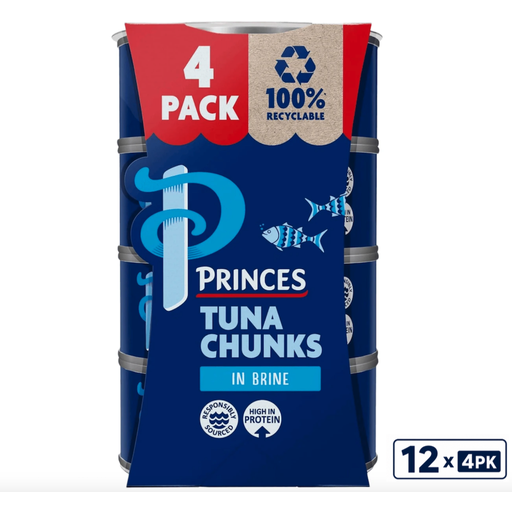
Princes Tuna Chunks in Brine, 12 × 4 × 145g
This larger bundle suits a stock-up when you expect to use many separate cans over time. It is a brine-packed variant, so check the label if ingredients or salt per 100g matter to you; refrigerate opened leftovers and follow the stated two-day use instruction.
View on Joybuy
 No image available
John West Tuna Chunks in Sunflower Oil, 4 × 125g
Choose this four-can pack if sunflower oil is the packing liquid you want for your meals. Check the current label when comparing nutrition with other liquids: the product information describes its nutrition as applying to tuna drained of packing liquid. Refrigerate opened tuna and follow its two-day use instruction.
View on Joybuy
 No image available
John West Tuna Chunks in Springwater, 4 × 125g
The four separate cans suit meals spread across a cupboard stock-up when you want a spring-water variant. Check the drained weight against the portions you plan to make. After opening, the product instructions call for unused tuna and liquid to be moved to a non-metallic container, refrigerated and used within two days.
View on Joybuy
 No image available
Princes Tuna Chunks in Brine, 4 × 145g
This four-can brine pack offers separate portions for a smaller cupboard stock-up than the Princes twelve-pack bundle above. Check drained weight and the current ingredients label for your intended meals; seal and refrigerate opened leftovers and use them within the product's two-day instruction.
View on Joybuy
Questions about buying and storing tuna
Should I bulk-buy tinned tuna or fresh fillets?
Buy tinned tuna when you want unopened cupboard stock for flexible meals; buy fresh fillets for a planned cooked dish. If you buy extra fresh packs, check their use-by dates and whether you can freeze them on or before those dates, as GOV.UK advises.
Does the weight on a tuna tin tell me how much tuna I will get?
Not if the tin contains packing liquid: check its drained weight as well. Tesco lists 280g drained for a 400g spring-water can and 3 × 56g drained for its 3 × 80g pack, so plan portions using the drained figures.
How should I keep tuna left over from an opened can?
Follow the instructions on the exact pack rather than treating an opened can like unopened cupboard stock. The cited Princes, John West and M&S product instructions call for refrigeration and use within two days; some specify transferring the contents to a non-metallic container.
What should I check when buying tuna during pregnancy or for someone with a fish allergy?
For someone who is pregnant or trying for a baby, NHS guidance sets a limit of no more than four cans of tuna a week or two tuna steaks a week because of mercury. For a fish allergy, check the current ingredients label: GOV.UK says fish must be clearly declared when it is an ingredient in prepacked food.


