Convenience-led shop buyers
For ready-to-use stock without freezer management, compare spring-water tins with no-drain packs. Check the opening and leftover-storage instructions on the particular product.


Prioritise tinned tuna when customers or staff need cupboard storage and tuna that can be served without defrosting or cooking. Frozen tuna steaks suit cooked meals when there is freezer space and a reliable way to follow the product’s preparation instructions. For either format, check the exact pack’s portions, fish allergen information and storage directions.
For ready-to-use stock without freezer management, compare spring-water tins with no-drain packs. Check the opening and leftover-storage instructions on the particular product.
Frozen steaks or fillets provide a format for cooked plated meals when freezer storage, preparation time and cooking equipment are available.
Compare the packing medium, salt values on the same stated basis, fish allergen declaration, possible-bones warning and instructions for opened or thawed fish.
Choose the serving format before comparing packs: a ready-to-use tin and a frozen steak involve different storage and preparation.
Choose when: cupboard stock and quick assembly of sandwiches, salads or other dishes matter most.
Allow for: refrigerating leftovers after opening and checking each pack’s drained weight and label.
Choose when: the intended meal calls for a cooked steak and freezer storage and cooking are manageable.
Allow for: the chosen product’s freezing, defrosting and cooking instructions; Tesco specifies storage at −18°C or colder for its frozen steaks.
| Concern | What to check | Who this matters to |
|---|---|---|
| Immediate use | Check whether the tin needs draining and whether the intended dish calls for cooked fish. | If I need tuna for a sandwich or cold meal without a defrosting step, preparation is my priority. About 36% of consumers put immediate use first. |
| Frozen-meal preparation | Check freezer capacity and the exact steak’s storage, defrosting and cooking directions. | For a cooked steak meal, I need to know that frozen fish can be stored and prepared as directed; roughly 29% of consumers put this capability first. |
| Food-label fit | Compare ingredients and salt on the same stated basis; check fish allergens and any bones warning. | When choosing tuna for a particular menu, I want the packing medium and label details to fit it. Label fit comes first for about 21% of consumers. |
| Portions and leftovers | Compare pack counts and drained weight, then plan for the stated storage period after opening. | If opened tins may leave unused portions, I need a pack size I can manage. Portion and leftover handling is the main concern for approximately 14% of consumers. |
The NHS says fresh and canned tuna do not count as oily fish, so tuna alone does not fulfil its oily-fish advice.
If that advice is relevant to the food offer, plan a separate oily-fish option rather than counting tuna as one.
Tesco’s frozen tuna steaks require storage at −18°C or colder, and its instructions say not to refreeze them once thawed.
Check freezer space, cooking equipment and who will manage preparation before choosing frozen stock.
Fish that cannot be stored or prepared according to its instructions may have to be discarded.
Spring-water, brine and oil products have different ingredients; net pack weight does not by itself establish the usable drained portion.
Compare drained weights where stated and read salt figures on the same per-100g basis.
Examples listed by Tesco and M&S require unused tuna to be refrigerated and used within two days of opening.
Choose can sizes around expected portions and follow the exact pack’s instructions for transferring and storing leftovers.
Its relevant lines include conventional tinned tuna and no-drain spring-water chunks.
Princes offers tuna chunks in spring water alongside other packing formats.
Tesco’s relevant own-label examples cover both cupboard-stored tuna chunks and frozen tuna steaks.
Relevant M&S food products include tinned tuna steak in spring water and yellowfin tuna steaks.
These products cover tinned tuna for cupboard stock, with different packing media and draining requirements, plus a frozen steak option for cooked meals.
 Image unavailable
A no-drain tin for quick meal assembly and cupboard storage before opening. Contains fish; refrigerate after opening and use within two days. Check the current label’s nutrition basis before comparing it with drained-weight figures.
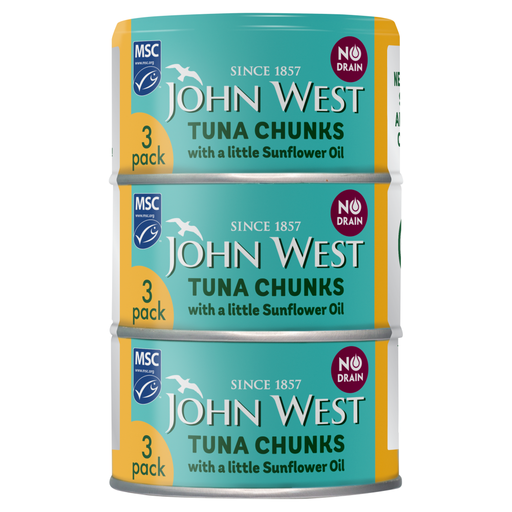 Image unavailable
A no-drain alternative when sunflower oil suits the intended dish; it is not a spring-water product. Contains fish, and the listing warns that bones may remain. Refrigerate after opening and use within two days.
 Image unavailable
Four tins for cupboard stock and meals such as sandwiches or salads. Check the drained weight for portion planning and the pack before assuming it is no-drain. Contains fish; transfer unused contents to a non-metallic container, refrigerate and use within two days.
 Image unavailable
A four-tin cupboard option when brine suits the menu. This product requires draining, so check drained weight when planning portions. Contains fish; refrigerate opened contents in a sealed container and use within two days.
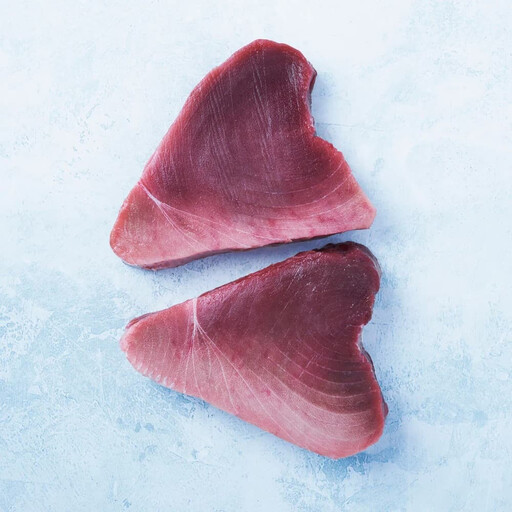 Image unavailable
A frozen steak format to consider for cooked meals when freezer space and preparation time are available. Store at −18°C or colder, follow the pack’s thawing and cooking instructions, and do not refreeze once thawed. Contains fish; check the current label for other allergen warnings.
No. The NHS says fresh and canned tuna do not count as oily fish. If the food offer is intended to include an oily-fish portion, choose a separate oily-fish option.
Follow the exact pack’s directions. The Tesco and M&S examples instruct users to transfer unused tuna to a non-metallic container, refrigerate it and use it within two days of opening.
Check freezer space and the intended cooking method. Tesco’s frozen steaks specify storage at −18°C or colder, an oven route from frozen and, for its defrosted cooking route, at least eight hours of refrigerator defrosting; they must not be refrozen once thawed. Follow the instructions for the product actually purchased.
If it is starting or taking over a food business, the UK Food Standards Agency says to register with the local authority at least 28 days before trading or food operations begin. That business requirement should not be assumed to apply to an individual’s household shopping.
Check the exact current label for fish, the full ingredients list and any additional allergen or bones warnings. The warnings can differ between products, including between tinned and frozen formats.