Cooks making a quick cupboard dinner
Tinned tuna can go into a warm pasta bake, melt or jacket potato without defrosting. Check the packing medium, salt information and storage directions on the can you choose.


Choose tinned tuna when you want a ready-to-use ingredient for a pasta bake, tuna melt or jacket potato. Choose frozen tuna steaks when the fish itself will be the cooked centrepiece; you will need to allow for freezer space and follow the exact pack's cooking and thawing instructions. Tinned tuna will not give you the same steak-style portion.
Tinned tuna can go into a warm pasta bake, melt or jacket potato without defrosting. Check the packing medium, salt information and storage directions on the can you choose.
Frozen or previously frozen tuna steaks suit a dinner built around a cooked portion rather than tuna mixed through a dish. Check whether the pack is sold frozen or chilled, and follow its cooking and defrosting directions.
If freezer room is limited, a cupboard tin avoids storing a frozen portion. If sourcing matters to you, check certification or traceability on the specific tuna product rather than assuming it applies across a brand's range.
Choose it when: Tuna will be mixed into a quick pasta bake, melt or jacket-potato filling.
Trade-off: A cooked ingredient from a tin will not provide a whole, freshly cooked steak-style portion.
Choose them when: You want to cook tuna as the main portion of the dinner.
Trade-off: You need room to store the fish and time to follow its product-specific cooking or thawing directions.
| Priority | What to check | Your needs |
|---|---|---|
| Meal format | Check whether the tuna is ready-to-use tinned fish or a raw steak requiring cooking. For steaks, read whether cooking from frozen is permitted; Tesco gives those directions for its 400 g frozen yellowfin product, not for every steak. | A pasta bake needs tuna mixed through it; a plated fish dinner calls for a portion I can cook separately. |
| Packing medium and label | Check whether a tin contains spring water, brine or oil, and compare salt and protein using the same label basis. Princes lists 23.5 g protein and 0.85 g salt per 100 g drained for its spring-water chunks; that drained basis differs from an as-sold steak label. | I want to know what liquid comes with the tuna and how its label figures relate to the portion I will use. |
| Storage and timing | Read the frozen or chilled storage directions, use-by date, thawing method and any restriction on refreezing. Tesco specifies −18°C or colder for its frozen steaks; Sainsbury's says its previously frozen yellowfin steaks must be used within 24 hours after defrosting and not refrozen. | There needs to be freezer space for a frozen pack, or enough time to use a chilled steak within its stated dates. |
| Sourcing details | Look for certification, species and traceability information on the exact can or steak pack. A claim about one product does not establish the sourcing of a retailer's entire tuna range. | If sourcing is part of my choice, I want information that applies to the particular product I am buying. |
| Dietary guidance | The NHS says fresh and canned tuna do not count as oily fish. Its pregnancy guidance also limits tuna to no more than 4 cans or 2 steaks a week for people who are pregnant. | If I am choosing fish to meet NHS oily-fish guidance, tuna is not that portion. Pregnancy-specific guidance matters if it applies to me. |
Tinned tuna is a cooked ingredient for mixing into a dish; a raw tuna steak needs cooking and gives you a separate fish portion.
Decide how the tuna will appear on the plate, then check whether the pack is ambient, frozen or previously frozen and sold chilled.
The NHS says fresh and canned tuna do not count as oily fish.
If you are following its weekly oily-fish guidance, choose an oily fish separately rather than counting the tuna dinner towards that portion.
Frozen and previously frozen chilled steaks can have different storage and preparation instructions. Tesco and Sainsbury's both say not to refreeze their specified tuna steaks once defrosted.
Follow the directions on your exact pack, including its storage temperature, thawing method and time allowed after defrosting.
Certification and retailer sourcing descriptions apply to specified products. They do not establish that another can or steak has the same credentials.
Check the particular pack for the certification or traceability details you want.
Tesco lists both ambient tinned tuna and a 400 g frozen yellowfin tuna-steak product, allowing a cupboard-versus-freezer comparison within its range.
Sainsbury's lists chilled yellowfin tuna steaks that have previously been frozen, a different storage route from both cupboard tins and packs sold frozen.
M&S lists spring-water tinned tuna as well as yellowfin steaks, so the preparation format matters more than the shared tuna name.
Princes offers ambient tuna, including chunks in spring water, for meals assembled from a cupboard ingredient.
John West appears in ambient tuna listings, including no-drain tuna-steak formats for dishes made with tinned fish.
These options include a frozen tuna-steak pack for a cooked centrepiece and tinned tuna for cupboard-based dishes. Check each pack's preparation and storage directions against the dinner you have planned.
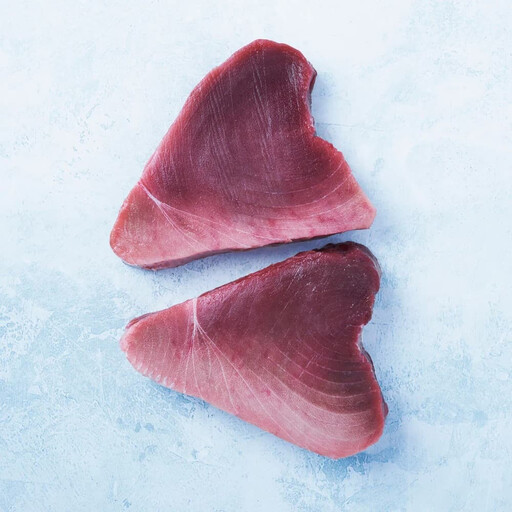 Image unavailable
For a dinner with cooked tuna steaks as the main portion. The pack contains two steaks; keep it frozen at −18°C or colder and follow its thawing and cooking directions. Do not refreeze once thawed.
 Image unavailable
Tinned tuna chunks for mixing into a pasta bake or another cupboard-based meal. Check the can directions for this variant before relying on the no-drain wording.
 Image unavailable
A spring-water tin for adding tuna to pasta or a jacket potato. The pack is 145 g; after opening, transfer unused contents to a non-metallic lidded container, refrigerate and use within two days.
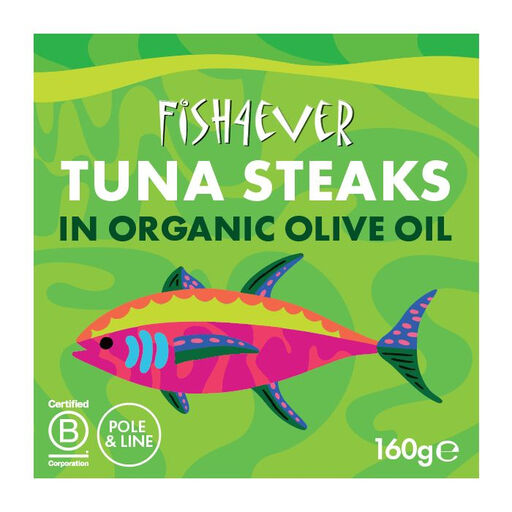 Image unavailable
A tinned tuna option for a pasta or rice dish when olive oil suits the recipe. It is a 160 g pack, not a raw steak for cooking as a fish centrepiece; refrigerate opened contents and use within two days.
 Image unavailable
Ready-to-eat tinned chunks for adding to pasta, rice or a casserole without thawing. The tin is 160 g; follow its refrigeration directions after opening and check the pack's allergen information if relevant.
Use tinned tuna if it will be mixed through the bake and you want a ready-to-use ingredient. Choose a frozen steak if you intend to cook and serve distinct tuna portions, following that pack's directions; Tesco gives oven-from-frozen instructions for its 400 g steaks, but that does not apply to every frozen product.
Follow the exact pack rather than assuming you can. Tesco says not to refreeze its frozen tuna steaks once defrosted, and Sainsbury's gives the same restriction for its previously frozen yellowfin steaks, alongside an instruction to use them within 24 hours after defrosting.
No. The NHS says fresh and canned tuna do not count as oily fish, so a tuna dinner does not fulfil the oily-fish portion in its general weekly fish guidance.
The NHS advises people who are pregnant not to eat more than 4 cans or 2 tuna steaks a week. That is pregnancy-specific guidance, not a limit to apply to every shopper.
Check the chilled product's use-by date, whether home freezing is permitted and its directions for thawing and use. Sainsbury's says its previously frozen yellowfin steaks should be thoroughly defrosted, used within 24 hours afterwards and not refrozen once defrosted.