Cupboard-meal shoppers
If you use tuna regularly in sandwiches, salads or pasta, tinned chunks give you an ingredient you can keep in the cupboard until opening. Compare the stated drained weight when deciding how much fish a pack provides.


Choose tinned tuna chunks for ready-to-use cupboard meals; choose frozen tuna steaks when you want to cook a fillet-style main meal and have freezer space. For a budget shop, check how much usable tuna is in a tin or multipack, but do not treat raw steaks and canned chunks as interchangeable ingredients.
If you use tuna regularly in sandwiches, salads or pasta, tinned chunks give you an ingredient you can keep in the cupboard until opening. Compare the stated drained weight when deciding how much fish a pack provides.
If you are planning a cooked fish main meal rather than a mixed dish, a frozen steak or fillet fits that plan. You will need freezer space and time to follow the product’s preparation and cooking instructions.
If packing liquid, fish species or sourcing labels affect your choice, check the exact variant. A label or ingredient list on one tuna product does not describe every product in the same range.
Decide whether the meal calls for ready-to-use chunks or a steak you will cook. Then check the pack details that matter within that format.
Choose when: You need tuna for a sandwich, salad or other meal using ready-to-use chunks.
Bear in mind: Brine, spring water and oil are different variants, and the amount of drained fish can differ from the tin’s total weight.
Choose when: You want a fillet-style fish meal that you will cook.
Bear in mind: Raw frozen steaks need freezer storage and preparation according to the instructions for the exact pack.
| Concern | What to check | Who this matters to |
|---|---|---|
| Usable tuna in the pack | Check the drained weight of tinned tuna, alongside the number and size of tins. | When I am stocking up for repeat meals, I want to know how much tuna remains after draining. About 50% of consumers put usable fish quantity first. |
| Ready-to-use convenience | Check whether the tin is a no-drain format and which liquid it contains. | For meals assembled without cooking fish, I need a cupboard ingredient that is ready when I am. Roughly 30% of consumers make that convenience their primary concern. |
| Cook-from-raw meals | Check frozen storage, defrosting and cooking directions for the exact steak or fillet. | If I am making a plated tuna-steak meal, I can allow for freezer storage and cooking. Around 20% of consumers prioritise that meal format. |
The total weight of a tin includes its packing liquid, so tins of similar stated size need not provide the same amount of fish.
Check the drained weight on the pack when comparing tinned variants.
The frozen Asda tuna-steak example is a raw product intended for cooking, not a ready-to-use cupboard ingredient.
Choose steaks for a meal you plan to cook, and follow the instructions on the exact pack.
Allow for freezer space and preparation time.
Spring water, brine and sunflower oil identify different tinned-tuna variants. Their ingredients and nutrition information should not be assumed to match.
Choose the variant that fits your recipe and read its own label.
A certification shown on one tuna product does not establish that every variant from that brand or retailer carries it.
If an MSC ecolabel matters to you, check the exact can or pack.
Its tinned range includes no-drain tuna chunks in spring water for meals where draining is inconvenient.
Its canned chunks include spring-water, brine and oil variants across different pack formats.
Its own-label and Stockwell & Co. ranges provide tinned-tuna options, including chunks in brine.
Its own-label tinned chunks include spring-water, brine and sunflower-oil variants.
Its range covers both tinned chunks and a separate frozen yellowfin tuna-steak option.
Its range includes spring-water tinned chunks and yellowfin tuna steaks.
These products cover a frozen tuna-steak option for cooking and tinned chunks for cupboard meals. Choose the format for your planned dish before comparing individual packs.
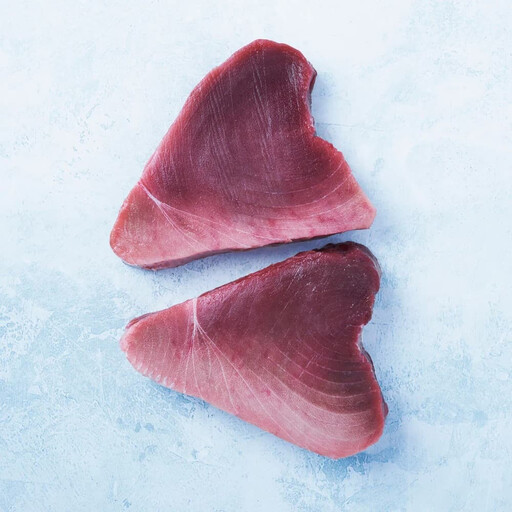 Image unavailable
A frozen steak format for a tuna meal you plan to prepare. Check the pack’s storage, defrosting and cooking instructions; the title’s “sashimi grade” wording alone does not establish that eating it raw is safe.
 Image unavailable
Tinned chunks for cupboard meals such as sandwiches or pasta. The pack contains four 145 g tins in brine; check its drained weight and ingredient label for your intended use.
 Image unavailable
A no-drain tinned option when you want to add tuna to a meal without draining the can. This is a three-tin springwater pack; check its label if the amount of tuna or ingredients matter to your choice.
 Image unavailable
Tinned springwater chunks for salads, sandwiches or pasta. The four-tin pack has 125 g stated for each tin; check the drained weight when comparing it with other tinned formats.
 Image unavailable
A tinned option if sunflower oil suits the dish you are making. The pack contains four 145 g tins; choose another packing liquid if your recipe calls for spring water or brine.
Buy tinned chunks for ready-to-use cupboard meals, or frozen steaks when you specifically plan to cook a fillet-style main meal. Check the usable amount and pack details for the format you choose rather than assuming the two products serve the same dish.
The researched Asda frozen tuna steaks must be fully cooked and must not be eaten raw, according to that product’s instructions. Follow the preparation and cooking directions on the exact pack you buy.
Follow the label on your tin. The researched Tesco, Asda and M&S tinned-tuna products instruct shoppers to transfer unused contents to a non-metallic container, cover and refrigerate them, and consume them within two days.
No. Check the exact can or pack for the blue MSC ecolabel rather than extending a label shown on one variant to a brand’s entire range.