If independently certified sourcing matters most, look for the blue MSC ecolabel on the exact tin, then compare energy, protein and salt on the same nutrition basis. For weight-management meals, the amount of tuna you serve and additions such as mayonnaise or oil also affect the meal you make; a spring-water label alone does not settle the choice.
Who is choosing tinned tuna?
Certification-first shoppers
If independently certified sourcing is your starting point, check the blue MSC ecolabel on the individual tin before comparing its packing liquid and nutrition panel. A wider brand commitment does not identify every variant on a shelf.
Meal planners comparing nutrition
If you use tuna in salads, jacket potatoes or grain bowls, compare figures for the amount you will eat rather than relying on the packing liquid alone. Princes lists 99 kcal and 23.5g protein per 100g drained for its Tuna Chunks in Spring Water; those figures belong to that product, not every spring-water tin.
Quick-lunch shoppers
If draining a tin is inconvenient, a clearly identified no-drain pack may suit your routine. Check its portion size, nutrition basis, MSC label and instructions for any tuna left after opening.
What matters when choosing a tin?
For tinned-tuna meals where both sourcing and weight management matter, identify your main purchase priority, then check the exact product against the other needs that still apply to you.
| Concern |
What to check |
Who this matters to |
| Certified sourcing |
Look for the blue MSC ecolabel on the exact tin or product listing, rather than relying on a general brand claim. |
If independent certification is my deciding factor, I need to identify the labelled product before choosing a flavour or pack size. About 36% of consumers put certified sourcing first. |
| Energy and protein |
Compare energy and protein per 100g drained where that basis is stated, then consider the portion and other meal ingredients. |
For planned lunches, I want nutrition figures I can apply to the tuna I actually serve, including any dressing or bread alongside it. Energy and protein are the primary concern for about 29% of consumers. |
| Preparation and portions |
Check the number and size of tins, whether the product is no-drain, and its opened-pack instructions. |
When lunch needs to be quick, I want a portion I can use with little preparation and store as directed if any remains. Roughly 21% of consumers prioritise convenience and usable portions. |
| Salt and safety information |
Read the salt, ingredients and allergen information; check NHS tuna guidance if pregnant or trying for a baby. |
If salt, fish allergy or pregnancy guidance affects my choice, those checks come before a convenient pack format. About 14% of consumers make these considerations their primary concern. |
Buying mistakes to avoid
-
Assuming a brand policy certifies every tin
A sourcing commitment and an MSC label on a particular product answer different questions. John West describes a responsible-sourcing ambition for 2030, while Princes and Tesco report completed tuna-sourcing commitments; none replaces checking the tin you intend to buy.
Use the blue MSC ecolabel on the exact pack when independent certification is your requirement.
-
Comparing unlike nutrition figures
A figure per can cannot be compared directly with one per 100g drained, particularly when tin sizes differ.
Find a common basis for energy, protein, fat and salt, then account for the portion you will use.
-
Assuming spring-water tuna has little salt
Princes lists 0.85g salt per 100g drained for its Tuna Chunks in Spring Water. The packing liquid alone does not tell you the salt value.
Read the nutrition panel on your chosen variety, especially if you need to monitor salt.
-
Choosing more tuna without checking safety needs
Fish is an allergen that must be declared when it is an ingredient. Tuna also has specific NHS advice for people who are pregnant or trying for a baby.
Check the ingredient and allergen information. The NHS advises no more than four cans of tuna a week, or two tuna steaks a week, for people who are pregnant or trying for a baby.
Relevant brands and sourcing claims
Princes
A tinned-tuna brand with spring-water, brine and oil varieties to assess separately.
- Princes states that it has completed its commitment to source all its tuna from MSC-certified fisheries. Its Tuna Chunks in Spring Water lists 99 kcal, 23.5g protein and 0.85g salt per 100g drained.
- Check the chosen pack’s ecolabel and nutrition panel: the spring-water figures do not describe its brine or oil varieties.
Tesco
An own-brand range to consider if Tesco is your regular place to shop.
- Tesco reports that it met its commitment to source MSC-certified tuna across Tesco UK and Booker by the end of 2025 and says its tuna products carry the blue MSC ecolabel.
- That sourcing statement does not give every tin the same packing liquid, portion size or nutrition values; compare the chosen format.
Sainsbury's
An own-brand option for shoppers looking for MSC-labelled tuna.
- The Marine Stewardship Council described Sainsbury's own-brand tuna range as extensive and fully MSC-labelled in May 2026.
- Choose by the exact pack’s label and nutrition panel rather than treating the range description as a nutrition comparison.
M&S
A product-led option if its Forever Fish sourcing policy and pole-and-line catch claim interest you.
- M&S describes its Tuna Chunks in Spring Water as responsibly sourced under its Forever Fish policy and pole-and-line caught.
- Those claims do not, by themselves, establish that this particular tin carries an MSC ecolabel; check the pack if certification is essential.
John West
A brand with a specifically named MSC spring-water product as well as other tuna formats.
- John West names a Tuna Chunks in Spring Water MSC product, making the precise product title useful when looking for certification.
- Its stated ambition to source all wild-caught seafood responsibly by 2030 is not evidence that every current John West tin is MSC-labelled. Check the exact variant.
Joybuy tuna for planned meals and quick lunches
These spring-water, brine and sunflower-oil packs offer different portion and preparation formats. If MSC certification is decisive, check the ecolabel on the exact pack rather than assuming it from the brand or packing liquid.
 No image available
John West No Drain Tuna Chunks in Sunflower Oil, 3 x 100g
The no-drain format may suit a lunch where draining is inconvenient. This is a three-tin sunflower-oil pack; check the pack’s MSC ecolabel and nutrition basis before comparing it with tuna labelled per 100g drained. The product information warns that some bones may remain.
View on Joybuy
 No image available
Morrisons Fad Free Tuna Chunks in Spring Water, 145g (6 Packs)
Six spring-water packs offer individual tins for planned meals. Compare the nutrition panel for the portion you use, follow the opened-tin storage instructions and check the exact pack for an MSC ecolabel if certified sourcing matters to you.
View on Joybuy
 No image available
John West No Drain Tuna Chunks in Springwater, 3 x 100g
Choose this three-tin format when avoiding a draining step matters to your lunch routine. Check its nutrition basis before comparing it with drained-weight figures, and look for the blue MSC ecolabel on the exact pack if certification is a priority.
View on Joybuy
 No image available
John West Tuna Chunks in Springwater, 4 x 125g
Four individual tins can be used across planned meals. The Joybuy product information lists 106 kcal, 25g protein and 0.80g salt per 100g drained. Confirm the exact can format if a no-drain product is important to you, and check the pack for an MSC ecolabel.
View on Joybuy
 No image available
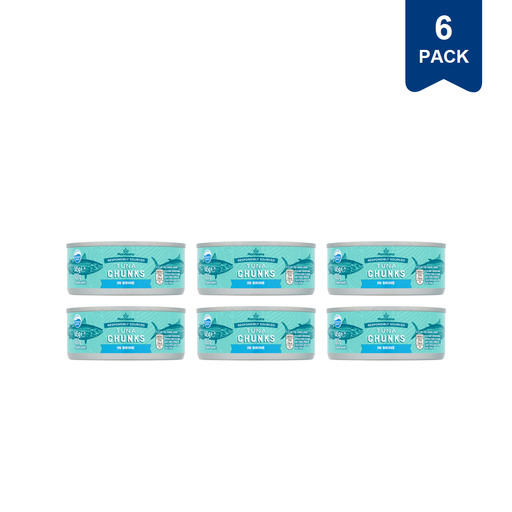
Morrisons Fad Free Tuna Chunks in Brine, 145g (6 Packs)
This six-pack offers brine-packed tuna for repeated meals. Compare its salt and other nutrition figures with the exact alternatives you are considering, and check the tin for an MSC ecolabel if certified sourcing is a requirement. The product information warns that some bones may remain.
View on Joybuy
Common questions
How can I identify MSC-certified tinned tuna?
Look for the blue MSC ecolabel on the exact tin or product listing. A brand’s broader sustainability statement does not establish that each of its variants carries the label.
Is spring-water tuna automatically the right choice for weight-management meals?
No: compare the chosen tin’s energy, protein and salt figures on a consistent basis, then consider your serving size and the rest of the meal. Princes lists 99 kcal and 23.5g protein per 100g drained for its Tuna Chunks in Spring Water, but those figures do not apply to every water-packed product.
How much tuna does the NHS advise during pregnancy?
For people who are pregnant or trying for a baby, the NHS advises no more than four cans of tuna a week, or two tuna steaks a week, because of mercury. This precaution applies regardless of whether a tin carries an MSC ecolabel.
What should I check if someone has a fish allergy?
Check the exact product’s ingredients and allergen information before serving it. GOV.UK identifies fish as an allergen that food businesses must declare when it is an ingredient; flavoured products may also have other ingredients to check.


