Quick hot-meal stockers
For pasta bakes, tuna-topped jacket potatoes or fishcakes, look for a format that is straightforward to portion and combine with ingredients already in the cupboard.


For pasta bakes, jacket potatoes and other hot meals built from cupboard staples, standard tuna chunks in spring water are a useful starting point. Compare drained weight, salt and opened-tin instructions on the exact product; choose brine or oil when those ingredients suit the recipe, or a no-drain format when avoiding that preparation step matters most.
For pasta bakes, tuna-topped jacket potatoes or fishcakes, look for a format that is straightforward to portion and combine with ingredients already in the cupboard.
If you use tuna regularly or buy multipacks, compare the drained quantity, salt per 100g and instructions for storing any unused tuna. Similar-looking tins need not provide the same recipe quantity.
If an MSC ecolabel or pole-and-line claim influences your choice, check it on the exact product. A claim on one tin does not establish how every tuna product from that brand was sourced.
Choose the packing format for the meal you plan to make, then check the quantity and label details of the particular tin.
Consider when: You want chunks for a pasta bake, jacket filling or fishcakes and intend to season the finished dish yourself.
Bear in mind: Spring-water tins can have different salt values, so the packing liquid alone is not a salt comparison.
Consider when: Brine suits the seasoning of the meal you are making.
Bear in mind: Princes lists water and salt in its brine chunks; account for the tin alongside other seasoned ingredients.
Consider when: You specifically want oil in the ingredient profile, rather than choosing solely by the word tuna on the front of the pack.
Bear in mind: Check the exact format and nutrition panel; Princes’ sunflower-oil sandwich tuna is not the same product as its brine chunks.
Consider when: Skipping the draining step makes a quick meal easier to prepare.
Bear in mind: Check the pack size and the basis of its nutrition figures before comparing it with standard drained chunks.
| Concern | What to check | Who this matters to |
|---|---|---|
| Making a hot meal quickly | Choose a chunk, sandwich or no-drain format that fits the recipe; check the usable quantity needed. | If I want to turn a tin into a pasta bake or jacket filling without much preparation, the format matters. About 42% of consumers put quick hot-meal preparation first. |
| Planning portions and leftovers | Compare drained weight and salt per 100g; read the opened-tin storage instruction. | When I use tins across several household meals, I want enough tuna for each recipe without leaving unused contents behind. For about 33% of consumers, portion and label planning is the primary need. |
| Checking sourcing and ingredients | Read the exact pack for sourcing and fish-allergen information; consider NHS tuna-intake advice if pregnant or trying for a baby. | If a sourcing claim or an ingredient determines whether a product meets my requirements, I need to check the particular tin. Roughly 25% of consumers prioritise sourcing and dietary checks. |
Sainsbury’s lists 0.12g salt per 100g drained for its referenced spring-water product, while the referenced Tesco and Asda products each list 0.90g. Cheese, sauce or stock can also contribute salt to a pasta bake.
Compare salt per 100g drained on the exact tin, particularly when the rest of the dish is already seasoned.
Liquid contributes to the labelled tin weight. Tesco’s referenced 145g tin has a drained weight of 102g, while its referenced four-pack lists 139g drained per tin.
Check drained weight against the amount of tuna your bake or jacket filling needs.
Princes lists 99kcal and 0.5g fat per 100g drained for its brine chunks, compared with 224kcal and 16.0g fat per 100g drained for its sunflower-oil sandwich tuna. Both the packing medium and the product format differ.
Choose the format for the recipe, then compare nutrition figures on the same stated basis.
The referenced Sainsbury’s product says to use refrigerated leftovers within one day; the referenced Tesco, Asda and M&S products specify two days. Their instructions also call for transferring unused tuna from the tin.
Before making a partial-tin recipe, check the product’s storage instructions and follow its stated timeframe.
Its range includes standard spring-water chunks and a separately identified no-drain spring-water format.
Its referenced products include brine chunks and sunflower-oil sandwich tuna, allowing a choice by ingredient profile and intended recipe.
The referenced own-label spring-water chunks include a single tin and a multipack with different stated drained quantities.
The referenced spring-water tins carry MSC and pole-and-line statements and list 0.12g salt per 100g drained.
The referenced spring-water range includes 145g multipack tins and smaller 80g tins for different portion plans.
Its referenced spring-water tuna states a pole-and-line sourcing method and is suggested by M&S for pasta bakes or jacket potatoes.
These tins cover spring-water chunks, brine chunks and no-drain chunks in spring water or sunflower oil. Match the format to your hot meal, then check the exact pack for drained quantity and storage instructions.
 No image available
Spring-water chunks are an option for stocking several pasta bakes or jacket fillings. The pack contains six 145g tins; check the drained quantity per tin against your recipe.
 No image available
Consider these spring-water chunks when planning several meals from cupboard staples. The pack has four 125g tins; use the drained quantity on the pack when working out recipe portions. This title does not identify the product as no-drain.
 No image available
Choose brine chunks if that packing medium suits the seasoning of your pasta bake or other hot meal. This pack contains four 145g tins; check the exact tin’s salt label and drained quantity before planning portions.
 No image available
The no-drain format suits meals where skipping that step is useful. The pack contains three 100g tins; check the pack’s nutrition basis and usable quantity before comparing it with drained-weight figures for standard chunks.
 No image available
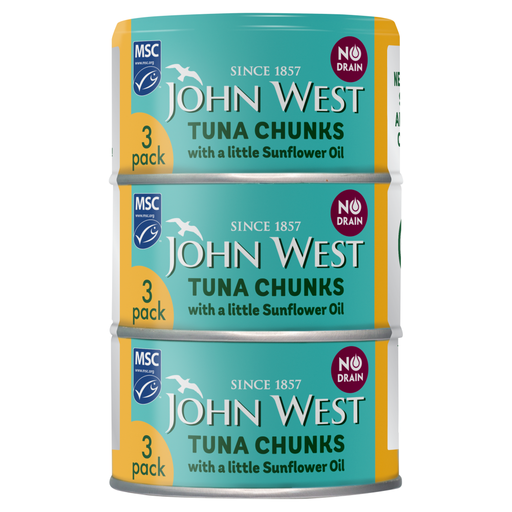
Consider this no-drain format when sunflower oil suits the dish as well as the preparation method. The pack contains three 100g tins. Check the nutrition basis and usable quantity on the pack; the product information also cautions that some bones may remain.
No. The NHS says fresh and canned tuna do not count as oily fish, so a tin of tuna does not fulfil its oily-fish recommendation.
Follow the instruction on the exact pack. The referenced Sainsbury’s, Tesco, Asda and M&S products call for transferring leftovers to a non-metallic container and refrigerating them; Sainsbury’s specifies use within one day, while the other referenced products specify two days.
The NHS advises people who are pregnant or trying for a baby to have no more than four cans of tuna or two tuna steaks a week because tuna can contain higher levels of mercury. Count tuna eaten across meals, not just the tins kept for winter dinners.
Tuna contains fish and is not suitable for someone with a fish allergy. Check the exact pack’s ingredient and allergen information, and check any other ingredients added to the meal for their own allergens.