Choose tuna steaks or fillets when you want recognisable pieces in a salad, jacket potato or simple lunch; standard chunks make sense when the tuna will be mixed into a sandwich filling or cooked dish. For either format, check the packing liquid, drained weight and sourcing wording on the exact product, because those details vary between cans.
Who is this for?
First-shop cooks who want intact pieces
If tuna will be visible in a jacket potato, salad or rice bowl, compare steak and fillet formats with chunks. Tesco Groceries lists both formats, so you can choose according to how the finished meal should look and feel.
Cupboard stockers planning several meals
If the same tins need to work in sandwiches, pasta bakes and other simple dishes, check the drained weight and number of cans in a pack. Intact pieces may matter less when the tuna will be stirred through other ingredients.
Shoppers checking fish sourcing
Look for a specific claim on the product you are considering, rather than judging sourcing by its presentation. Princes describes its tuna as MSC certified and traceable to the boat; Marks & Spencer describes its particular spring-water chunks as pole-and-line caught and traceable.
What matters when choosing?
Start with the meal: decide whether intact pieces matter, then compare usable quantity, preparation and sourcing details on the exact pack.
| Concern |
What to check |
Who this matters to |
| Piece texture |
Check whether the pack says steaks, fillets or chunks, and whether the pieces will stay visible in the meal. |
If I am putting tuna straight into a salad or onto a jacket potato, I want pieces that remain recognisable. Around 27% of consumers would make intact texture their primary concern. |
| Usable quantity |
Compare drained weight, can size and the number of cans in a multipack. |
When stocking a cupboard for several simple meals, I need to know how much tuna each pack provides. About 33% of consumers would put usable quantity first. |
| Quick preparation |
Look for no-drain wording and read any instructions for keeping leftovers after opening. |
For a lunch prepared away from a sink, I would rather avoid draining a can. Roughly 20% of consumers would prioritise low-mess preparation. |
| Fish sourcing |
Check the exact pack for an MSC label or specific catch-method and traceability wording. |
If sourcing determines my choice, I want a claim I can identify on the tuna I take home. Around 20% of consumers would make sourcing their primary concern. |
Common buying mistakes
-
Choosing intact pieces for every dish
Steaks and fillets are most relevant when their shape remains visible. That distinction matters less once tuna is broken up and mixed through a filling or bake.
Choose the piece format after deciding how you will use the tuna, and compare drained weights across the packs you are considering.
-
Assuming every packing liquid gives the same nutrition figures
Marks & Spencer lists 0.6g fat per 100g for its spring-water chunks and 6.4g per 100g for its sunflower-oil steak. These are different products as well as different packing liquids, so the figures cannot describe every water- or oil-packed tuna.
Choose the liquid to suit the dish and compare the nutrition panels of the exact products.
-
Applying a sourcing claim to every can from a brand
An MSC label, a catch-method statement and a traceability claim tell you different things. A statement about a brand's range does not replace the wording on an individual product.
Check the exact pack for the sourcing detail that matters to you.
-
Overlooking the label before opening
The Marks & Spencer spring-water chunks described here list fish as an allergen, warn that the product may contain bones and give instructions for unused tuna after opening.
Read the current pack's allergen, bone and storage information, particularly if you will not use the whole can at once.
Brands to compare
Tesco
Tesco Groceries lists own-label tuna chunks and steaks in several packing liquids, giving first-shop buyers formats to compare.
- Its listings distinguish chunks from steaks and show drained-weight information for relevant products.
- Check the current listing and pack for the quantity and format of the product you choose.
John West
John West offers no-drain tuna formats for shoppers who want fewer preparation steps.
- John West describes its fridge-pot tuna steak as a no-drain option.
- Check the specific container and its storage instructions; the fridge-pot description does not describe every John West tuna product.
Princes
Princes offers tuna formats including chunks and steaks and makes range-wide sourcing statements.
- Princes says its tuna is MSC certified and traceable to the original boat.
- Check the current pack for the sourcing wording you want; these company claims do not establish an individual product's flavour or texture.
M&S
Marks & Spencer lists tuna in chunk and steak formats, including spring-water and oil-packed products.
- Marks & Spencer describes its spring-water chunks as pole-and-line caught and traceable.
- Compare nutrition panels product by product: its cited spring-water chunks and sunflower-oil steak have different fat figures per 100g.
Joybuy tuna selections
These selections include tuna steaks and fillets for meals where the pieces remain visible, plus no-drain chunks for quick lunches. Check each product's preparation and storage instructions before using it.
 Image unavailable
Tropical Sun Tuna Steaks in Brine 160g
A steak format to consider when you want visible pieces in a cooked dish. The product details identify skipjack tuna, water and salt; they also say cooking is required, so do not use this product straight from the tin.
Check the current pack for its drained weight and cooking instructions.
View on Joybuy
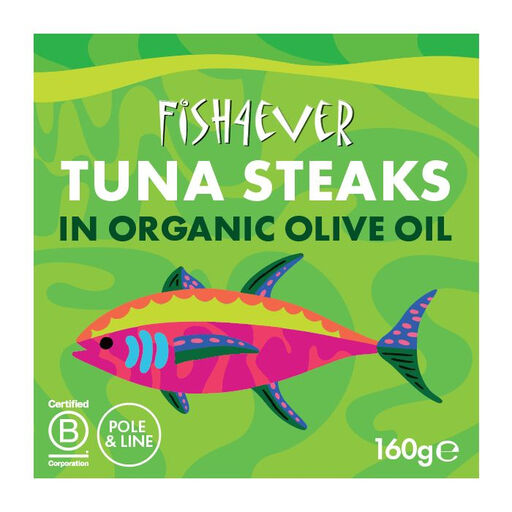 Image unavailable
Fish4ever Tuna Steaks in Organic Olive Oil 160g
Consider this steak format when the olive oil will be part of a salad or pasta dish. The product details describe tuna fillets in olive oil and give a two-day refrigerated period after opening.
If comparing nutrition figures, check whether each label uses the whole product or drained product as its basis.
View on Joybuy
 Image unavailable
Tropical Sun Tuna Steaks in Sunflower Oil
A sunflower-oil steak option for a salad, sandwich or pasta dish. The product details describe it as ready to eat, unlike the Tropical Sun brine-packed steaks above.
Use the exact product's nutrition label when comparing it with water-packed tuna.
View on Joybuy
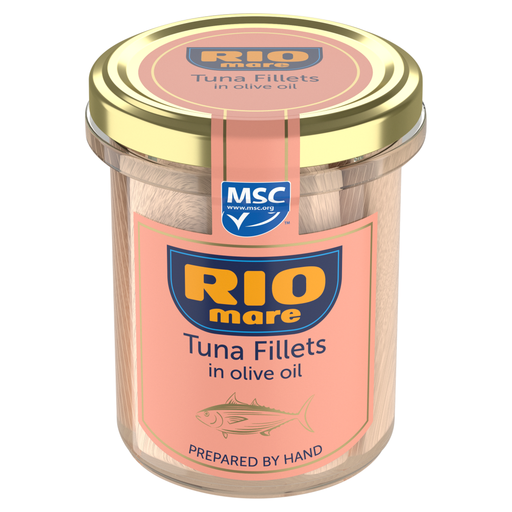 Image unavailable
Rio Mare Tuna Fillets in Olive Oil Glass Jar 180g
A jarred fillet option when you want recognisable tuna pieces and olive oil in a salad or pasta dish. Its product details give nutrition information for both the whole and drained product, so compare like with like.
Check the jar for its current sourcing and after-opening instructions.
View on Joybuy
 Image unavailable
John West No Drain Tuna Chunks in Springwater, 3 x 100g
A three-can chunk pack to consider for quick sandwiches or salads when avoiding draining matters more than keeping steak-sized pieces intact.
The product details say to refrigerate after opening; follow the instructions on the individual can.
View on Joybuy
Questions about tinned tuna
Is tuna steak always the right choice instead of chunks?
No. Choose steak or fillet when you want intact pieces to remain visible; chunks are a practical choice when the tuna will be broken up for a sandwich filling or stirred through a cooked dish. Check the format and drained weight of the products you are comparing.
Should I choose spring water, brine or oil?
Choose according to the dish and compare the exact labels, especially if fat or salt matters to your choice. Marks & Spencer lists 0.6g fat and 0.75g salt per 100g for its spring-water chunks, versus 6.4g fat and 0.93g salt per 100g for its sunflower-oil steak; the products also differ in format, so those figures are not a rule for all packing liquids.
How should I keep tuna left over after opening?
Follow the instructions on the exact pack. Marks & Spencer tells buyers to transfer unused spring-water chunks to a non-metallic container, refrigerate them and eat them within two days; its sunflower-oil steak instructions specify refrigeration and consumption within 24 hours.
What does NHS tuna guidance say for pregnancy or trying for a baby?
For people who are pregnant or trying for a baby, the NHS advises no more than four cans of tuna a week or two tuna steaks a week because tuna contains higher levels of mercury than other fish. This guidance applies to that group; it is not a general limit for every shopper.


