Low-preparation meal organisers
For someone arranging meals when cooking a raw fillet is impractical, tinned salmon offers a ready-to-use ingredient. John West says its salmon can be used straight from the can.


Choose tinned salmon when the meal needs a ready-to-use ingredient and cooking a fillet is impractical; check the particular can if bones or texture matter. Choose frozen fillets when there is freezer space and someone can follow the pack’s cooking instructions. If the need is for a complete delivered meal rather than an ingredient, check what the local meals-on-wheels provider offers.
For someone arranging meals when cooking a raw fillet is impractical, tinned salmon offers a ready-to-use ingredient. John West says its salmon can be used straight from the can.
Frozen fillets are an option when someone can store them and follow the particular pack’s cooking directions. Tesco and Sainsbury's list cooking-from-frozen directions for the cited fillets, though the methods differ.
Skinless-and-boneless products may be easier to prepare for a recipient with those preferences. Check the individual label and the food before serving: M&S warns that small bones may remain in its cited canned salmon.
Decide whether someone can cook a fillet before comparing bone status, portions and ingredients.
| Concern | What to check | Who this matters to |
|---|---|---|
| Preparation | Check who can cook the fish and whether the chosen frozen pack permits the available cooking method. Tesco lists microwave directions for its cited fillets; Asda marks its cited frozen fillets unsuitable for microwave cooking. | If nobody can cook a raw fillet, I need salmon that can go straight into a meal. About 50% of consumers put minimal preparation first. |
| Bones, texture and portions | Check the exact pack’s skin and bone description, portion size and any warning about remaining bones. | For a recipient who finds skin or bones difficult to manage, I want a portion I can check before serving. Roughly 30% of consumers put bone and texture handling first. |
| Ingredients and meal planning | Compare the exact products’ ingredients and nutrition per 100g and per serving, using the basis stated on each label. | When planning repeated meals, I need the serving size and ingredient list to fit the plan. Around 20% of consumers put ingredients and portions first. |
Tinned salmon can be a ready-to-use meal ingredient, whereas a frozen fillet needs storage and cooking. That difference matters if the recipient cannot prepare raw fish.
Choose the format according to who will prepare the meal, then compare products within it.
Skinless-and-boneless labelling is useful, but M&S warns that small bones may remain in its cited canned salmon.
Read the product label and check the food as appropriate for the person being served.
Directions differ by product: Tesco lists microwave-from-frozen instructions for its cited fillets, while Asda says its cited frozen fillets are not suitable for microwave cooking.
Follow the current pack’s storage and cooking directions rather than transferring instructions from another product.
GOV.UK says councils or local organisations may provide meals at home for eligible people in England and Wales. The hot and frozen options described by Rhondda Cynon Taf County Borough Council are a local example, not a menu for every service.
Ask the recipient’s council or provider about eligibility, delivery arrangements and any dietary or texture-modified options.
A tinned salmon range for cupboard meals, including salads, sandwiches and pasta.
Its Wild Pacific Red Salmon comes in 105g and 213g sizes, alongside other salmon formats.
Own-brand frozen wild salmon fillets and tinned salmon options illustrate both preparation routes.
Own-brand options include frozen salmon portions and a 105g skinless-and-boneless tin of pink salmon.
Own-brand frozen wild fillets and chilled fillets offer different storage and cooking arrangements.
Tinned Wild Alaskan Red Salmon and ready-to-cook chilled salmon represent distinct preparation routes.
These options cover a tinned salmon ingredient for low-preparation meals and frozen fillet steaks for a cooked portion. Choose according to the preparation and storage available at home.
 No image available
Consider this tinned option when a cupboard-based salmon ingredient fits the meal routine. The can is 213g; check its label for bone status and instructions for storing any contents left after opening.
 No image available
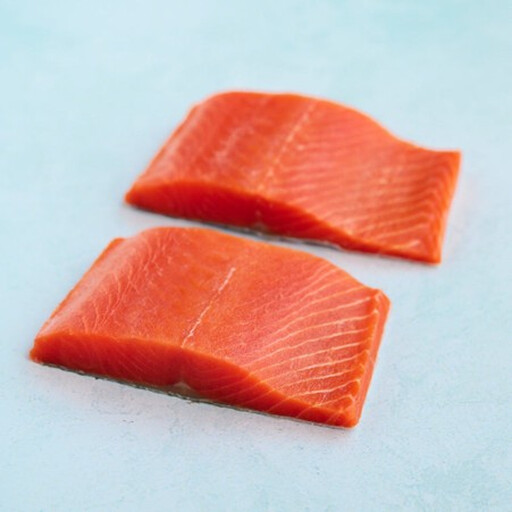
These fillet steaks are an option when someone can store frozen fish and prepare a cooked portion. The pack is 220g; check its thawing, cooking and bone information before serving.
Yes, if someone can store and cook the particular product. Sainsbury's lists oven-from-frozen directions for its cited fillets, while Tesco lists oven and microwave-from-frozen directions for its cited fillets; follow the pack actually being served.
Tinned salmon avoids cooking a raw fillet: John West says its salmon can be eaten straight from the can. The person preparing it must still be able to open the tin, check the food where bones matter and store any leftovers as the label directs.
No. M&S warns that small bones may remain in its cited canned salmon despite its skinless-and-boneless description. Check the label and the food as appropriate for the recipient.
It could if a suitable local service offers one. GOV.UK says councils or local organisations may provide meals at home for eligible people in England and Wales; Rhondda Cynon Taf County Borough Council describes hot and frozen meals in its own service. Confirm the recipient’s local options, eligibility and any dietary or texture requirements directly.
Follow the instructions on the exact can. For its cited canned salmon, M&S says to transfer unused contents to a non-metallic container, refrigerate them and eat them within 24 hours.