Quick savoury-pancake cooks
If you want to assemble the filling without thawing a fillet, tinned salmon gives you fish to drain and flake. Check the can’s ingredients and bone wording before mixing it in.


Choose tinned salmon when you want a cupboard ingredient you can drain and flake into a quick savoury pancake filling. Choose frozen salmon fillets when you want cooked pieces as the focus of the filling and can allow for freezer storage and preparation. For either format, check the portion you need and the current pack label; frozen fish also needs to be prepared according to its instructions.
If you want to assemble the filling without thawing a fillet, tinned salmon gives you fish to drain and flake. Check the can’s ingredients and bone wording before mixing it in.
If cooked salmon pieces are the focus of the pancake, frozen fillets give you portions to prepare. You will need freezer space and time to follow the pack’s cooking or defrosting instructions.
If small bones, added ingredients or after-opening storage affect your choice, compare individual labels rather than relying on the words ‘tinned salmon’. Fish is an allergen, so salmon is not suitable for someone with a fish allergy.
For a savoury Pancake Day filling, decide which is your primary concern: assembling it quickly, serving cooked fillet pieces or checking the format and label closely.
| Concern | What to check | Who this matters to |
|---|---|---|
| Quick assembly | For a tin, compare the amount available for the filling, using drained weight where stated. Check its skin-and-bone wording. | If I need to put the filling together shortly before serving, I want salmon I can drain and flake without a thawing step. About 40% of consumers put quick assembly first. |
| Cooked pieces and portions | For frozen salmon, check the number and size of portions and whether the pack calls for defrosting or permits cooking from frozen. | When salmon is the main part of my pancake filling, I want cooked pieces and enough fish for the people eating. About 30% of consumers prioritise fillet texture and portion planning. |
| Bones, ingredients and storage | Read the current ingredients, allergen and bone statements, plus the instructions for any opened tin. | If I am serving someone with a fish allergy, salmon is off the menu; otherwise, I may need to avoid unexpected bones or ingredients and handle leftovers as directed. About 30% of consumers put format and label certainty first. |
Tinned listings include different salmon types, can sizes and skin-and-bone formats. The amount and texture you can use in a filling may therefore differ.
Compare the individual can’s format, ingredients and drained weight where stated before deciding how many pancakes it will fill.
A frozen fillet may need defrosting before it can be cooked for the filling. GOV.UK food-hygiene guidance advises fully defrosting food before cooking unless the manufacturer says it can be cooked from frozen, and recommends defrosting in the fridge.
Read the particular pack’s directions before buying and allow the preparation time they require.
M&S warns that small bones may remain in its skinless-and-boneless red salmon despite care taken to remove them.
Check the wording on your chosen product and inspect the salmon as you flake it if small bones would be a problem.
Ingredients, allergen statements and after-opening directions need to be checked for the product you will use. Fish is an allergen.
Read the physical pack before preparation, especially if an ingredient or allergy concern is non-negotiable, and follow its storage directions after opening.
Princes offers tinned Wild Pacific red salmon for a cupboard-based filling.
Tesco Groceries lists John West red and pink tinned salmon alongside an Atlantic salmon fillet in olive oil.
Tesco Groceries lists own-label tinned salmon and frozen salmon fillets, allowing a comparison of cupboard and freezer formats.
M&S lists skinless-and-boneless tinned red salmon and frozen Scottish salmon portions.
These Joybuy selections cover tinned pink salmon for a cupboard filling and frozen sockeye salmon steaks for a cooked filling. Choose the format before comparing the individual packs.
 No image available
A tinned option if you want several cans available for quick, flaked pancake fillings. The pack contains four 213g cans; check each can’s drained weight and skin-and-bone wording if they affect your recipe. Read the current label for allergens and after-opening storage.
 No image available
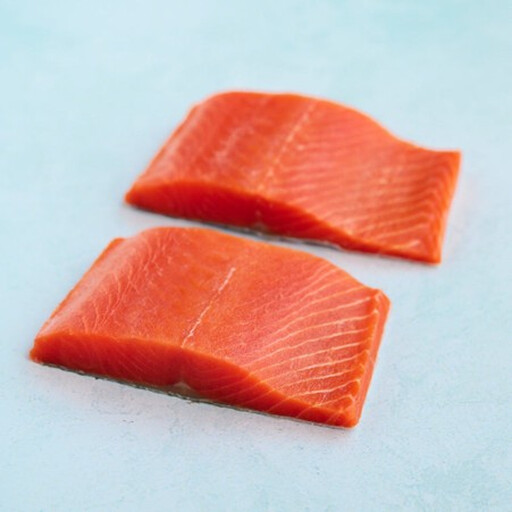
Frozen salmon fillet steaks for a filling built around cooked fish. The named pack is 220g; check its portioning, bone information and cooking directions before planning the pancakes. Allow for defrosting unless the pack instructs you to cook from frozen, and read the current allergen label.
 No image available
A single tinned option when you want to prepare a flaked salmon filling without buying the four-pack. The can is 213g; check the drained weight and skin-and-bone wording when judging how much filling it will provide. Follow the current label’s allergen and after-opening directions.
Use tinned salmon for a filling you can drain and flake without thawing; choose frozen fillets when you want cooked salmon pieces and can make time to prepare them. Check the amount needed and the individual pack’s directions before deciding.
Follow the pack’s instructions. GOV.UK food-hygiene guidance advises fully defrosting food before cooking unless the manufacturer says it can be cooked from frozen, and recommends defrosting in the fridge.
Yes. M&S warns that small bones may remain in its skinless-and-boneless red salmon. Check your chosen can’s label and inspect the fish while flaking it if bones would affect the meal.
Follow the directions on the can you have opened. For its skinless-and-boneless red salmon, M&S instructs shoppers to put unused contents in a non-metallic container, refrigerate them and eat them within 24 hours; do not assume another product has the same directions.