Choose tinned salmon when cupboard storage and little preparation matter most; choose plain frozen fillets when you want to cook portions as needed and the person can safely manage the prepared fish. Check the exact product for bones, salt, portion size and preparation instructions. If the person has swallowing difficulties, follow their individual professional guidance rather than assuming either format is suitable.
Who is this choice for?
Older adults who need straightforward meals
A ready-to-use tin may reduce meal-assembly steps. Royal United Hospitals Bath NHS Foundation Trust and the British Dietetic Association highlight nutrition as an important consideration in later life; the choice of salmon still needs to fit the person's meals and preferences.
Shoppers deciding whether bones are acceptable
Standard tinned salmon and explicitly boneless products offer different textures. Check the wording on the particular tin or frozen pack rather than assuming every salmon product has the same bone content.
Carers following swallowing guidance
For someone with dysphagia, NHS Tayside advises following their Speech and Language Therapist's guidance on texture and fluid consistency. Tinned fish being easy to flake does not, by itself, establish suitability.
What matters when choosing?
Decide whether the main priority is the nutrition panel, an acceptable texture, preparation effort or manageable portions; then compare the exact tin or frozen pack.
| Concern | What to check | Who this matters to |
|---|
| Nutrition information |
Compare protein and salt on the label using the stated per-100g basis, then consider the portion likely to be eaten. |
When planning an older person's meals, I want to know what the serving actually contributes rather than judging it by the pack alone. About 36% of consumers put nutrition information first. |
| Texture and bones |
Look for explicit boneless wording; where a texture-modified diet is prescribed, follow the individual instructions for preparing the fish. |
If bones are unwelcome or swallowing guidance applies, the fish must suit the person who will eat it. Texture and bones are the primary concern for about 29% of consumers. |
| Storage and preparation |
Choose between a cupboard-stored tin and a frozen product that needs freezer space and preparation; follow the pack directions. |
On days when preparing a meal takes extra effort, fewer steps may matter more than the choice of format itself. Roughly 21% of consumers chiefly prioritise storage and preparation. |
| Manageable portions |
Check a tin's drained weight where stated, or the number and size of frozen portions. |
For a smaller meal, I want an amount I can use without leaving more than I need. Portion management comes first for about 14% of consumers. |
What should you avoid assuming?
-
Assuming every tin is boneless
Standard tinned salmon and skinless-and-boneless salmon are distinct products. Bones or an unsuitable texture may matter to the person eating the meal.
Check the exact tin for boneless wording. If a texture-modified diet has been prescribed, follow the person's professional guidance.
-
Treating prepared frozen dishes as plain fillets
A prepared salmon dish can have different ingredients, seasoning, texture and cooking directions from plain fish.
Choose a product labelled as plain fillets when you need control over preparation, and read the ingredients and directions on prepared dishes.
-
Ignoring how much fish a pack provides
Tins and frozen packs come in different sizes, and a can's total weight need not describe the amount of drained fish.
Check drained weight where stated and compare it with the number and size of frozen portions you expect to use.
-
Assuming soft fish meets swallowing requirements
A food's general softness does not establish that it meets an individual's prescribed texture. NHS Tayside advises following Speech and Language Therapy guidance for dysphagia.
For known or suspected swallowing difficulties, seek or follow individual professional advice before serving either tinned or frozen salmon.
Brands and ranges to compare
Princes
Princes has standard Wild Pacific Red Salmon and a separate Skinless and Boneless Wild Red Salmon product.
- Princes lists 22.8g protein and 0.91g salt per 100g drained for its standard Wild Pacific Red Salmon.
- The skinless-and-boneless product is a different variant: use its own label when checking ingredients and nutrition.
John West
Tesco Groceries lists John West Red Salmon among its tinned-salmon products.
- The Tesco listing identifies a 213g red-salmon tin for comparison with other listed tins.
- Check the particular product label for bone content, ingredients and nutrition rather than applying one variant's details to another.
Tesco
Tesco Groceries lists both tinned salmon and plain frozen salmon fillets in its own-label ranges.
- Its listings include a skinless-and-boneless tinned option and frozen salmon fillets.
- Check the exact frozen product: a prepared dish should not be treated as equivalent to a plain fillet.
Sainsbury's
Sainsbury's lists Wild Pacific red and pink salmon, including skinless-and-boneless tinned variants.
- Its listings distinguish a skinless-and-boneless red-salmon tin from a standard pink-salmon tin.
- Select by the individual pack's bone wording and nutrition label, not the supermarket name alone.
Joybuy salmon selections
These selections cover a tinned pink salmon multipack for cupboard-stored meals and frozen sockeye salmon fillet steaks for cooking at home. Check each pack against the eater's portion and texture needs.
 No image available
Morrisons Pink Salmon 213g, 4 Packs
This tinned option suits meals where cupboard storage and little preparation are priorities. The listing identifies four 213g packs; check the can's drained weight and whether it contains bones if either affects the meal. Follow individual swallowing guidance where applicable.
Joybuy
 No image available
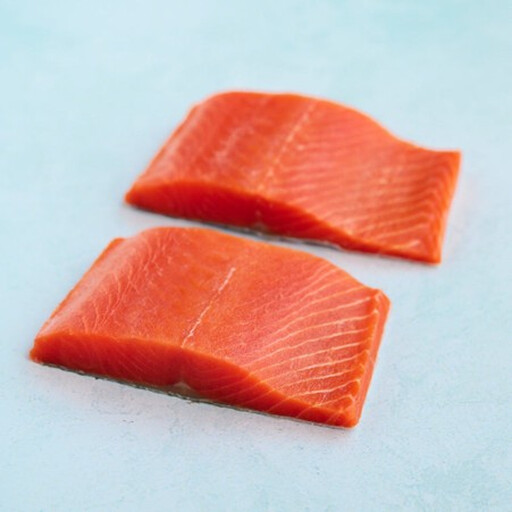
The Fish Society Wild Sockeye Salmon Fillet Steaks 220g
These frozen fillet steaks suit someone planning to cook salmon as needed, with freezer storage and preparation required. Check the pack for bone information and follow its thawing and cooking directions. A cooked steak still needs to meet any individual swallowing guidance.
Joybuy
Common questions
Does tinned salmon count as oily fish?
Yes. The NHS identifies salmon as oily fish. When comparing tins, use the individual product's label for its ingredients, serving information and nutrition values.
Should I choose boneless salmon for an older person?
Choose an explicitly boneless product if bones are unwanted, but do not assume boneless fish meets a prescribed texture. For swallowing difficulties, follow the person's individual professional guidance.
Can tinned salmon replace a frozen fillet for someone with dysphagia?
Not on the basis of format alone. NHS Tayside advises following a Speech and Language Therapist's instructions on the appropriate texture and fluid consistency for someone with dysphagia.
How should I handle frozen salmon?
Follow the specific pack's storage, thawing and cooking instructions. Food Standards Agency research notes that thawing followed by storage at significantly higher temperatures can allow surviving microorganisms to grow.
Is salmon suitable for someone with a fish allergy?
No. The Food Standards Agency identifies fish as an allergen that can pose a risk to someone with a fish allergy. Check the product label and follow the person's clinical allergy advice.


