Desk-lunch shoppers
If you need an unopened ingredient you can keep at work and add to a sandwich or salad, tinned tuna fits that routine. A no-drain pack is worth considering when you have no convenient place to empty a can.


Choose tinned tuna for a cold office lunch you want to assemble with little preparation; a no-drain pack avoids dealing with liquid at work. Choose frozen tuna steaks for a cooked, steak-style lunch only if you can follow the pack’s cooking directions and keep the prepared lunch chilled. Packing medium, drained weight and the exact nutrition label matter when comparing tins.
If you need an unopened ingredient you can keep at work and add to a sandwich or salad, tinned tuna fits that routine. A no-drain pack is worth considering when you have no convenient place to empty a can.
If you prefer a cooked steak or fillet to tinned chunks, frozen tuna is an option when you can cook it according to its label and transport the prepared lunch chilled. It takes more planning than opening a tin at your desk.
If packing medium, portion size or sourcing information guides your choice, compare the exact products. Check whether nutrition figures refer to drained tuna, and look for species and certification details on the pack you intend to buy.
Start with where you can store and prepare lunch, then compare the pack format and label details that affect your meal.
Choose it when: You want to assemble a cold lunch at work from an unopened pack.
Trade-off: Check whether the tin needs draining and how to store any tuna left after opening.
Choose them when: You want a cooked, steak-style lunch and can prepare it before work.
Trade-off: The Tesco frozen steaks described in the research require cooking, with defrosting or cooking times that need planning.
| Priority | What to check | Your needs |
|---|---|---|
| Preparation at work | Check whether a tin is no-drain and whether the portion suits your lunch. For frozen steaks, read the cooking and defrosting directions on the exact pack. | I need to put lunch together without a cooker or somewhere to drain a tin. A no-drain pack addresses the second problem; a frozen steak needs cooking first. |
| Storage | Follow the unopened pack’s storage directions and its instructions after opening or defrosting. Tesco’s frozen steak listings specify storage at −18°C or cooler; the checked M&S tin says to store it in a cool, dry place. | My lunch may sit at work until midday, so I need a suitable place for the unopened product and a way to keep a prepared or opened lunch chilled. |
| Packing medium | Compare spring water, brine and oil on the same label basis. Princes lists 99 kcal per 100 g drained for its spring-water chunks and 180 kcal per 100 g drained for its sunflower-oil chunks; these are two specific products. | I want the tuna’s flavour and nutrition panel to fit the rest of my lunch, rather than assuming different packing media have identical values. |
| Edible portion | Look for drained weight as well as total can weight, and check whether nutrition values are per 100 g drained or on another stated basis. Tesco lists 102 g drained weight for its 145 g spring-water can. | A can’s headline weight does not tell me on its own how much tuna I will add to a sandwich or salad. |
| Species and sourcing | Read the exact pack for species, catch-method statements and any certification mark. A claim on one product does not establish the status of another tuna product. | If sourcing matters to me, I want information tied to the particular tin or steak I am buying. |
| Dietary considerations | Read the current allergen label: the tuna products described here contain fish. If pregnant or trying for a baby, account for the NHS weekly tuna guidance across meals, not just packed lunches. | I need to check whether tuna suits the person eating lunch and, where relevant, how it fits with tuna eaten elsewhere in the week. |
The Tesco and M&S frozen or chilled steaks described here are raw products that require cooking. Tesco’s frozen products also have storage and, where applicable, defrosting directions.
Choose a frozen steak only if you can follow its pack directions before work and keep the prepared lunch chilled. For an unplanned cold lunch, consider tinned tuna.
Liquid contributes to a tin’s total weight, while nutrition panels may use drained weight. Packing medium can also change the figures: Princes lists different energy values for its spring-water and sunflower-oil chunks per 100 g drained.
Check drained weight, packing medium and the nutrition panel’s measurement basis on each tin you compare.
Species, catch-method statements and certification can differ between products. A range-level statement does not establish what is on an individual pack.
Check the species and any sourcing or certification mark on the exact product.
For people who are pregnant or trying for a baby, NHS guidance limits tuna to no more than four cans or two tuna steaks a week because tuna can contain higher mercury levels.
Count tuna from office lunches alongside tuna eaten elsewhere when following that guidance.
John West offers spring-water tuna chunks and a no-drain spring-water range relevant to cold lunches.
Princes lists tuna chunks in spring water, brine and sunflower oil.
Tesco’s listed examples include spring-water tinned tuna and frozen tuna steaks, illustrating two different lunch-preparation routes.
M&S lists tinned skipjack tuna steak in spring water and raw yellowfin steaks.
These tinned options cover spring-water, sunflower-oil, plain and flavoured tuna for assembling a cold packed lunch. The frozen-steak route discussed above requires a different preparation routine.
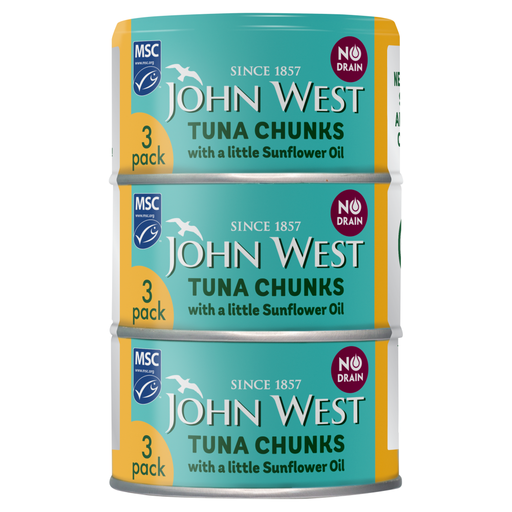 No image available
The no-drain format avoids dealing with can liquid when assembling lunch at work. This is a sunflower-oil option in three 100g packs; check the current pack’s nutrition basis before comparing it with drained-weight figures.
 No image available
For a sandwich or salad assembled with limited preparation space, this combines a no-drain format with three 100g cans. Check the current pack before comparing its nutrition figures with values stated per drained weight.
 No image available
Spring-water skipjack chunks are an option for a cold sandwich or salad. The listed nutrition figures are per 100g drained; check the can’s preparation directions if avoiding liquid at work matters to you.
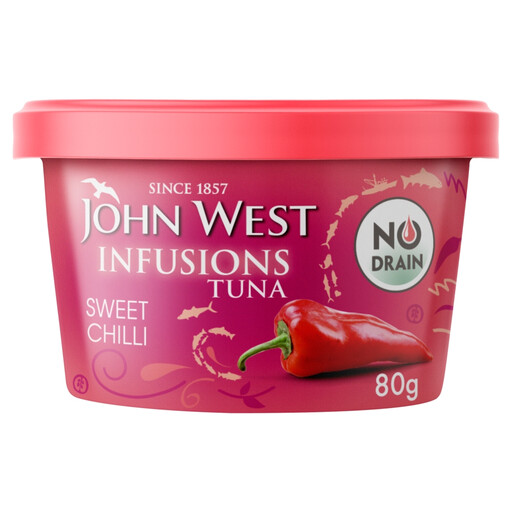 No image available
This 80g flavoured tuna can is described as ready to eat without draining, for a sandwich or salad that does not need plain tuna. It contains sunflower oil, sugar, red pepper and jalapeño; check the ingredients and nutrition panel against your preferences.
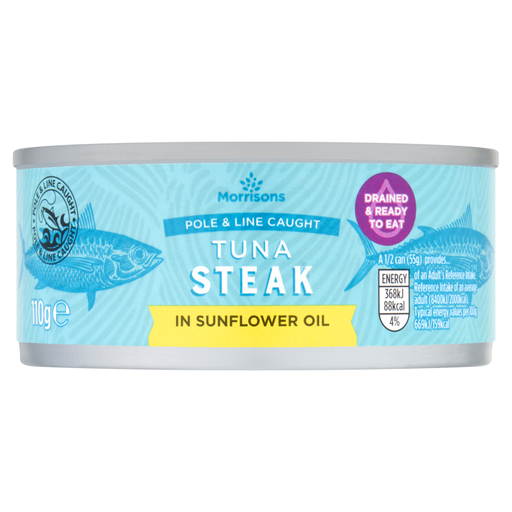 No image available
This tinned skipjack steak format offers pieces for a cold salad, pasta or sandwich, with sunflower oil as the packing medium. Confirm the can’s draining directions before relying on it for a low-preparation lunch, and check the nutrition panel’s measurement basis.
Tinned tuna is more practical when you need to assemble a cold lunch from an unopened pack at work. Frozen tuna steaks suit a cooked lunch prepared in advance: the Tesco frozen products described here require cooking, and one specifies at least 12 hours of fridge defrosting if thawed before cooking.
Choose by the flavour you want and the exact nutrition label. Princes lists 99 kcal per 100 g drained for its spring-water chunks and 180 kcal for its sunflower-oil chunks on the same basis. Its brine chunks list 0.9 g salt per 100 g drained, compared with 0.85 g for its spring-water chunks; these values do not describe every tuna product.
Follow the pack’s directions for the unopened tin and refrigerate tuna when its after-opening instructions require it. The checked M&S tin says to store it unopened in a cool, dry place, then transfer unused contents to a non-metallic container, refrigerate and eat within two days. Keep a prepared lunch containing perishable ingredients chilled.
Yes, if you can follow that product’s cooking and storage directions and keep the prepared lunch chilled until eating. Tesco says to keep its checked frozen steaks at −18°C or cooler; one listing gives a 24–26 minute oven-cooking time from frozen, while defrosting directions differ by product.
For people who are pregnant or trying for a baby, the NHS advises no more than four cans of tuna or two tuna steaks a week because tuna can contain higher mercury levels. Account for tuna eaten in meals other than office lunches too.