What matters when choosing?
Decide whether the meal will be assembled from an already-cooked ingredient or prepared as a cooked fish course, then check what the recipient can safely eat.
Tinned tuna
Choose when: The meal needs cupboard storage before opening and little preparation at serving time.
Allow for: The exact tin’s draining, nutrition, bone warning and instructions for leftovers.
Frozen tuna steaks
Choose when: A cooked fish course fits the meal plan and freezer storage and cooking facilities are available.
Allow for: Freezer space, cooking time and the chosen pack’s thawing and cooking directions.
| Concern |
What to check |
Who this matters to |
| Quick meal assembly |
Whether the tuna is already cooked and needs draining; storage directions before and after opening. |
When I have little equipment or time at serving, I need fish I can add to a suitable dish without cooking it first. About 37% of consumers put immediate preparation first. |
| Individual eating needs |
Fish allergens, bone warnings and any prescribed texture for the recipient. |
If the recipient has swallowing difficulties or a fish allergy, I need to establish whether and how the fish can be served before choosing a format. For about 27% of consumers, individual suitability is the primary concern. |
| Frozen-meal workflow |
Freezer capacity and the exact steak pack’s thawing and cooking instructions. |
For a cooked fish course, I need storage and preparation steps that fit the meal schedule. Roughly 18% of consumers chiefly prioritise this workflow. |
| Label details |
Nutrition on a comparable drained-weight basis where given; packing liquid and product-specific sourcing labels. |
When selecting ingredients for a planned menu, I want the salt information and sourcing claim for the exact product, not an assumption based on its brand or packing liquid. About 18% of consumers make these label details their main concern. |
Brands to consider for tinned tuna
These examples refer to particular products and retailer listings, not every tin made by each brand. Check the current label for the product you intend to serve.
John West
A tinned-tuna option represented by spring-water chunks in the researched Sainsbury’s listing.
- The listed 125g MSC-labelled product gives 0.8g salt per 100g drained.
- Sainsbury’s warns that bones may remain; its listed product needs refrigeration and use within two days after opening.
Princes
An ambient multipack option represented by spring-water chunks in the researched ASDA Groceries listing.
- The listed product carries an MSC label and gives 0.85g salt per 100g drained.
- It contains fish, and its opened contents need refrigeration and use within two days.
Tesco
The researched Tesco Groceries range includes ambient spring-water chunks and a separate frozen tuna-steak product.
- The ambient chunks offer a different preparation route from a cooked steak; the listed tin gives 0.90g salt per 100g drained.
- The researched frozen steaks require storage at −18°C or cooler and preparation according to their pack instructions.
Sainsbury’s
An own-label spring-water multipack represented by a researched Sainsbury’s listing.
- The listed multipack gives 0.12g salt per 100g drained and carries an MSC label.
- Sainsbury’s directs buyers to transfer opened contents from the tin, refrigerate them and use them within one day.
Asda
An own-label ambient option represented by spring-water tuna chunks in an ASDA Groceries multipack listing.
- The listed multipack gives 0.90g salt per 100g drained and carries an MSC label.
- Its label warns about bones and directs buyers to transfer and refrigerate unused contents, using them within two days.
M&S
An own-label tinned option represented by the researched 160g spring-water product.
- The listed product gives 0.75g salt per 100g.
- Marks & Spencer warns that bones may remain and directs buyers to refrigerate unused contents in a non-metallic container and eat them within two days.
Tinned and frozen tuna on Joybuy
These selections cover tinned chunks for meals assembled with little cooking and frozen steaks for a cooked fish course. Check the chosen pack against the recipient’s eating plan before serving either format.
 No image available
John West No Drain Tuna Chunks in Springwater, 3 x 100g
The no-drain format suits a meal that needs fewer assembly steps. The pack contains three 100g portions; check its current fish-allergen and bone information and any prescribed texture before serving.
View on Joybuy
 No image available
John West Tuna Chunks in Springwater, 4 x 125g
Four tins offer portions for meals prepared on separate occasions. This is a spring-water product, not the no-drain variant; check the pack’s handling, bone and fish-allergen information and the recipient’s texture plan.
View on Joybuy
 No image available
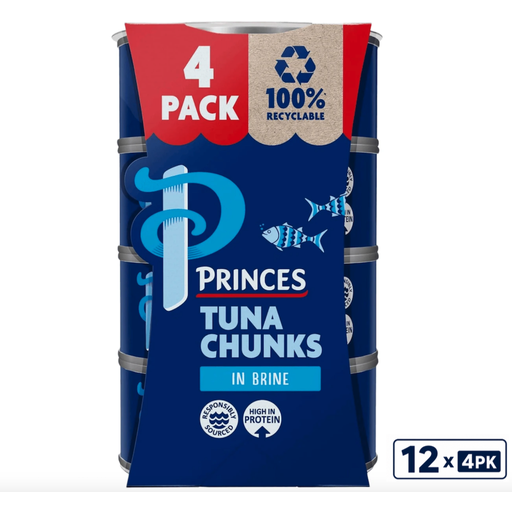
Princes Tuna Chunks in Brine, 4 x 145g x 12 packs
This larger multipack may fit repeated meal preparation where its quantity can be stored and used appropriately. It contains brine-packed chunks; the listing identifies fish as an allergen and warns that small bones may remain.
View on Joybuy
 No image available
Morrisons Fad Free Tuna Chunks in Spring Water, 145g (6 packs)
The six-pack format suits planning several meals with tinned tuna. The listing directs buyers to transfer opened leftovers to a non-metallic container, refrigerate them and use them within two days; check the current pack for bone information and the recipient’s eating requirements.
View on Joybuy
 No image available
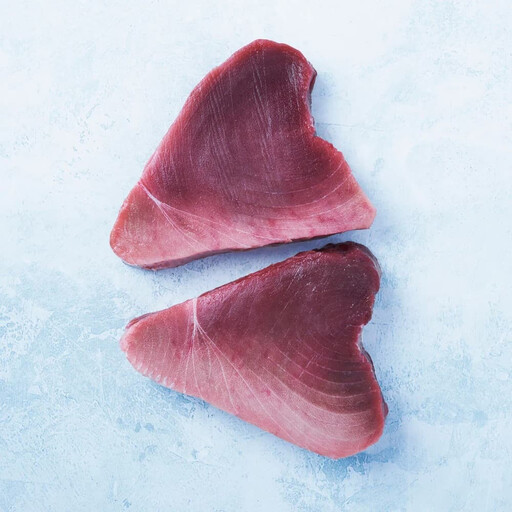
Frozen tuna steaks, 2 steaks, 260g
These steaks are for a meal with freezer storage and facilities to prepare a cooked fish course, not a direct substitute for ready-to-use tinned chunks. The listing calls for storage at −18°C or colder and says not to refreeze once thawed; follow its applicable handling and cooking directions. Check fish and possible crustacean and mollusc cross-contact information against the recipient’s allergies.
View on Joybuy
Common questions
Which tuna format works for a meal with minimal preparation?
Tinned tuna works when an already-cooked ingredient can be incorporated into a suitable meal. Frozen steaks need freezer storage and preparation according to their pack; the researched Tesco Groceries steak product, for example, specifies storage at −18°C or cooler.
How long can I keep tinned tuna after opening it?
Follow the exact tin’s directions rather than a single rule for all tuna. The researched Sainsbury’s multipack says to refrigerate transferred contents and use them within one day; the researched Tesco Groceries and ASDA Groceries examples specify use within two days.
Is tinned tuna suitable for someone with swallowing difficulties?
Do not assume that chunks, mashed tuna or a steak meet that person’s prescribed texture. Cambridge University Hospitals NHS Foundation Trust says speech and language therapists assess swallowing difficulties; follow the recipient’s individual plan and professional advice before choosing or preparing the fish.
Can thawed tuna steaks be refrozen?
Check the specific pack: the researched Tesco Groceries frozen steaks say not to refreeze once defrosted, and the researched Waitrose & Partners chilled, previously frozen steaks give the same restriction after home freezing and defrosting. A chilled product previously frozen before sale is not the same storage format as a pack sold frozen.
Does tinned tuna count as oily fish?
No. The NHS says fresh and canned tuna do not count as oily fish. If the meal plan calls for an oily-fish portion, choose a suitable oily fish for that purpose rather than counting the tuna.


