Bakers planning a visible fruit finish
If the fruit will sit on top of a cake or tart, the cut matters: peach or pear halves give you pieces to arrange, while fruit cocktail gives a mix of smaller fruits.


Choose tinned fruit by how it will appear in the finished dessert, rather than assuming a brand or a “luxury” label will produce a particular result. Peach halves suit an arranged topping, while fruit cocktail offers a varied mix for trifles or dessert cups; check the exact tin’s ingredients and drained weight, and keep full ingredient information for the finished bake.
If the fruit will sit on top of a cake or tart, the cut matters: peach or pear halves give you pieces to arrange, while fruit cocktail gives a mix of smaller fruits.
When added liquid or the packing medium matters, compare juice and syrup on the exact label. Plan how much fruit to drain and whether the recipe calls for any of the liquid.
The tin is only one ingredient in a finished bake. Keep its label alongside the full recipe so helpers can communicate ingredients and follow the school’s allergy arrangements.
For a school bake sale, decide on the dessert and portion size before choosing the fruit cut, packing medium and amount of usable fruit. Ingredient information also needs to cover the finished item, not just the tin.
| Concern | What to check | Who this matters to |
|---|---|---|
| Visible fruit finish | Choose halves, slices or mixed fruit to suit the decoration; check whether pieces need cutting. | If I want fruit arranged visibly on a cake, I need pieces that suit the design rather than an unspecified mix. About 30% of consumers put presentation first. |
| Packing medium and recipe | Compare the exact ingredients and nutrition panel; decide whether the recipe uses the packing liquid. | For a dessert where added liquid matters, I want to know whether the fruit comes in juice or syrup before adjusting the recipe. Recipe and ingredient control is the primary need for about 30% of consumers. |
| Usable quantity | Plan portions from drained weight, not net can weight, and check how much fruit each serving needs. | When making a batch of individual portions, I need enough fruit after draining without opening unnecessary tins. Roughly 20% of consumers prioritise usable quantity. |
| Ingredient communication | Keep the tin label and a complete recipe record; follow the school’s arrangements for labelling and serving. | If I am organising the stall, families and helpers need information about the whole bake, including toppings and handling. Clear ingredient communication comes first for about 20% of consumers. |
Net weight includes the packing liquid. Tesco Groceries lists a 415g Del Monte peach-halves tin with 235g drained weight; Sainsbury’s lists a 415g Del Monte fruit cocktail with 250g drained weight. The same net weight does not mean the same amount of fruit.
Work out the fruit needed per portion, then use the drained weight of the exact product to plan the batch.
Sainsbury’s lists clarified pineapple juice from concentrate for Del Monte fruit cocktail in juice, while its light-syrup cocktail lists water, glucose-fructose syrup and sugar. The packing liquids are not interchangeable ingredients.
Check the current tin’s ingredient list and decide whether to drain it or use the liquid according to the recipe. Do not assume the words “light syrup” describe the finished dessert’s sugar content.
Cake ingredients, decorations, preparation surfaces and serving utensils also affect the information needed for the finished item. A fruit label alone cannot describe the whole bake.
Keep a complete ingredient record for each item and follow the school’s allergy policy. Anaphylaxis UK recommends giving allergen information, labelling items and taking care with separation and utensils at bake sales.
A familiar name does not tell you whether the tin contains the right cut, packing medium or quantity for your planned decoration.
Choose the dessert format first, then compare the exact products’ fruit pieces, ingredients and drained weights.
Product listings from Tesco Groceries and Sainsbury’s show Del Monte peach halves and fruit cocktail in juice. These are distinct options for an arranged topping or a mixed-fruit dessert.
Princes lists fruit cocktail in juice in 410g and 220g sizes and suggests it for trifle.
Sainsbury’s lists own-label peach slices and apricot halves in fruit juice, offering cuts to compare with branded products.
These tins cover mixed fruit and sliced or halved fruit for bake-sale desserts, with both juice- and syrup-packed options. Match the cut and packing medium to the recipe, then check the current package for ingredient and portion planning.
 Image unavailable
Consider the mixed fruit for a trifle or dessert cup where varied pieces are part of the presentation. Sainsbury’s lists this 415g product as a five-fruit cocktail with 250g drained weight; its fruit proportions can vary, so check the current label if the appearance needs to be consistent.
 Image unavailable
Choose halves when you want to arrange recognisable peach pieces or cut them to fit individual portions. Tesco Groceries lists 235g drained weight for the 415g tin, so use the drained amount when planning how many toppings it will make.
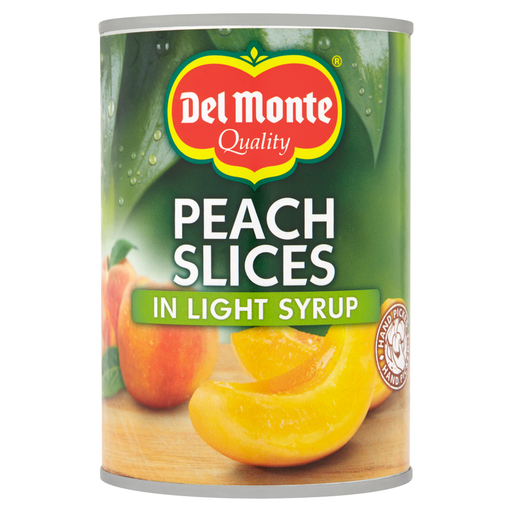 Image unavailable
Sliced peaches suit a recipe calling for pieces rather than whole halves. This 420g tin is packed in light syrup; check its ingredient and nutrition labels, and whether the recipe calls for the syrup, before substituting it for juice-packed fruit.
 Image unavailable
This 220g tin offers peach slices in juice for a dessert needing sliced fruit. If the batch calls for a precise amount, check the drained weight on the current package rather than treating the full tin weight as usable fruit.
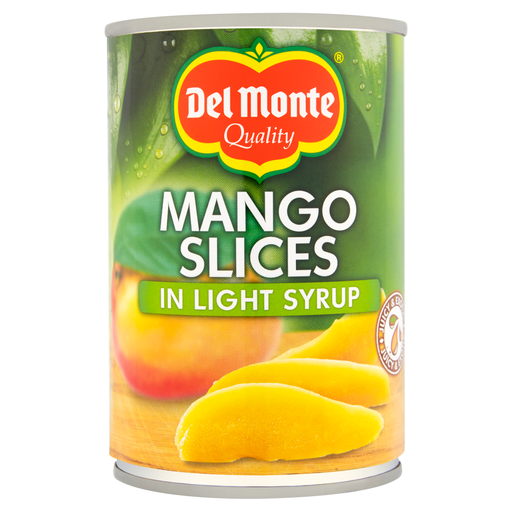 Image unavailable
Sliced mango provides a different visible fruit choice for a planned dessert topping. This 425g tin is packed in light syrup; check the label for ingredients and drained quantity, and follow the recipe’s directions for using the slices and liquid.
Choose a cut you can use visibly: peach halves can be arranged or sliced for a topping, while fruit cocktail brings a varied mix to a trifle or dessert cup. Check the pieces and drained quantity on the exact tin before planning portions.
Do not assume that from the packing-medium name. Sainsbury’s listings show different ingredients for the compared Del Monte juice and light-syrup fruit cocktails, but that does not establish a rule for every tin or the finished dessert; compare the exact products’ nutrition and ingredient labels.
Keep the full recipe and the labels for packaged ingredients, including the fruit, so information covers the finished bake rather than one component. Anaphylaxis UK recommends providing allergen information and taking care with labelling, separation and serving utensils; follow the individual school’s allergy policy and local arrangements.
Follow the storage and use-by-after-opening instructions on that product’s current label. Check these before opening more tins than the batch needs.