Salt-conscious home bakers
If salt is your starting concern, compare the figures per 100g on current packs. Check whether each figure describes drained fruit or the product as sold before treating two numbers as directly comparable.


Check salt per 100g on the current label, comparing products on the same drained or as-sold basis. For a cake, crumble or traybake, the packing liquid, fruit cut and drained weight may then make the more useful difference to your recipe: juice and syrup affect sweetness, while the amount of fruit left after draining determines how much you can use.
If salt is your starting concern, compare the figures per 100g on current packs. Check whether each figure describes drained fruit or the product as sold before treating two numbers as directly comparable.
If a cake or crumble already contains sugar, look at whether the fruit is packed in juice or syrup and check the sugars figure. Follow the recipe’s instructions for draining or using the liquid.
For a filling, layer or topping, choose the fruit cut the recipe calls for and use drained weight, rather than total pack weight, to work out how much fruit you will have.
Start with a comparable salt figure, then choose the packing liquid and usable fruit quantity for the bake you intend to make.
| Concern | What to check | Who this matters to |
|---|---|---|
| Salt on the label | Compare salt per 100g on the same drained or as-sold basis; check the current pack. | If I am choosing fruit for a salt-conscious bake, I want a figure I can compare fairly across products. About 45% of consumers put that salt comparison first. |
| Sweetness and liquid | Check whether the fruit is in juice or syrup, its ingredients and its sugars per 100g. | When my cake already contains sugar, I want the packing liquid to suit the recipe rather than make it unexpectedly sweet or wet. About 33% of consumers prioritise this recipe balance. |
| Cut and usable quantity | Choose the required slices, chunks or halves; check drained weight when the recipe calls for drained fruit. | If a filling needs a particular amount and shape of fruit, I need to know what remains after draining. Around 22% of consumers put fruit format and usable quantity first. |
For a concrete quantity check, Tesco lists its 410g peach-slices can with a 250g drained weight. The two figures serve different purposes when a recipe specifies drained fruit.
A suitable salt figure does not tell you whether the packing liquid suits the bake. In Asda’s peach examples, the juice-packed and light-syrup products have different ingredients and sugars figures.
After comparing salt on the same basis, check the ingredients and sugars figure before deciding between juice and syrup.
Total weight includes packing liquid. Tesco’s peach slices are labelled 410g in total and 250g drained, a distinction that matters when a recipe specifies a weight of drained peaches.
Calculate the number of cans from drained weight when the recipe calls for drained fruit.
Tesco and Sainsbury’s warn that stones may remain in their peach products despite preparation. A piece could otherwise end up in a filling or batter.
Inspect peach pieces as you drain or cut them, particularly before adding them to batter or serving the bake to children.
Ingredients and nutrition information can change, affecting a salt comparison or a recipe calculation.
Check the tin or bottle you will use, especially if its ingredients or nutrition figures are important to your choice.
Sainsbury’s lists Del Monte fruit in several forms, including peaches, pears and pineapple, with juice-packed and syrup-packed choices.
Princes describes its canned-fruit range as suitable for baking and includes pineapple, peaches, pears and fruit cocktail.
Tesco offers peach slices in juice and light syrup among its own-label options.
Sainsbury’s lists own-label fruit including peaches, apricots and pears, with packing liquids that vary by product.
Asda’s checked peach products include slices in fruit juice and slices in light syrup.
M&S lists tinned rhubarb and grapefruit; it suggests rhubarb for pies and crumbles.
These options include pineapple, pears and peaches in juice, plus a bottled peach-in-syrup choice. Match the fruit cut and packing liquid to your recipe, then check the current label before making a salt comparison.
 Image unavailable
Consider the slices when a recipe calls for layered pineapple or visible fruit on top. Check drained weight for the amount of fruit you need, and compare salt using the basis shown on the current label.
 Image unavailable
Choose chunks if the recipe calls for pineapple pieces rather than slices. Check how much fruit remains after draining, and use the pack’s nutrition basis when comparing salt with another product.
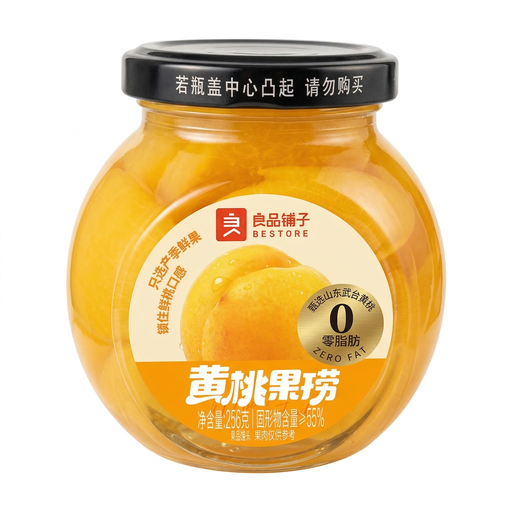 Image unavailable
This bottled option is for a recipe where peaches in syrup suit the intended sweetness. Check its sugars and salt on the current label and the usable fruit quantity if the recipe specifies drained peaches.
 Image unavailable
Pear halves suit a recipe that calls for larger pieces rather than slices or chunks. Check drained weight when planning portions, and confirm the salt figure and its basis on the pack.
 Image unavailable
Consider peach halves for a bake that calls for larger fruit pieces. Check the drained amount against the recipe, compare salt on a like-for-like label basis and inspect the fruit for stone fragments before use.
Not necessarily. Compare the salt figure per 100g on current labels, making sure the products use the same drained or as-sold basis. A reduced-salt phrase alone does not tell you which fruit cut or packing liquid will suit your recipe.
Choose according to the sweetness and liquid your recipe calls for. In Asda’s checked peach products, the light-syrup version contains water and sugar, while the fruit-in-juice version has a different ingredient list. Check the sugars figures on the packs rather than assuming fruit in juice contains no sugar.
Follow the recipe: some uses call for drained fruit, while others use some of the liquid. If it specifies a weight of drained fruit, plan from drained weight rather than total can size; Tesco’s peach-slices example is 410g in total and 250g drained.
Follow the instructions on the exact pack. The checked Tesco and Sainsbury’s peach products instruct shoppers to transfer leftovers to a covered, non-metallic container and refrigerate them; their stated use-by periods after opening can differ from those of other products.
Where a front-of-pack traffic-light label is provided, it offers a quick way to compare labelled nutrition information. For the salt figure you intend to use in a recipe comparison, read the current product’s nutrition panel and check that both products are measured on the same basis.