Coeliac label-checking shoppers
Fruit-based ingredients alone do not settle whether a finished tin suits a coeliac diet. Coeliac UK advises checking the current label for cereals containing gluten and relevant precautionary allergen information.


For a lower-added-sugar choice, start with tinned fruit in natural juice or water, then check the ingredients and sugars per 100g: fruit in juice is not necessarily sugar-free. For coeliac shopping, assess the exact current pack separately by checking its ingredients, highlighted cereals containing gluten and any precautionary allergen wording; a suitable packing liquid does not establish gluten suitability.
Fruit-based ingredients alone do not settle whether a finished tin suits a coeliac diet. Coeliac UK advises checking the current label for cereals containing gluten and relevant precautionary allergen information.
If you use tinned fruit for breakfast, snacks or desserts, the packing liquid matters. NHS guidance points to fruit in natural juice or water with no added sugar rather than fruit in syrup; the nutrition panel still shows sugars present in the product.
A tin should fit how much fruit you expect to use. Compare its size, drained weight where shown and the instructions for leftovers, particularly if you may not finish it after opening.
Check the exact pack for coeliac suitability first; then compare the packing liquid, ingredients, sugars and amount of fruit you will use.
| Concern | What to check | Who this matters to |
|---|---|---|
| Coeliac suitability | Read the current ingredients for highlighted cereals containing gluten, check precautionary allergen wording and look for a gluten-free claim on the exact variant. | If I need food suitable for a coeliac diet, I cannot judge the finished tin by its fruit alone. About 46% of consumers put checking coeliac suitability first. |
| Added sugar | Compare juice or water with syrup, then read the ingredients and sugars per 100g; a juice-packed tin can still contain fruit sugars. | For breakfasts or snacks, I may want fruit without added sweetening ingredients rather than a syrup-packed option. Reducing added sugar is the primary concern for about 36% of consumers. |
| Portions and leftovers | Compare tin size with drained weight where stated, and follow the selected product’s after-opening instructions. | If I am unlikely to finish a large tin at once, the usable fruit and storage directions affect which size I choose. About 18% of consumers place household fit and leftover handling first. |
Light syrup does not establish the absence of added sugar. A Del Monte fruit cocktail listed by Joybuy contains glucose-fructose syrup and sugar.
Check the ingredients on the individual tin and compare its packing liquid and sugars per 100g with alternatives in juice or water.
As Coeliac UK explains, processing and other ingredients can affect a food made from ingredients that do not naturally contain gluten.
Read the current pack for highlighted cereals containing gluten and any precautionary allergen statement. Do not rely on a brand name or an older product photograph.
Net weight includes the packing liquid, while the amount of fruit available to serve may be shown separately as drained weight. A larger tin can also leave more fruit to store after opening.
Compare drained weight where supplied with the amount you intend to use, and read the exact tin’s storage directions.
Fruit left unused after opening may go to waste.
Collingwood Health Group notes that grapefruit or grapefruit juice can affect some medicines.
If you take regular medication, check its patient leaflet and ask a pharmacist or prescriber before choosing grapefruit products.
Princes lists pineapple chunks in juice in 227g and 432g formats.
Del Monte fruit appears in both juice-packed and syrup-packed formats in supermarket listings.
Sainsbury’s lists own-label peach slices and mandarin segments in fruit juice alongside syrup-packed fruit.
Tesco’s tinned-and-pot-fruit category includes fruit in juice and fruit in light syrup, as well as other formats.
M&S lists 540g Grapefruit Segments packed in grapefruit juice.
These Joybuy selections are fruit packed in juice, with pineapple, peach, mixed-fruit and pear options. Before choosing one for coeliac use, check the current pack’s ingredients and allergen information; juice packing alone does not establish suitability.
 Image unavailable
Consider this 435g tin if you want pineapple slices packed in juice rather than syrup. Compare its sugars per 100g and the amount of fruit you plan to serve; check the current pack’s coeliac-related labelling before use.
 Image unavailable
This 415g tin offers peach halves in juice if that fruit and cut suit your intended servings. Check the ingredients, sugars per 100g and current allergen wording rather than treating juice packing as a coeliac guarantee.
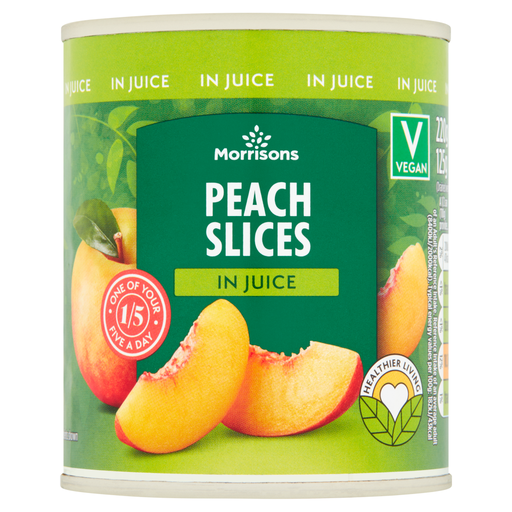 Image unavailable
The 220g peach-slice tin is a smaller juice-packed format to consider if a larger tin would leave unwanted leftovers. Check its sugars information and the exact current pack’s ingredients, gluten-free wording and precautionary allergen information before deciding whether it suits a coeliac diet.
 Image unavailable
Choose this 415g juice-packed format if mixed fruit suits your planned serving. Check the nutrition panel, the current allergen information and the drained weight if the amount of fruit matters to your portion planning.
 Image unavailable
This 415g tin is an option when you want pear halves packed in juice. Compare its sugars per 100g and check the current pack for coeliac suitability; if you expect leftovers, follow that pack’s after-opening directions.
No. Fruit can contain naturally occurring sugars even when none have been added. Read the ingredients and compare sugars per 100g if the total amount matters to your choice.
If reducing added sugar is your priority, NHS guidance points to canned fruit in natural juice or water with no added sugar rather than syrup. Check the exact ingredients: juice-packed fruit still contains sugars, while “light syrup” alone does not tell you whether sugar has been added.
No. Coeliac UK advises checking the current product label for cereals containing gluten and relevant precautionary allergen wording. Assess any gluten-free claim on the exact tin rather than relying on the fruit or brand name alone.
The NHS states that 80g of canned fruit counts as one portion of 5 A Day. If you are planning servings from a tin, check its drained weight where supplied rather than using net weight as the amount of fruit.
Follow the instructions for the exact product. For example, M&S directs shoppers to transfer its Grapefruit Segments to a non-metallic container, refrigerate them and eat them within two days; do not apply that product-specific period to every tin.