Salt-conscious tuna buyers
If salt is a priority when planning meals, compare the amount per 100g and in the portion you will eat. Diabetes UK advises people with diabetes to pay attention to salt and food labels.


Choose tinned tuna steak when you want pantry convenience and larger pieces, or chunks when the fish will be mixed into a meal. Fresh tuna suits a cooked steak meal instead. Whichever format you choose, check salt and portion information alongside the rest of the meal; the NHS says neither fresh nor canned tuna counts as oily fish.
If salt is a priority when planning meals, compare the amount per 100g and in the portion you will eat. Diabetes UK advises people with diabetes to pay attention to salt and food labels.
A tin can provide a convenient starting point for a salad, baked potato or packed lunch. Check the tuna label and the other ingredients when assessing the whole meal; Diabetes UK includes tinned tuna among its store-cupboard meal options.
If larger pieces matter, compare tinned steak with chunks. Fresh tuna is a different choice for a cooked meal: M&S describes its fresh yellowfin steaks as firm and meaty.
| Concern | What to check | Who this matters to |
|---|---|---|
| Salt | Compare salt per 100g on the drained-product label, then consider the portion you will eat. Spring water alone does not tell you the salt content. | If keeping track of salt is my main priority, the amount in my usual serving matters more than the packing liquid’s name. About 36% of consumers put salt comparison first. |
| Meal planning | Read the carbohydrate and serving information on the tuna pack, then account for bread, potatoes, rice, pasta or sauces in the meal. | For a quick lunch, I want a convenient tuna base without overlooking what the other ingredients contribute. Around 29% of consumers primarily want to plan the whole meal. |
| Texture and format | Check whether the pack contains steaks or chunks and whether it needs draining. Choose fresh tuna when you want to cook a steak rather than open a tin. | If the fish will be prominent on the plate, I care whether tinned pieces hold their shape or a cooked steak better suits the dish. Roughly 21% of consumers make texture their main concern. |
| Fish choices | Do not use fresh or canned tuna as a substitute for oily fish when planning your fish choices; the NHS classifies neither as oily fish. | When I plan different fish meals, I need to know where tuna fits rather than assuming fresh tuna counts as oily fish. About 14% of consumers chiefly focus on that distinction. |
Spring-water steak products can have different salt values. Tesco lists 1.0g per 100g for John West No Drain tuna steak and 0.80g per 100g for Princes drained tuna steak; M&S lists 0.75g per 100g for its spring-water steak.
Compare the same per-100g basis first, then use the pack’s serving information to assess the amount you intend to eat.
The NHS excludes both fresh and canned tuna from its oily-fish category. Changing from a tin to a fresh steak does not change that classification.
If an oily-fish meal is part of your plans, choose an oily fish separately rather than relying on tuna for that purpose.
Diabetes UK advises looking at food labels and the overall meal rather than treating a food as suitable because it carries a diabetes-friendly description. Bread, potatoes, pasta and sauces also contribute to the meal’s nutrition.
Check the tuna’s label, then assess the ingredients and portions you will serve with it.
Instructions for storing unused tuna can differ between products, so one tin’s directions should not be applied to another.
Read the current pack for how to transfer, refrigerate and use any leftovers.
Its No Drain spring-water tuna steak is a portioned tinned option; Tesco lists a 3 × 60g pack.
Princes has tinned tuna steak options, including a spring-water 3 × 110g pack listed by Tesco.
Its own-brand spring-water tuna chunks offer a tinned format for meals where intact steak pieces are less important.
Its spring-water tuna steak options include a standard 3 × 120g pack and an albacore product.
M&S lists both tinned spring-water tuna steak and fresh yellowfin tuna steaks, allowing a choice between a pantry ingredient and fish to cook.
These options include spring-water tuna chunks for mixing into meals, a brine-packed tinned steak and frozen steaks for cooking. Check the individual pack if spring-water tinned steak or fresh fish is your priority.
 No image available
Consider these chunks for a quick salad or sandwich when intact steak pieces are not essential. The name identifies a no-drain, spring-water product; check the current pack’s salt and serving information for the amount you will eat.
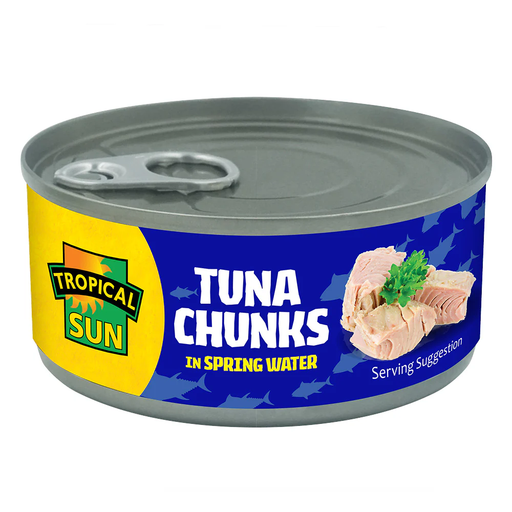 No image available
The chunk format suits meals where tuna will be mixed with other ingredients. This product’s description calls for draining; check the physical pack for its nutrition and allergen information, particularly if soybeans or wheat are a concern.
 No image available
These spring-water chunks are an option when tuna will be mixed into a salad, pasta dish or sandwich rather than served as intact pieces. Compare salt on the current pack and in the portion you plan to use.
 No image available
Consider this tinned steak format when larger pieces matter, but note that it is packed in brine rather than spring water. The product description says it requires cooking and is not ready to eat; follow its cooking instructions.
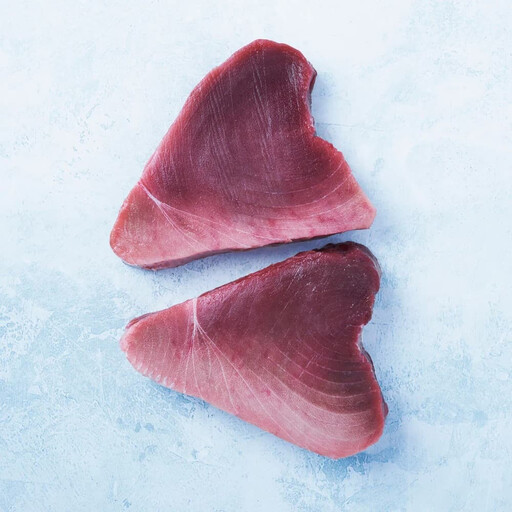 No image available
These frozen steaks suit a planned cooked tuna meal rather than a pantry lunch. Keep them frozen and follow the pack’s thawing and cooking instructions; check the allergen information if crustaceans or molluscs are a concern.
No special type is needed: Diabetes UK says there is no such thing as a separate “diabetic” diet. Compare the tuna’s nutrition panel and portion size, then consider what else goes into the meal.
No. Tesco lists 1.0g salt per 100g for John West No Drain spring-water steak and 0.80g per 100g for Princes drained spring-water steak. Read the particular pack’s salt value and consider the portion you will eat.
No. The NHS says neither fresh nor canned tuna counts as oily fish, so choose an oily fish separately if that is part of your meal plans.
Follow the storage directions on that product’s current pack, including any instructions to transfer and refrigerate unused contents and the stated time for using them.
Tuna is fish, so it is not suitable for someone with a fish allergy. Read the current pack’s ingredients and allergen information for any additional ingredients or cross-contact warnings that matter to you.